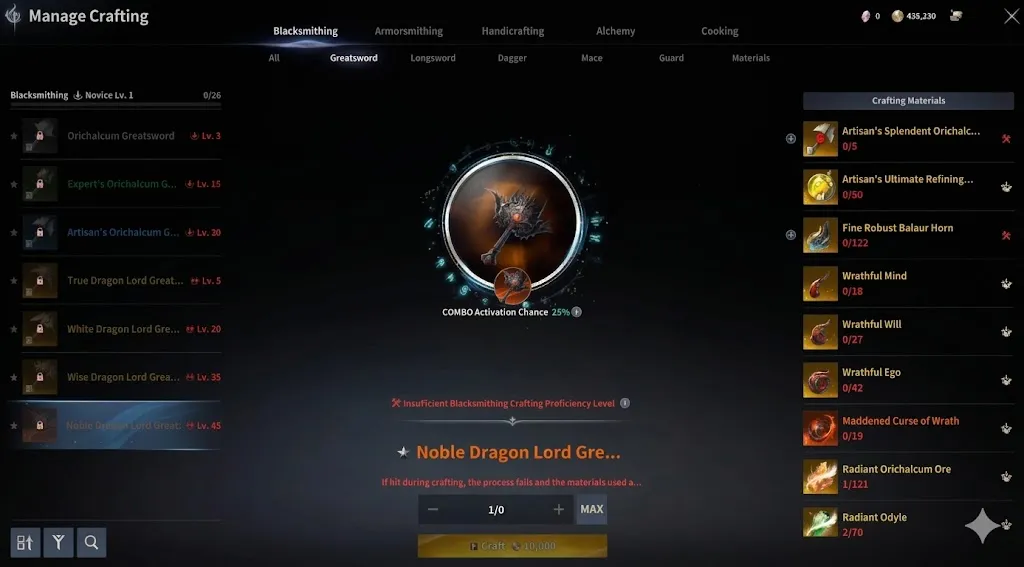
Blacksmithing in Aion 2 is a crucial crafting profession that focuses on creating high-quality weapons and armor. These crafted items often rival or even surpass gear dropped in dungeons, making Blacksmiths essential, especially for melee characters. Blacksmithing relies on gathering materials through Essence Extraction and follows a “chaining” system, where you need lower-quality items to craft higher-tier gear.
What Is Blacksmithing in Aion 2?
Blacksmithing is one of the main professions in Aion 2 and focuses on creating melee weapons, such as:
Greatswords
Longswords
Daggers
Maces
Blacksmiths are especially valuable to melee-focused players, as their crafted weapons can compete with or even outperform standard PvE gear for physical damage.
How Blacksmithing Works?
Weapon Crafting: Blacksmiths craft a wide variety of weapons for different classes.
Chaining System & RNG: Crafting high-tier items involves a random chance element. To make a higher-tier item, you often need to craft a "+ version" (special variant) of a lower-tier item, which has a low success rate (e.g., 25%). If you fail, you might need to go back and start from a lower tier.
Required Materials: Gather metals and ores, and buy special catalysts from vendors in major cities to use at the Blacksmithing table.
Substance Morphing: Players can transform materials like Odal into ore at a 1:1 ratio in the crafting menu, which helps supplement gathered materials.
Weekly/Seasonal Turn-ins: Lower-tier or failed items can be used for weekly or seasonal quests to earn rewards, such as Abyss Points.
Crafting Efficiency: Use the "Manage Crafting" menu to craft items, even in batches, for efficiency.
In Aion 2, Blacksmithing is an essential crafting profession, especially for players focusing on melee combat. The crafted weapons can often compete with or even surpass dungeon drops, making Blacksmiths highly sought after. To support your crafting, materials like metals and ores are necessary, and purchasing special catalysts from vendors in cities plays a big part. If you're looking to improve your Blacksmithing experience or need some extra Aion 2 gold for materials and catalysts, U4N offers a reliable marketplace for purchasing gold, ensuring you can gather what you need to craft high-tier items without wasting time.
Blacksmithing Crafting Guide
Crafting Table
Weapons
Gear
Consumables
Materials
Blacksmithing
Orichalcum Longsword
Orichalcum Greatsword
Orichalcum Dagger
Orichalcum Mace
Orichalcum Guard
Expert's Orichalcum Longsword
Expert's Orichalcum Greatsword
Expert's Orichalcum Dagger
Expert's Orichalcum Mace
Expert's Orichalcum Guard
Artisan's Orichalcum Longsword
Artisan's Orichalcum Greatsword
Artisan's Orichalcum Dagger
Artisan's Orichalcum Mace
Artisan's Orichalcum Guard
Star Dragon Lord Longsword
Star Dragon Lord Greatsword
Star Dragon Lord Dagger
Star Dragon Lord Mace
Star Dragon Lord Guard
Dark Dragon Lord Longsword
Dark Dragon Lord Greatsword
Dark Dragon Lord Dagger
Dark Dragon Lord Mace
Dark Dragon Lord Guard
Ebony Dragon Lord Longsword
Ebony Dragon Lord Greatsword
Ebony Dragon Lord Dagger
Ebony Dragon Lord Mace
Ebony Dragon Lord Guard
Horned Dragon Lord Longsword
Horned Dragon Lord Greatsword
Horned Dragon Lord Dagger
Horned Dragon Lord Mace
Horned Dragon Lord Guard
None
None
Orichalcum Ingot
Fine Thick Balaur Horn
Fine Hard Balaur Horn
Fine Durable Balaur Horn
Fine Robust Balaur Horn
How to Use Blacksmithing
Resource Transformation: Use the Blacksmithing table to turn raw materials (like Oracle Ore from Essence Extraction) into refined Ingots.
Weapon Crafting: Create powerful melee weapons like Swords, Great Swords, Daggers, and Maces.
Shield Fabrication: Craft Shields, especially important for classes like Templars.
Crafting Mechanics
Skill Levels: Players can level up from Novice to level 50, and then reach Professional by completing NPC quests.
RNG & Tiers: The system uses a “plus version” mechanic, where crafting a higher-tier item often requires a successful “critical” version of the previous tier. Success chances vary.
Failure Penalty: Failing a crafting attempt means you might lose your resources, though some Season 3 items have a 100% success rate or offer recrafting options to reduce RNG.
Training: Level up your skills by either crafting manually or completing NPC work orders using materials you can buy.
Tips
Weekly Turn-Ins: Even failed or low-tier items can be turned in for Abyss Points or used for weekly crafting quests.
Catalysts: Most recipes require a catalyst, which you can buy from vendors near crafting tables in cities.
Gathering Stats: Improve stats like Lady Luck and Delicate Touch to gather higher-quality materials for your forge.
Mix Crafting: Craft a variety of items, not just the top-tier weapons, to level up efficiently.
Stockpile Materials: Always have extra materials so you don't run out during progression.
Sell Crafted Weapons: There's often high demand for crafted weapons, and selling them can be profitable.
Higher Skill Levels: Unlock better designs and improve your return on investment (ROI) with higher Blacksmithing skill.
The U4N Editorial Team is made up of dedicated gamers and technical experts. We're not just a trusted marketplace for game assets—we're all about empowering players with top-tier, expert-driven content. Our team produces in-depth guides, strategies, and technical fixes for some of the biggest games out there, like MLB The Show 26, Aion 2, Forza Horizon 6, Arc Raiders, and Path of Exile.
Whether it's mastering market flipping in Diamond Dynasty or optimizing your endgame builds, all of our strategies are tested and proven by in-house experts. At U4N, we don't just follow the meta—we help you stay ahead of it.