


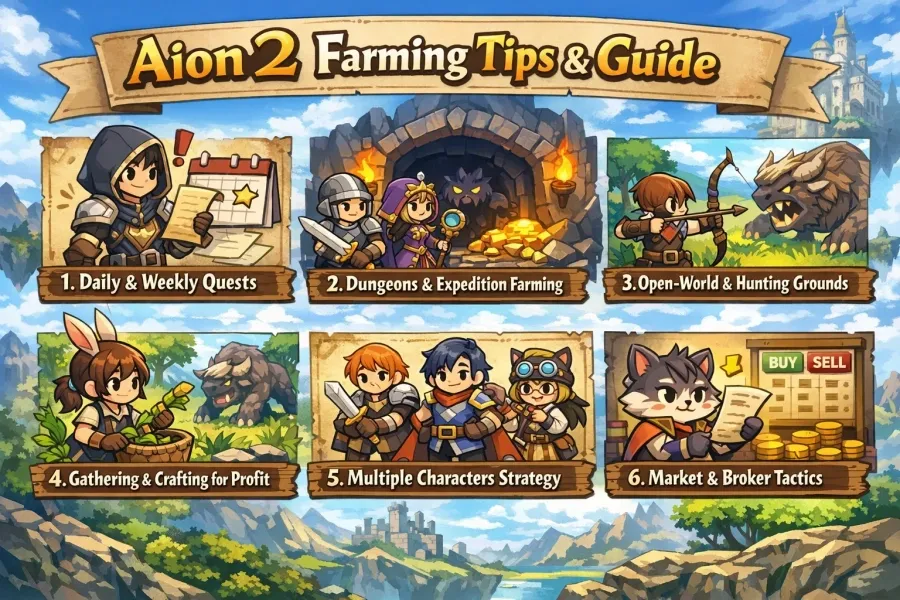
Here's a farming & resource guide for Aion 2 — focused on how to earn Kinah (in‑game gold), gather materials, and optimize your time in the MMORPG. This covers beginner → endgame farming routes, crafting, and tips from multiple player sources.
1. Consistent Kinah (Gold) Sources
Daily & Weekly Quests: A Steady Income
Daily and weekly quests are some of the best ways to earn Aion 2 Kinah without the grind. These quests are designed to keep you engaged while rewarding you with valuable resources and currency. Here's how you can optimize these quests:
Daily Quests
- Always prioritize daily quests because they give you guaranteed Kinah. Most of these quests are simple objectives that you can complete in less than 30 minutes, making them perfect for players who are short on time.
- Examples of daily quests include delivering items, completing combat tasks, and gathering resources from the environment.
- Some of these tasks also offer additional rewards like crafting materials, which you can either use for upgrading your gear or sell for additional Kinah on the market.
Weekly Quests
- Weekly quests typically provide much higher rewards, including substantial amounts of Kinah, gear, and sometimes even rare items. Completing these should be part of your routine, especially on the days where you have more time to play.
- These quests often involve larger, more time-consuming objectives, such as completing certain dungeons, killing rare bosses, or gathering high-level resources.
- Tip: Many of these weekly objectives reward not just Kinah, but high-tier items and crafting materials, so completing them will enhance your gear progression too.
Tip: Consistency is key — complete your dailies and weeklies as early as possible to ensure steady progression, and avoid missing out on important rewards.
2. Dungeons & Expedition Farming: Efficient Gold
Dungeons in Aion 2 are a significant source of Kinah and rare loot, making them one of the most efficient ways to farm gold. Here's how to maximize your dungeon runs:
High-Level Dungeons
- As you progress through the game, the dungeons you can access will become more challenging, but they also offer higher rewards. You will start encountering dungeons with multiple bosses and valuable loot.
- The drop rates for rare materials and equipment increase significantly in endgame dungeons. High-tier dungeons are perfect for gathering materials, valuable items for crafting, and rare gear that can be sold for high amounts on the Broker or Auction House.
Expedition Modes
- Expedition Conquest Mode (Solo): This mode is one of the most efficient for solo players, as it allows you to clear areas filled with mobs quickly and collect loot in bulk. The mobs drop decent Kinah, and you'll also find materials and rare items useful for crafting.
- If you have the right class setup with AoE abilities and sustain, you can earn around 1 million Kinah per hour by clearing out mobs. This mode allows you to farm with minimal risk, and since it's solo, you have full control over your farming session.
Tip for Expeditions:
- To make the most of these dungeons, try to create or join a farming group. Some dungeons are much easier with a group, and they allow for faster clears, meaning you can farm more efficiently and make higher profits.
3. Open-World & Hunting Grounds: Exploring for Gold
Best Open-World Farming Spots
While dungeons and quests provide a substantial amount of Kinah, open-world farming is also an excellent way to gather resources and gold. By finding the right spots, you can earn passive income from enemy mobs and resource nodes.
High-Density Mobs
- The key to farming in open-world zones is finding areas that have dense mob spawns. These zones allow you to clear multiple enemies at once, which speeds up the process and results in more drops in a short period of time.
- For example, if you're in a mid-level zone (gear score around 600-900), look for places where you can engage in group mob pulls that drop good quantities of loot.
- Tip: Avoid farming in areas where mobs are too high-level unless you have a strong build. Stick to spots where mobs are relatively easy to handle so that you can farm without spending too much time on healing or dying.
Resource Nodes: Gathering for Profit
- As you wander around the world, be on the lookout for gathering nodes like ores, herbs, and other valuable materials. These materials are constantly in demand, especially for crafting or upgrading gear. Farming them can be quite profitable.
- You can either sell the raw materials directly on the market or craft them into consumables that other players need, such as potions, gear enhancements, and upgrade materials.
Tip: Keep an eye on the market demand — certain materials like ores or herbs may go through price spikes due to patch changes or crafting demands.
4. Gathering & Crafting for Profit: Leverage Your Skills
Gathering Materials: Efficient Routes
Gathering materials is one of the most consistent methods for earning Kinah in Aion 2. By focusing on high-value materials, you can either craft valuable items or sell them directly for profit.
High-Value Materials
- Focus on rare materials found in high-level zones or endgame maps. These materials are in high demand for crafting powerful gear and consumables.
- Some of the best farming spots for gathering ores and herbs are in the mid to late-game zones, where there's little competition and good loot potential. The materials gathered in these zones can be sold for a premium.
Crafting Items: Profit from Consumables
- Once you have gathered sufficient materials, craft consumables like potions, elixirs, or enhancement items, which are always in demand by other players. These consumables are low-risk and generally offer high profits when listed correctly.
- Some of the most profitable items are enhancement stones used for upgrading weapons and armor, enchantment scrolls, and attribute potions.
- Another highly profitable route is crafting gear. If you have gathered or obtained high-quality materials, consider crafting endgame armor or weapons and selling them to other players who are working on progression.
Tip for Crafting:
- If you're not sure which items to craft, check the market trends to see which consumables and equipment are in high demand. Adjust your crafting to match these trends to maximize profits. For instance, crafting high-tier enchants will often fetch more money than basic consumables.
5. Multiple Characters Strategy: Maximize Farming Efficiency
Why Multiple Characters Are Beneficial
Having multiple characters (alts) in Aion 2 can significantly increase your farming efficiency, especially when you're looking to earn Kinah consistently. Here's how you can use multiple characters to your advantage:
Completing Daily & Weekly Quests
- Each character can complete daily and weekly quests, and by rotating through your alts, you can ensure you never miss out on these important tasks. This maximizes the amount of Kinah and items you can earn daily without additional grind.
- The best part is that alt characters don't need to be highly geared to complete these quests — as long as they're active in the game, you can collect valuable rewards.
Farming Resources with Multiple Characters
- Use each alt character to focus on different resources or areas. For example, one alt could specialize in gathering ores while another focuses on herbs or leather.
- This strategy allows you to farm resources in different parts of the world, ensuring you collect a variety of materials and don't saturate one area. This can help you avoid overcrowded farming spots and maximize your gathering efficiency.
Selling Items on the Market
- You can also use your alts to manage the market. For instance, have one character focus on gathering and crafting, while another character focuses solely on selling items on the market or broker.
- By diversifying your alts, you can specialize in different tasks, making your farming more organized and less chaotic.
How to Set Up Your Alts for Efficiency
- Specialize each character: Make sure each of your alts specializes in something that benefits you. For example, one could focus on combat (for dungeon runs) while another focuses on crafting or gathering.
- Use shared resources: Once you've completed quests and gathered materials on one character, pass the loot and resources to your other characters to ensure they're well-equipped and productive.
Tip: Be mindful of your weekly alt limit. Every character can only run dungeons or participate in certain activities a limited number of times per week, so plan your farming accordingly to ensure all your alts are maximizing their potential.
6. Market & Broker Tactics: Turning Loot into Profit
Understanding the Market: Strategic Selling
The Broker (or Auction House) in Aion 2 is an incredibly powerful tool for turning your loot into significant profits. However, being successful on the market requires a bit of strategy and market knowledge. Here's how to maximize your profits:
Know What to Sell
Start by identifying high-demand items that consistently sell well. Some examples include:
- Enhancement Stones for upgrading equipment.
- Consumables like potions, elixirs, and buffs.
- Rare crafting materials that players need for progression.
- Weapons and gear from dungeons or crafted items.
Selling rare or sought-after gear can be a major profit source, but it's important to time the sale right. Selling these items during events or new content releases can increase their demand.
Price Your Items Right
- Price your items competitively. If you price them too high, they might not sell, but if you price them too low, you may miss out on profits. Research other listings to get a sense of what price range is reasonable for similar items.
- Consider undercutting a bit if you're trying to quickly offload high-demand materials — just enough to make sure you get the sale, but not so much that you leave money on the table.
Supply and Demand
- Pay attention to fluctuations in the market — the prices for certain materials and items can shift depending on updates or changes in demand. For example, certain crafting materials may suddenly become more valuable after a patch that introduces new crafting recipes.
- Monitor item demand and adjust your pricing accordingly. If you're sitting on an inventory of items, you can either wait for prices to rise or sell them at a slightly lower price to get a quicker turnaround.
Tip for Success in the Broker:
- List items at a reasonable undercut price during high-demand events or on busy weekends, where many players are active. Avoid overpricing unless you have rare or very high-quality items that will justify the cost.
- Bulk-selling: If you have lots of materials, instead of selling them one by one, try selling them in stacks of 100 or more for faster sales.
7. High-Risk, High-Reward Options: PvP & Boss Farming
PvP Farming: Bigger Risks, Bigger Rewards
For those willing to take a bit of risk, PvP farming can be extremely profitable. Participating in world PvP, faction wars, and large-scale battles can yield high-level loot and valuable Kinah.
Farming from PvP Events
- PvP-based events or world PvP zones often reward players with loot drops, such as rare gear, equipment, and sometimes Kinah.
- Winning in PvP tournaments or faction battles not only grants valuable rewards but often gives you special buffs or honor points that can be exchanged for high-value gear or consumables.
Tip for Success in PvP Farming:
- Team up with a solid PvP group that specializes in these types of events. Communication and coordination are key, as PvP farming can be chaotic and competitive. Winning PvP fights typically offers higher rewards, but having a coordinated team can ensure that you don't waste resources.
Boss Farming: Major Loot Drops
Boss farming is another high-reward farming method in Aion 2. Bosses can drop rare items, legendary gear, and high amounts of Kinah. However, these bosses can be difficult to defeat and often require a strong team to defeat.
Endgame Bosses
- High-level bosses, like world bosses or elite raid bosses, drop some of the best loot in the game. These bosses require teamwork and solid tactics to defeat, and the effort is well worth the massive loot drops.
- World bosses spawn at specific times and usually require large groups of players to defeat. These bosses often drop rare crafting materials or top-tier gear that can be sold for a huge profit.
- Elite dungeon bosses drop valuable gear and materials, and can also provide Kinah for those brave enough to challenge them.
Tip for Boss Farming:
- Make sure you have a strong group before attempting boss fights, as they can be difficult without good coordination and strategy. Use your alts to farm resources, then focus your main character on the tougher raids for endgame loot.