

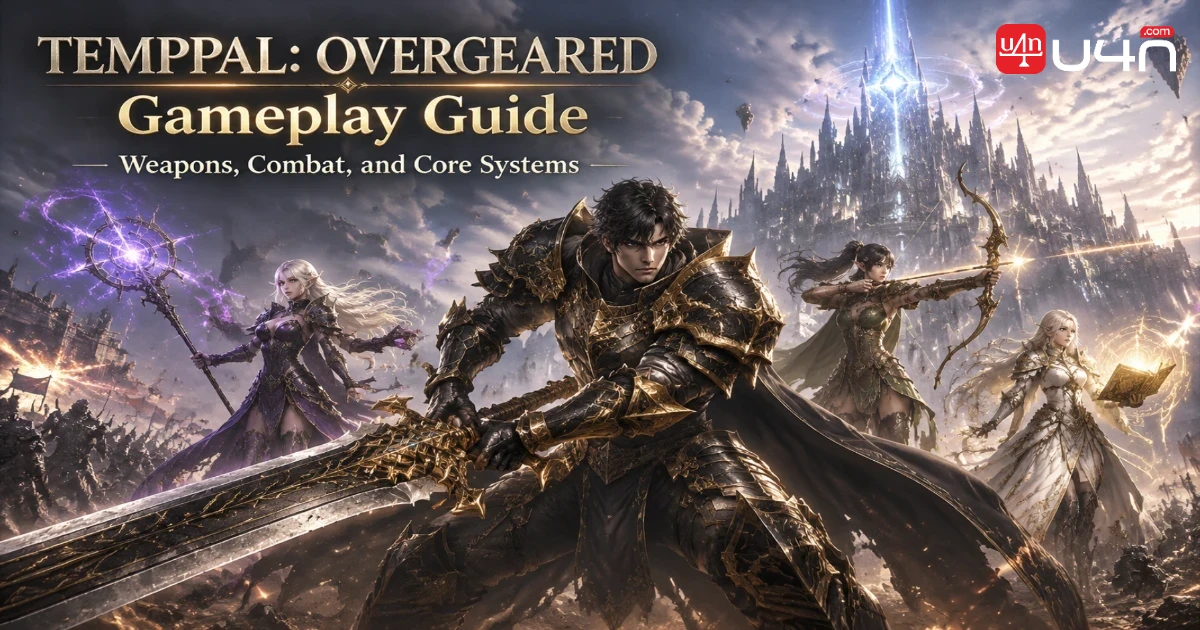
TEMPPAL: OVERGEARED is an MMORPG where equipment is more than a way to increase your character's stats. Weapons determine your combat style, class-specific abilities shape how you fight, and several interconnected progression systems allow you to push your character's power further.
With its November 26, 2026 launch approaching, players have started paying closer attention to how these mechanics work. The latest gameplay showcase revealed four main weapon types, the Overgeared and Overclock progression systems, God Hand Memories, and a weapon modification feature that gives players more control over their equipment.
For players coming from traditional MMORPGs, some of these systems may take a little getting used to. Simply finding a higher-grade weapon is not the whole progression strategy. Understanding how equipment enhancement, Core Score, and combat effects work together will be just as important.
In this guide, our team breaks down the main gameplay systems in TEMPPAL: OVERGEARED, compares all four weapon types, and explains what players should understand about combat, equipment upgrades, and character development before starting their adventure.
How Does Combat Work in TEMPPAL: OVERGEARED?
TEMPPAL: OVERGEARED combines weapon-based combat with class-specific abilities and equipment-driven progression. Rather than giving every character the same basic combat experience, the game uses four weapon categories to establish different fighting styles.
Each weapon has its own battlefield role, while individual classes introduce additional mechanics that influence how players approach enemies and team encounters.
The four main weapon types are:
| Weapon | Main Combat Role | Fighting Style |
|---|---|---|
| Greatsword | Frontline combat | Heavy attacks, durability, and enemy disruption |
| Staff | Magic damage | Elemental attacks and tactical spellcasting |
| Bow | Ranged damage | Powerful ranged attacks and backdash mechanics |
| Bible | Support | Healing and crowd control |
One important distinction is that weapon choice and class identity are not exactly the same thing. Two characters using the same weapon can still have noticeably different combat styles because their class abilities introduce different effects and tactical options.
For example, Greatsword users can focus on sustained combat or enemy control. This means players should look beyond weapon appearance when deciding which character suits their preferences.
Weapon choice establishes your combat foundation, but class-specific abilities determine how you actually fight. Understanding both is more important than simply choosing the weapon with the most impressive appearance.
From our team's perspective, understanding these differences early is more useful than immediately chasing a supposedly strongest weapon. A weapon that matches your preferred combat style will make it easier to understand the game's mechanics and build around them.
All Four Weapons Explained: Which One Should You Choose?
Weapon selection is one of the first major decisions players will want to understand. Each category serves a different purpose, and the best choice depends on whether you prefer close-range combat, elemental damage, ranged attacks, or team support.
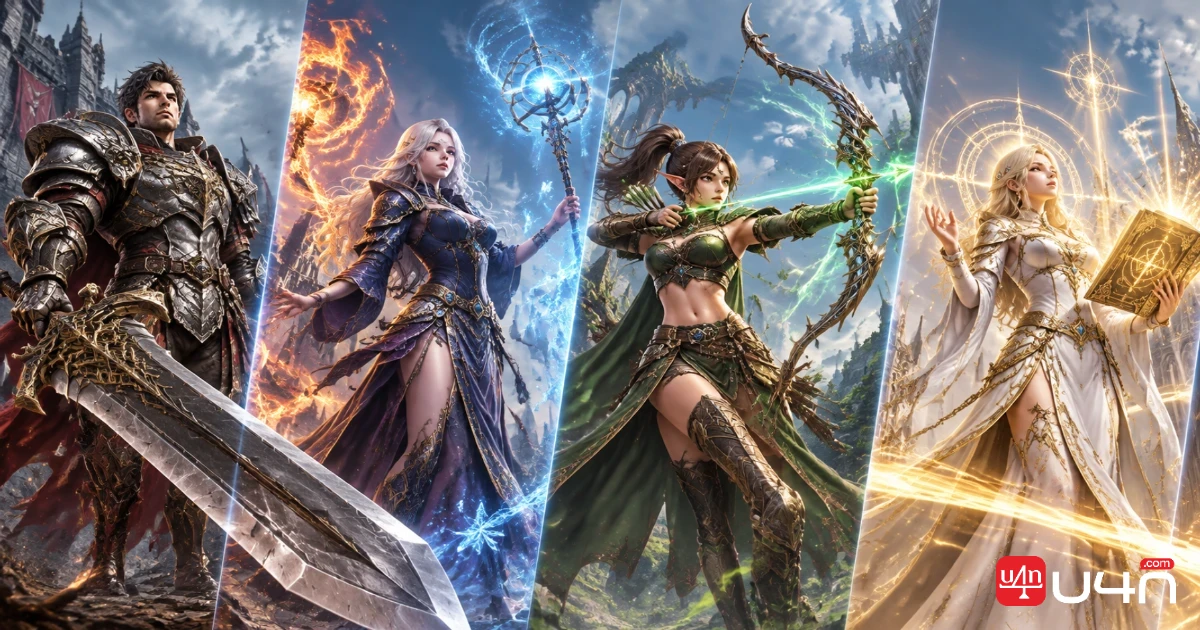
Greatsword: Frontline Damage and Enemy Control
The Greatsword is designed for players who prefer direct confrontation. It allows characters to withstand incoming attacks while applying pressure and disrupting enemy formations.
However, its two showcased class identities demonstrate why weapon selection alone does not define a character.
| Class | Combat Identity | Main Mechanic |
|---|---|---|
| Blood Warrior | Sustained melee combat | Bleeding and HP leech |
| Crusher | Crowd control | Pulls and stuns |
Blood Warrior is particularly interesting for players who enjoy maintaining pressure over longer encounters. Its bleeding and HP leech mechanics support a more sustained fighting style.
Crusher takes a different approach. Instead of focusing entirely on continuous damage, it uses pulls and stuns to interfere with enemy movement and create opportunities for follow-up attacks.
Our recommendation is to consider how much you enjoy controlling the pace of combat. Players who prefer staying in the middle of a fight may find the Greatsword appealing, while those who enjoy controlling enemy positioning may be more interested in Crusher.
Staff: Elemental Magic and Tactical Damage
The Staff is the natural choice for players who prefer magic-based combat.
Its main identity revolves around elemental magic, giving players different ways to approach encounters through spellcasting and tactical skill selection.
Unlike straightforward melee combat, Staff gameplay places more emphasis on choosing the right abilities for different situations.
When learning this weapon, players should pay attention to:
- Elemental attack options and their individual effects.
- Skill selection and how abilities work together.
- Positioning during ranged encounters.
- Opportunities to maintain damage without exposing themselves unnecessarily.
The Staff is worth considering if you enjoy managing abilities and adapting your attacks rather than relying primarily on direct weapon strikes.
Bow: Ranged Attacks and Powerful Strikes
The Bow focuses on ranged damage and powerful attacks, with backdash mechanics providing an additional way to manage positioning.
Its combat identity makes it appealing to players who prefer maintaining distance instead of constantly fighting at close range.
However, ranged combat still requires good timing. Players need to pay attention to enemy movement, attack opportunities, and positioning rather than simply attacking from a safe distance.
For beginners, learning when to reposition will be just as important as understanding the weapon's offensive abilities.
Bible: Healing and Crowd Control
The Bible fills a different role from the other three weapons.
Its main strengths are healing and crowd control, making it particularly relevant to players who enjoy contributing to team encounters rather than focusing exclusively on personal damage.
In group content, support abilities can make a meaningful difference when teammates need additional protection or help controlling enemies.
Players who regularly enjoy cooperative MMORPG content should pay attention to this weapon.
It is also worth remembering that support does not automatically mean a passive playstyle. Healing, controlling enemies, and choosing the right moment to use abilities can all require active decision-making.
Overgeared and Overclock: Understanding Equipment Progression
Equipment progression is arguably one of the most important parts of TEMPPAL: OVERGEARED.
The game introduces two connected systems: Overgeared and Overclock. The first develops equipment and increases character stats, while the second uses the results of that progression to unlock additional combat effects.
Understanding their relationship will help players make better equipment decisions.
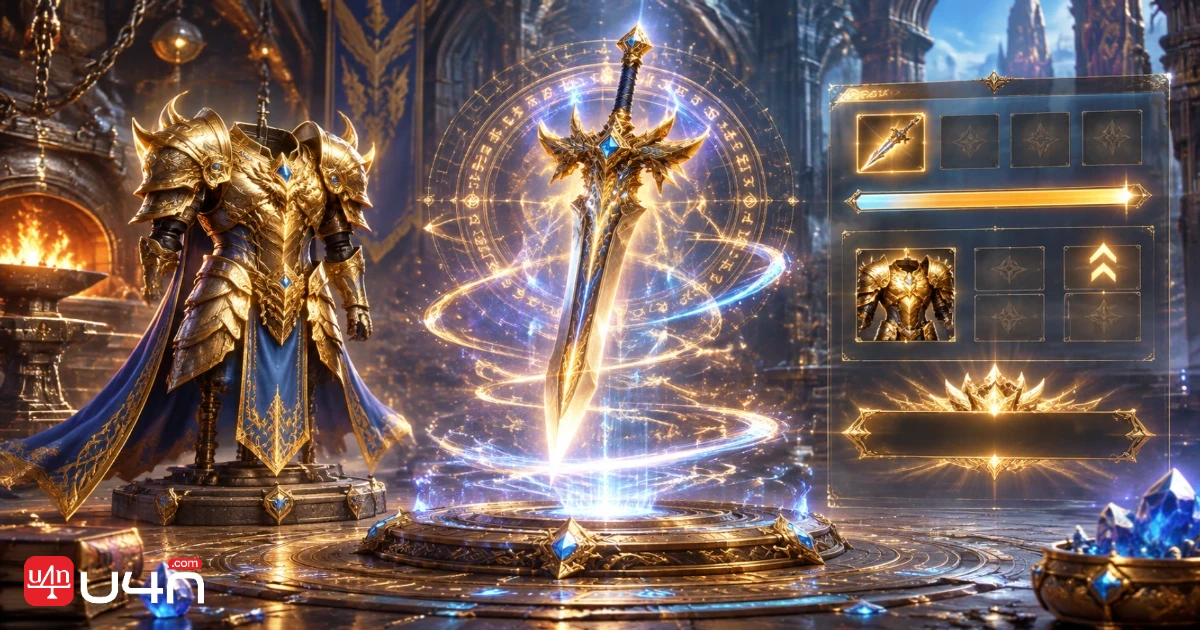
How the Overgeared System Works
Unlike a progression model that revolves entirely around replacing old equipment with new drops, Overgeared allows players to improve individual equipment slots.
The main progression process includes:
- Enhancement: Increase the level of individual equipment slots to improve character attributes.
- Breakthrough: Reach the enhancement cap and perform a breakthrough to raise the maximum progression level.
- Additional Stat Unlocks: Further progression unlocks additional stats sealed within equipment.
- Material Management: Use Pavranium for equipment enhancement, crafting, and weapon modification.
Pavranium is particularly important because it can be obtained by salvaging unused equipment or through failed enhancement attempts.
This gives unwanted equipment another purpose instead of making every lower-grade item feel completely disposable.
For players familiar with gear-heavy MMORPGs, this approach creates an additional decision: should you replace an item immediately, or invest more resources into developing your current equipment?
We recommend evaluating both options rather than automatically choosing whichever item has the higher displayed grade.
What Is Core Score?
Core Score connects several equipment-related progression systems into a broader measure of character development.
Its value is influenced by multiple factors, including:
- Overgeared enhancement and breakthroughs.
- Equipment grade and enhancement level.
- Alchemy.
- Appraisal.
The important point is that Core Score does not depend on one equipment slot alone.
A character with well-developed equipment across multiple systems may reach higher progression thresholds than one that focuses all resources on a single item.
This becomes particularly relevant when players start working toward stronger Overclock effects.
How Overclock Improves Combat Performance
Overclock takes the results of equipment progression and connects them to actual combat.
Players unlock different Overclock tiers by reaching specific Core Score thresholds. During combat, normal attacks and critical hits fill the relevant gauge, allowing additional effects to activate.
The system introduces another reason to pay attention to overall equipment development rather than focusing exclusively on individual weapon damage.
There is also an important detail worth remembering: changing equipment can lower your Core Score. If your score drops below a required threshold, previously unlocked Overclock effects may become locked again.
Our equipment tip: Before replacing an important piece of gear, check how the change affects your total Core Score. A small individual stat improvement may not be worth losing access to a stronger Overclock tier.
God Hand Memories: How to Build Your Combat Setup
God Hand is another major system that connects TEMPPAL: OVERGEARED to its original fantasy universe.
Rather than functioning as a purely visual feature, God Hand Memories provide additional combat effects through three different categories.
Players can equip one Memory from each category, creating combinations that support different combat situations.
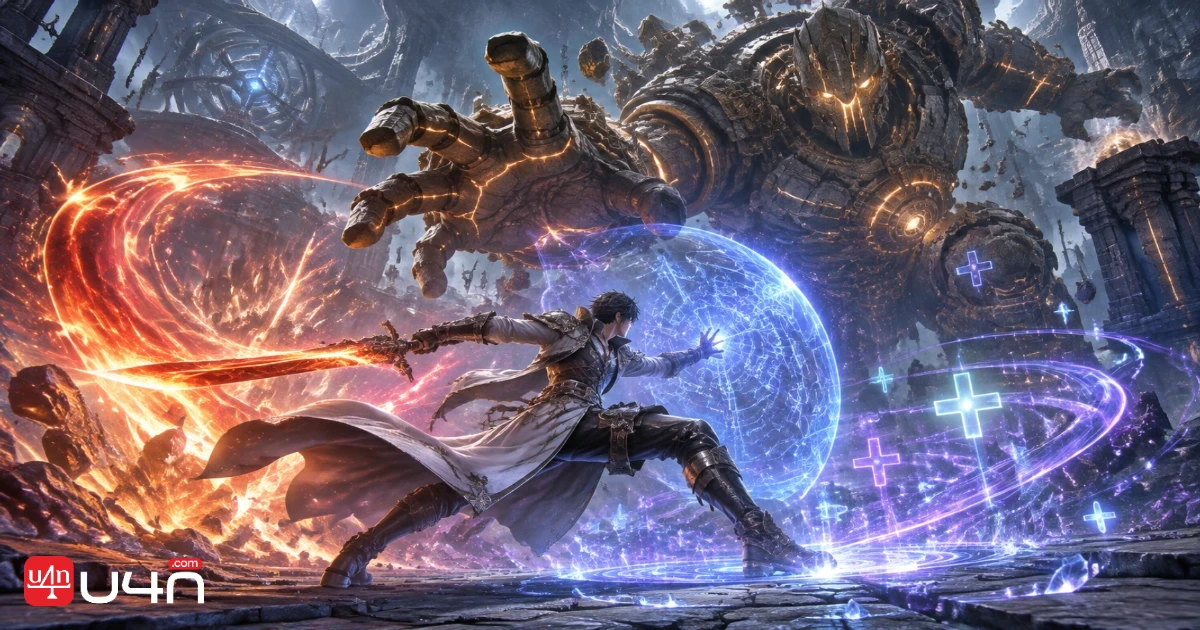
The Three Types of God Hand Memories
| Memory Type | Activation Condition | Example Effect |
|---|---|---|
| Offensive | When attacking | Additional damage on hit |
| Defensive | When taking damage | Shield generation |
| Auxiliary | When using skills | MP recovery |
The activation conditions are particularly important.
Offensive Memories reward attacking, Defensive Memories respond to incoming damage, and Auxiliary Memories activate around skill usage.
This makes God Hand more interesting than simply equipping three bonuses with the highest displayed values.
Players should consider how frequently they can activate each Memory during their preferred fighting style.
Choosing Memories for Different Situations
Different combinations may be more useful depending on the activity.
| Activity | Suggested Focus | Reason |
|---|---|---|
| Regular Farming | Offensive + Auxiliary | Support consistent damage and skill usage |
| Boss Encounters | Offensive + Defensive | Balance damage with additional protection |
| PvP | Defensive + Auxiliary | Improve defensive responses and utility |
These are starting-point recommendations based on the announced activation mechanics, not confirmed optimal endgame builds. Actual performance will depend on individual Memory effects, class abilities, and the final game balance.
Why God Hand Presets Matter
Players can save different God Hand Memory combinations as presets.
This is a useful feature because farming, boss encounters, and PvP do not always reward the same combat setup.
Instead of constantly rebuilding your configuration, you can prepare different combinations and switch according to the activity.
Our advice is to experiment with these presets once you have access to a wider selection of Memories. A combination that performs well during ordinary hunting may not provide the same value against a boss with heavy incoming damage.
Weapon Modification and Signature Equipment
Weapon customization adds another layer to character development.
TEMPPAL: OVERGEARED allows players to modify both the appearance and performance direction of their weapons. This means equipment can reflect personal preferences while also supporting different combat approaches.
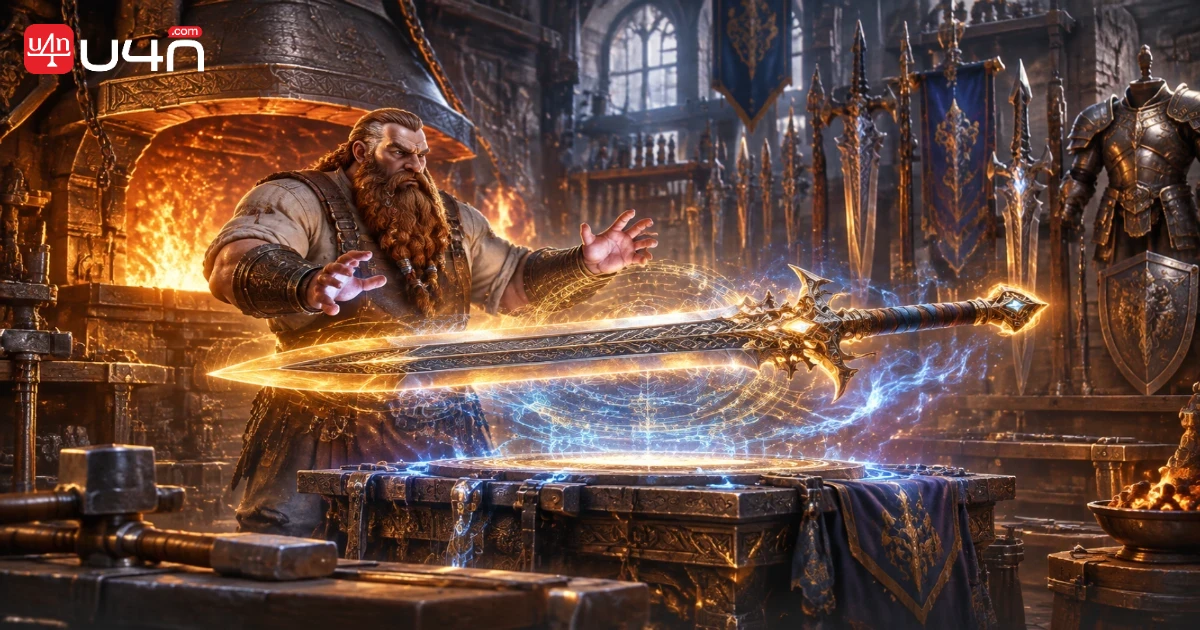
How Weapon Modification Works
The modification system includes visual components such as blades, handles, and keyrings.
Players can also adjust weapon performance toward different attributes.
For example, one modification direction may emphasize maximum damage and critical power for powerful individual attacks, while another may prioritize accuracy and status effect effectiveness.
| Modification Direction | Main Focus | Intended Combat Benefit |
|---|---|---|
| Burst Damage | Maximum damage and critical power | Strong individual attacks |
| Accuracy | Hit reliability | More consistent attacks |
| Status Effects | Status effect effectiveness | Stronger status-oriented strategies |
This creates more flexibility when developing a weapon.
A player who prefers heavy burst attacks may not need the same setup as someone who wants more reliable hits or stronger status effects.
We recommend choosing modifications based on your weapon, class mechanics, and preferred combat approach rather than trying to maximize every attribute at once.
What Makes Signature Equipment Special?
Signature Equipment is one of the more interesting crafting features revealed during the gameplay presentation.
When equipment crafting achieves Great Success, players can obtain a Signature Equipment piece engraved with the creator's name and Artisan Grade.
These items offer a safe enhancement benefit two tiers higher than standard equipment.
They can also provide an Overgeared Core amplification effect, further increasing Core Score and helping players reach higher Overclock thresholds.
This creates a connection between crafting success and long-term character progression.
For players who enjoy MMORPG crafting systems, Signature Equipment is worth watching because it gives successful crafting attempts additional significance beyond obtaining another piece of gear.
Practical Combat Tips for Beginners
Understanding the individual systems is only part of preparing for TEMPPAL: OVERGEARED. Players also need to know how to approach different activities without wasting time or resources.
Our team recommends focusing on a few basic principles before experimenting with more specialized builds.
Build Around Your Preferred Weapon
Start by identifying the combat style you enjoy most.
- Choose Greatsword if you prefer frontline combat and enemy disruption.
- Choose Staff if you enjoy elemental magic and tactical ability usage.
- Choose Bow if you prefer ranged attacks and repositioning.
- Choose Bible if healing and crowd control appeal to you.
Once you understand your weapon, learn how its class-specific abilities change your approach to combat.
Balance Equipment Upgrades With Core Score
Do not judge every upgrade by its individual stats.
Overgeared progression, equipment grade, alchemy, and appraisal all contribute to Core Score. Since this score determines Overclock access, changing one item can affect more than just your character's displayed attributes.
Before committing resources, consider whether an upgrade improves your overall progression.
Prepare Different God Hand Setups
Avoid relying on one Memory combination for every activity.
A farming setup should prioritize consistent combat efficiency, while boss encounters may require more defensive support.
PvP introduces another set of considerations, especially when dealing with incoming attacks and opportunities to activate additional effects.
Having multiple presets available makes adapting to these situations easier.
Manage Your Equipment and Crafting Materials
Pavranium has several uses across equipment progression, crafting, and weapon modification.
Salvaging unused equipment can therefore support more than one part of character development.
We recommend avoiding unnecessary equipment upgrades before understanding which materials are needed for your preferred progression path.
Players who want to explore the in-game economy and prepare their resources can also check cheap Temppal Overgeared Coins as part of their launch preparation.
Avoid These Common Beginner Mistakes
| Mistake | Why It Matters |
|---|---|
| Choosing a weapon based only on appearance | Different weapons have distinct combat roles |
| Ignoring class-specific abilities | Classes using the same weapon can fight differently |
| Replacing gear without checking Core Score | Overclock effects may become locked |
| Using one God Hand setup everywhere | Different activities reward different effects |
| Spending materials without a progression plan | Enhancement and crafting compete for resources |
The biggest lesson is to understand how the systems connect before committing heavily to one progression route.
Final Thoughts: Mastering Combat and Gear Progression
TEMPPAL: OVERGEARED offers several interconnected ways to develop a character. Weapons establish the foundation of combat, class abilities add individual identities, and equipment progression influences both character stats and additional combat effects.
The most important systems to understand are Overgeared, Overclock, and God Hand. Together, they make character development about more than simply finding a stronger weapon.
For beginners, our team recommends starting with a weapon that matches your preferred fighting style, learning how Core Score affects Overclock, and experimenting with God Hand Memories as more options become available.
The November 26 launch will provide the opportunity to see how these systems perform in actual gameplay. Until then, understanding their basic mechanics is the best way to prepare for your first adventure in TEMPPAL: OVERGEARED.
Key takeaway: The strongest character progression strategy is not simply about finding better gear. It is about understanding how weapon choice, class abilities, Overgeared enhancement, Overclock, and God Hand Memories work together to support your combat style.