

A five-dollar fashion crate and a paid equipment upgrade do very different things to a game. Both can make players uncomfortable. Only one directly changes a character's stats. Our team thinks the argument over MapleStory Classic World needs that distinction, alongside a closer look at what happens when cosmetic items enter the player economy.
The question extends beyond an expensive pet or an exclusive chair. Once cash-shop items can be exchanged for MapleStory Classic World Mesos through player trading, spending can influence purchasing power. That deserves attention even if the original item provides no attack, accuracy, or additional upgrade slots.
Our assessment uses the supplied commentary as its November 2026 snapshot. We are judging three things: what money buys, how those purchases affect progression, and how much pressure the system places on players who would rather keep their wallets closed.
Why the Black Friday Backlash Matters
The criticism came from several directions: premium fashion crates, expensive stamp rewards, a cloak whose visual presentation changed, and event food receiving expiration dates.
Those complaints share a concern about trust.
A player buying an outfit wants to know what it looks like. Someone saving event consumables wants to understand how long those items will remain usable. A collector looking at a stamp reward needs a realistic picture of the cost before opening crates.
We would separate those concerns before judging Nexon's motives. A corrected visual effect can create legitimate frustration without proving that the correction was deliberately delayed to encourage purchases. That accusation requires evidence about intent, which the supplied account does not establish.
The same care applies to community reactions. An angry discussion can identify a real problem, but its popularity does not measure how many players share the opinion or how severely the mechanic affects them.
For us, the useful question is specific: could players make an informed decision before spending or committing their time?
If the answer is unclear, the business model has a communication problem even before the pay-to-win debate begins. Calling every complaint an overreaction misses that point. Calling every disappointing update a deliberate scam goes further than the evidence allows.
Old GMS Sold More Than Character Fashion
The historical comparison is strongest when it explains mechanisms instead of relying on nostalgia.
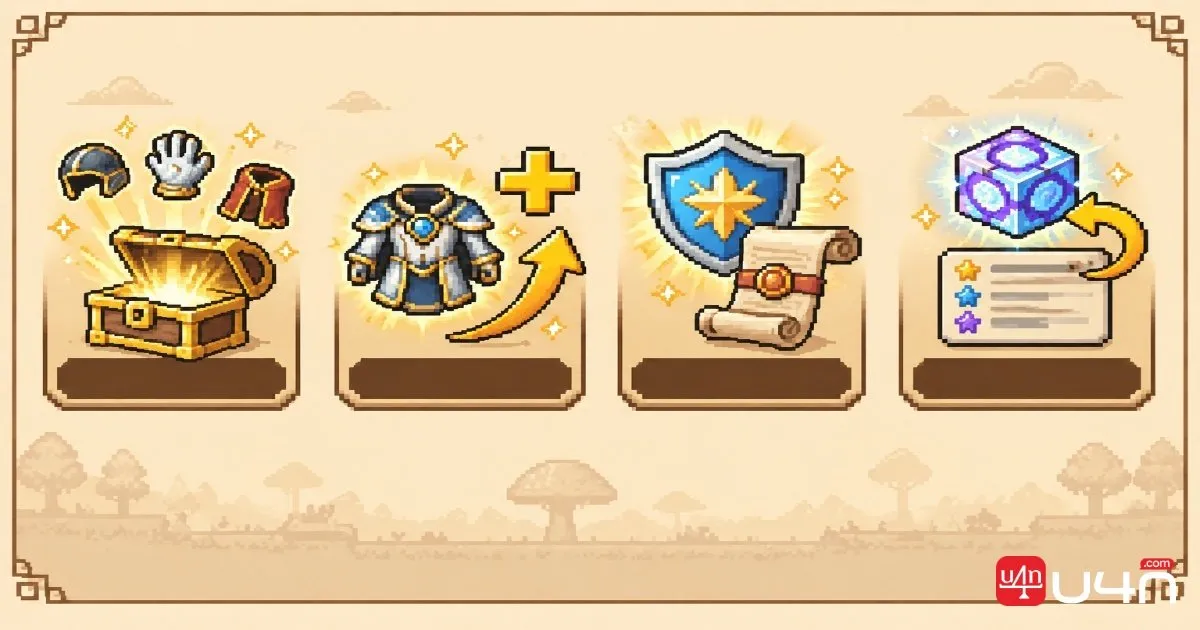
The older GMS systems discussed connected spending to equipment development in several ways. Paid random rewards could introduce equipment and scrolls. Hammers expanded upgrade opportunities. Protective items reduced some of the risks attached to enhancement. Cubes allowed repeated attempts at desirable potential stats.
Each affected a different stage of progression.
An extra upgrade slot increased an item's possible ceiling. Protection reduced the danger of pursuing that ceiling. Repeated stat rerolls created another reason to keep spending after the equipment itself had already been acquired.
That is why veteran frustration cannot be reduced to disliking a high price. The deeper issue was the relationship between spending and character development. When another purchase offers another chance at stronger equipment, stopping can feel like accepting a disadvantage.
There is a historical problem with treating all those systems as one version of "classic," however. The original commentary combines features introduced across different periods. A fair comparison needs to distinguish the era Classic World aims to recreate from the later commercial systems players remember disliking.
Our team would use the early period to assess authenticity and the later period to explain distrust. Those are separate questions.
A newer server can avoid later monetization mistakes while still departing from an earlier experience in other ways. Equally, removing cubes does not automatically settle every concern about convenience, trading, or limited-time rewards.
What Classic World Asks Players to Pay For
A model centered on appearance and convenience, with several purchases that also affect how comfortably players progress.
The distinction becomes clearer when we compare the function of each category.
| Shop category | What the purchase provides | Main concern |
|---|---|---|
| Fashion crates | A random cosmetic item | Uncertain cost of obtaining a specific appearance |
| Pets and revival items | Pickup assistance and continued pet activity | Recurring spending tied to convenience |
| Inventory and storage expansion | More room for items | Basic friction becoming a purchase incentive |
| Store permits | Access to selling features | The cost of participating in player commerce |
| AP and SP resets | A way to rebuild an allocation | Paying to correct mistakes or change a build |
| Safety Charms | Protection against death-related EXP loss | Spending to preserve earned progress |
We see meaningful differences within that list. An inventory expansion does not function like an equipment reroll. A reset scroll does not function like a random fashion box. Treating all three as equally harmless, or equally exploitative, makes the discussion less precise.
Public shop documentation lists regular fashion crates at 3,500 NX, with an eleven-crate bundle at 35,000 NX. Black Friday version costs 4,900 NX individually or 49,000 NX for eleven. Those figures establish that the premium crate carries a higher entry price; they do not tell us how much a particular outfit will cost to obtain.
That second question requires the reward pool, individual probabilities, duplicate rules, and trading options.
Our team is generally more comfortable evaluating a clearly priced purchase than a random one. With a direct sale, players can decide whether the item is worth the stated amount. With a crate, the visible price buys an attempt. The desired result may require a very different budget.

The Stamp Rewards Need Clearer Cost Labels
The stamp system is where the original argument needs the most careful arithmetic.
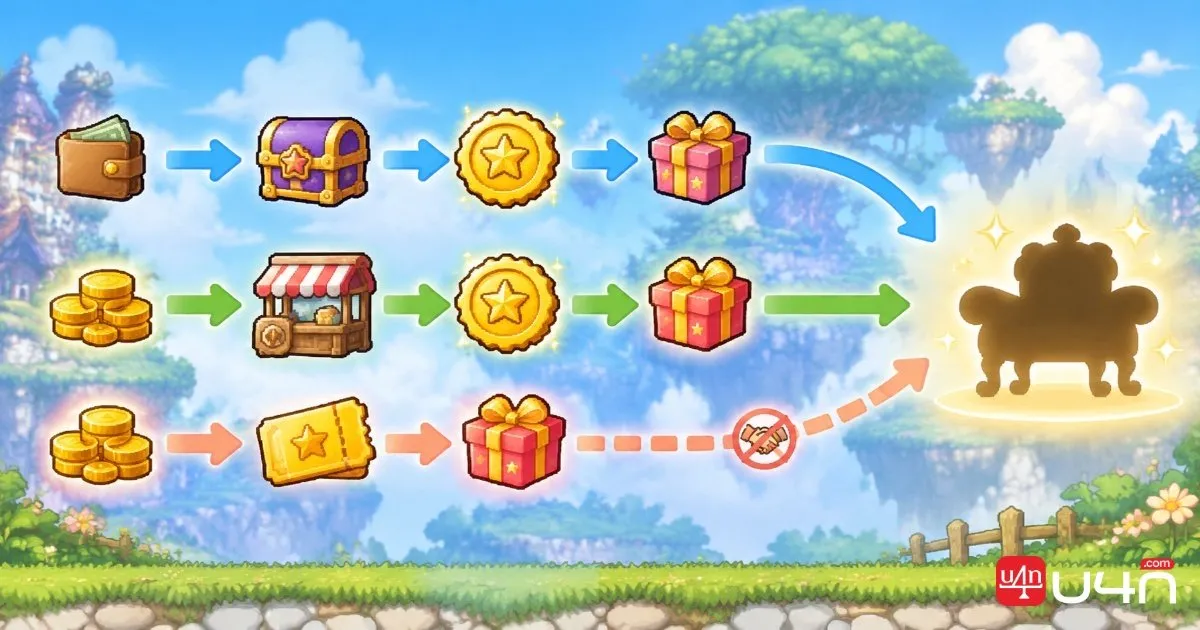
Unwanted crate items are being exchanged for stamps, which can then purchase special rewards. It also moves between a turkey pet and a chair when discussing a purchase approaching $1,000. Those examples need separate labels.
Thanksgiving offers distinguish a 200-stamp turkey pet from a 300-stamp Roasted Relaxer chair, while unwanted eligible crate pieces provide one stamp each. Combined with the regular eleven-crate bundle price, those requirements explain the large spending estimates circulating the rewards. The pet and chair are separate purchases with different thresholds.
Even then, "the chair costs $1,000" is incomplete.
It describes an approximate route through personally funded crate openings, under particular assumptions. It does not establish the amount every owner spent, the cheapest available route, or the current market price of a tradable reward coupon.
| Acquisition route | What the player spends | What the headline estimate misses |
|---|---|---|
| Opening crates personally | NX and unwanted results | Bundle sizes and alternative stamp sources |
| Buying eligible items to exchange | In-game currency | Market prices and item eligibility |
| Buying a reward coupon, where permitted | In-game currency | Availability and trading restrictions |
A useful price explanation should identify the route before displaying a total.
There is also an opportunity cost. Turning a tradable outfit into a stamp means giving up the option to sell or wear it. Players who obtain stamps through the market still spend something valuable, even if they never purchase NX.
We would therefore present these rewards as expensive collection targets with multiple acquisition paths. That is more informative than treating an estimated cash equivalent as a mandatory checkout price.
Cosmetic Trading Creates an Indirect Advantage
The weakest claim is that selling cosmetics leaves power entirely inside normal gameplay.
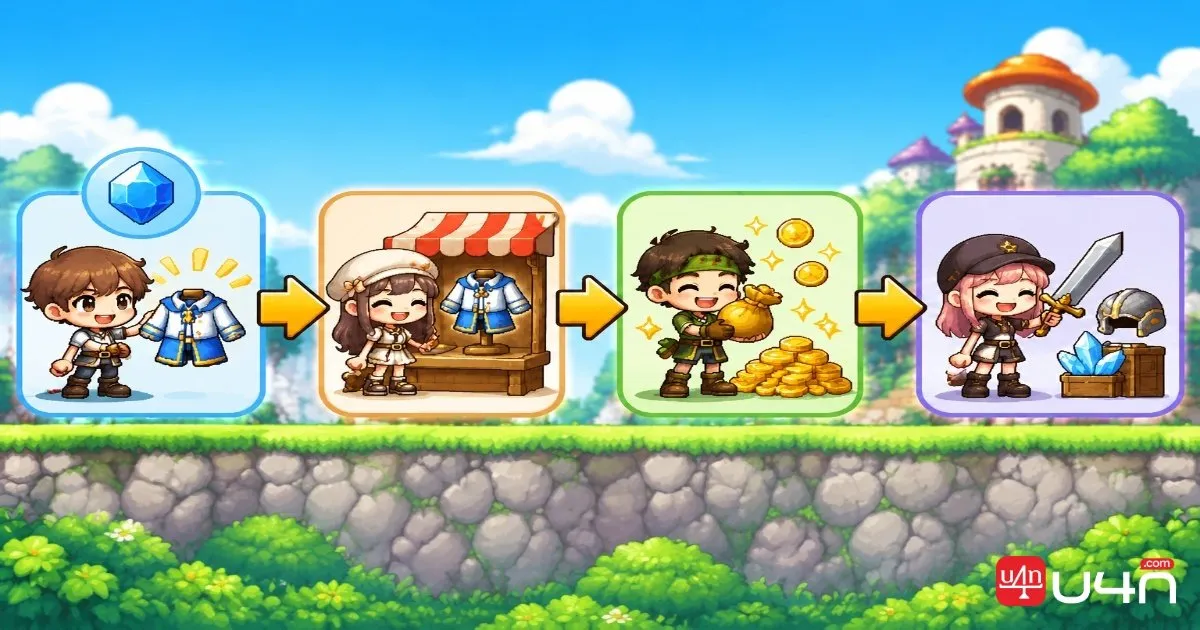
Its own description provides a reason to question that conclusion: players can sell cash-shop cosmetics for mesos. If those mesos can then purchase equipment or useful materials, spending has a route into progression.
The transaction starts with appearance, but its benefit need not end there.
Consider a hypothetical pair of players pursuing the same weapon. One earns the necessary currency through drops and ordinary trading. The other sells a desirable cash-shop item and uses the proceeds toward that weapon. The item being sold grants no combat stats, yet the transaction may shorten the buyer's equipment grind.
How much that matters depends on actual market conditions. A desirable cosmetic might sell quickly, while an unwanted one could sit in a shop. Supply, demand, trading restrictions, and equipment availability all affect the outcome. We would avoid treating every crate purchase as a reliable conversion into stronger gear.
Still, indirect advantages deserve a place in the assessment.
Our team would separate three questions:
- Does the shop directly improve an item's stats or upgrade potential?
- Can purchased goods be sold to finance gameplay purchases?
- Does spending reduce the time or risk involved in progression?
A system can avoid the first and still affect the other two.
Tradability also offers a benefit: players may obtain paid cosmetics using currency earned in the game. That can make fashion more accessible to people who do not spend cash.
Both effects can exist together. A functioning player market allows access to paid goods while also giving spenders another source of purchasing power. We should judge the scale of that influence rather than pretending it disappears because the original purchase was cosmetic.
Convenience Can Still Change the Grind
A paid convenience item deserves attention when it changes the cost of ordinary play.
Take death protection. Under the system, a Safety Charm prevents a setback that another player would have to recover through further grinding. It does not increase damage, but preserving earned progress has practical value.
We understand the appeal. Losing part of a short evening's progress can feel miserable. Paying to avoid that loss can be useful without making the purchase irrelevant to fairness.
Pets raise a similar question. Pickup assistance may reduce repetitive actions and make a session more comfortable. The assessment should examine whether normal looting remains reasonable without it and whether continued access creates a recurring expense players feel obliged to maintain.

Reset scrolls involve a different tradeoff.
We like having a way to recover from an allocation mistake or try another build. A character should not become a source of regret because of an early decision. Yet a paid reset also raises questions about the quality of the information available before that decision.
If a balance update substantially changes a skill, our preferred approach would be to offer affected players a suitable adjustment opportunity. Charging them to respond to a developer-driven change is harder to defend than charging for an elective rebuild.
The absence of HP washing, as in the supplied commentary, would remove one particular source of planning and spending pressure. That is a meaningful improvement. It cannot establish equal conditions across every other shop mechanic.
Our standard is practical: how enjoyable and manageable is ordinary progression before a player buys relief?
Our Verdict on Nexon's Commercial Direction
Our team sees a meaningful difference between the two models. Repeated paid attempts at stronger equipment create a more direct relationship between spending and combat performance than a shop focused on outfits, collection rewards, and convenience.
That gives Classic World a stronger position in this comparison. It does not make every current design choice easy to defend.
Expensive prestige rewards can coexist with a fair game when their costs and rules are clear. Random acquisition makes that clarity harder to maintain. Tradability can help players access cosmetics, while also allowing spending to influence the equipment economy. Death protection can feel reasonable to purchase, while still changing how much progress a mistake costs.
We would judge future updates by those effects rather than by the label attached to the product. A new Gachapon system, for example, would need scrutiny of its actual rewards, probabilities, and trading rules. Selling equipment or enhancement materials would raise different concerns from selling a purely visual collection.
For readers searching phrases such as buy MapleStory Classic World Items, our advice is to identify the exact item and acquisition route before comparing costs. A cosmetic, an equipment purchase, and a stamp reward solve different problems. Treating them as interchangeable makes both the spending decision and the fairness debate less useful.
We support funding the game through desirable optional purchases. We are less comfortable when unclear presentation, random outcomes, or avoidable inconvenience make players feel that another payment is the sensible way to protect their time. An impressive chair can justify its appeal through its appearance and rarity. A high acquisition cost alone does not prove good design.
Our position would change if paid purchases increasingly determined equipment access, advancement speed, or the ability to avoid routine setbacks. Nexon earns trust by keeping those boundaries clear in the shop, in the market, and in the next update.