


A falling NX market can make a good purchase look terrible for a few days. It can also make an unwanted item look like a bargain. Our team approaches these situations by separating the broader market move from the reasons players would actually want to own a particular cosmetic.
For players managing MapleStory Classic World Mesos, the useful question is how much buying power an NX purchase might preserve or gain before it sells. A higher listing price means little if nobody will pay it, and a promising cosmetic can still be a poor purchase at the wrong entry price.
Our approach centers on three decisions: choosing an item with credible demand, buying under conditions that leave room for profit, and setting an exit before the market tests our patience. We would rather make a defensible trade than rely on the claim that every NX item eventually goes up.
Why NX Prices Can Fall Together
The original market discussion describes NX prices moving with a shared "water level." That is a useful way to frame a broad decline: several unrelated cosmetics can become cheaper at the same time without each item suddenly losing its appeal.
Our team treats that pattern as a starting point for investigation. We would compare multiple items, check whether sellers are accepting lower offers, and look for a shared reason buyers might be holding onto their Mesos.
Separate market weakness from item weakness
Consider two hypothetical situations.
In the first, several established cosmetics fall while their relative popularity appears unchanged. That suggests a broader shift in purchasing behavior deserves attention.
In the second, one pair of glasses falls sharply while comparable accessories remain stable. We would investigate that item more closely, particularly if a similar alternative has just been announced.
The distinction changes the buying decision. A broad decline may create an entry opportunity for an item we already wanted. An isolated decline may reveal a problem with the item itself.
We also avoid calling every retreat "deflation." A few falling listings cannot establish what is happening across the economy. For a practical trade, it is enough to identify what changed, whether completed sales support the apparent price, and why we expect buyers to return.

Read the Box Cycle Before Buying
The source's strongest trading idea concerns the difference between items still entering circulation and items whose current source has ended. We would build the buying plan around that distinction while checking the actual availability rules for each item.
An active box presents a possible buying window because sellers may compete to move newly obtained cosmetics. However, continued availability also means we need a reason to buy today rather than wait for another round of listings.
An older cosmetic presents a different question: does its existing demand justify the price now that the easiest supply window has passed?
| Item situation | What we would investigate | What would weaken the trade |
|---|---|---|
| Available from the current box | New listings, accepted offers, remaining availability | Supply continues to exceed buyer interest |
| Recently removed from a box | Whether unsold stock is clearing | Sellers repeatedly relist without sales |
| Older, recognizable cosmetic | Repeat demand and realistic sale prices | Reputation is stronger than current demand |
| Similar to an announced item | Whether buyers prefer the alternative | The new design attracts the same audience |
We would verify the rotation notice before treating an item as unavailable. "No longer in this box" and "cannot return through another source" are different claims.
The same caution applies to equipping. The source assumes that wearing NX steadily removes items from the market. Our trading plan would only count that effect after confirming the relevant binding and trading rules. If an equipped item remains transferable, wearing it does not establish permanent scarcity.
Why current-box items can still be attractive
Our interest in current-box items would come from the entry price and a plausible change in future supply.
We might buy while sellers are competing aggressively, provided the cosmetic has visible buyer interest, and the purchase still makes sense under a modest recovery. We would not buy simply because its box will eventually rotate.
That keeps the logic consistent: we accept ongoing supply only when the price compensates us for it.
Choose Items People Will Want to Buy
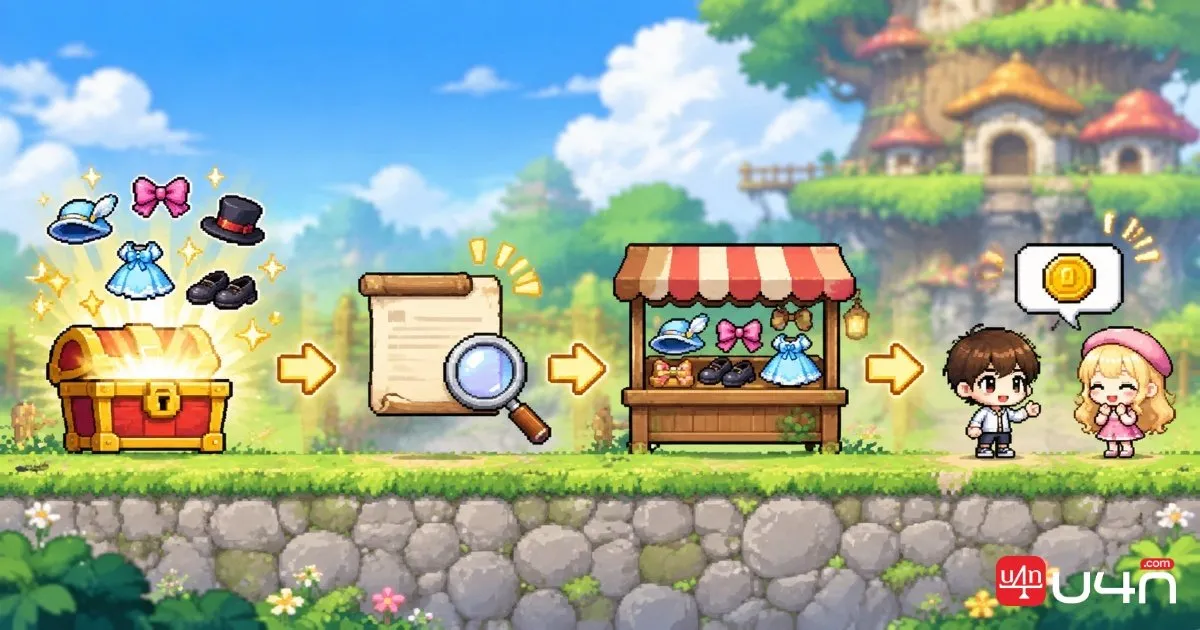
Scarcity needs an audience. Our team would rather investigate a recognizable cosmetic with repeat buyer interest than assume an obscure item will appreciate because few copies are listed.
The source mentions White Label, Angel Halo, Cat Soul, Devil Horns, and Eagle Skull as examples the speaker favors. We would use those names as a research shortlist, rather than carry their reputation forward as a current recommendation.
Each candidate still needs a fresh price check.
Look for appeal that survives the release window
Our preferred questions are straightforward. Does the item work with several outfits? Is its appearance distinctive enough for buyers to search for it? Are players asking for it independently of the latest promotion?
We would also compare its alternatives. A cosmetic may look excellent by itself while offering little reason to choose it over a cheaper substitute.
The blue and black aviator example from the source illustrates this concern. Before buying the blue version, we would ask whether its buyers specifically want blue or simply want that general glasses style. A new color could serve a different audience, or it could compete directly with the older item.
We would wait for evidence rather than assume either outcome.

Make liquidity part of the selection
Our team gives saleability as much attention as potential appreciation. We want to know how confidently we could turn the item back into Mesos at a sensible price.
A single expensive listing would not persuade us. We would look for repeated transactions where records are available, credible offers, and evidence that sellers can move inventory without cutting deeply.
If we cannot establish a realistic exit price, we would reduce the position or pass. That is especially relevant when the entire profit argument rests on one unusually high asking price.
Personal taste still helps us shortlist cosmetics. We simply keep "we would wear this" separate from "another player is likely to buy this from us."
Set a Buy Price With Room for Error
A useful entry price should leave room for ordinary disappointment. Our team would price a purchase around a conservative exit, then account for any applicable trading costs and the possibility of accepting a lower offer.
All prices in the example below are hypothetical Mesos amounts. They illustrate the calculation and are not current market quotes.
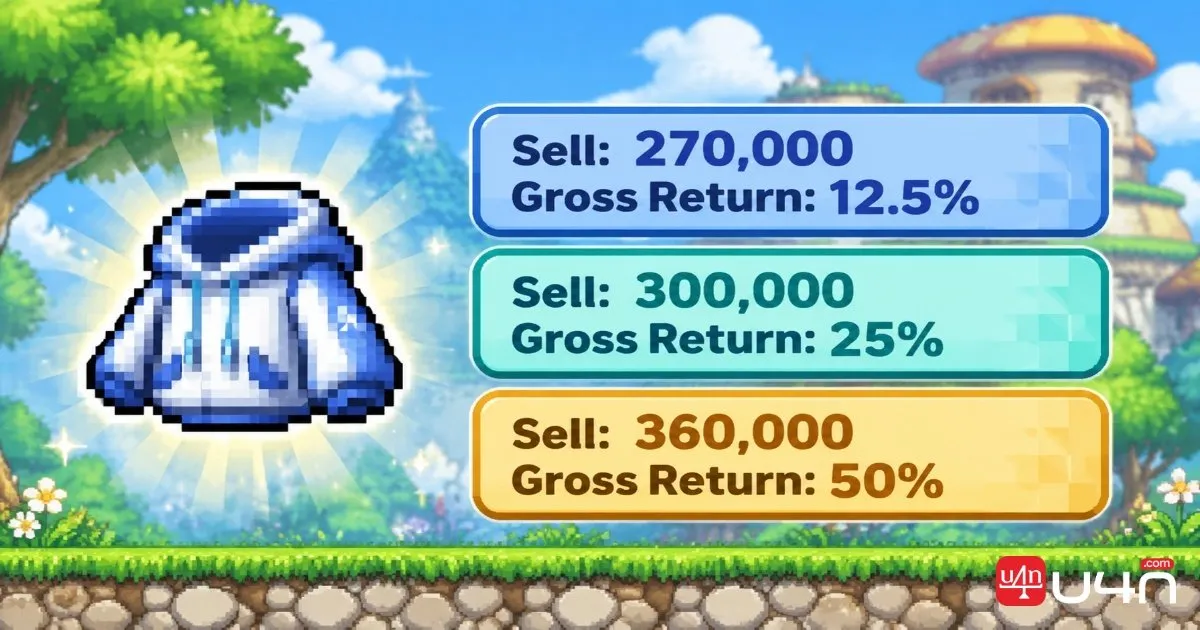
Suppose we are considering a cosmetic at 240,000 Mesos and believe 300,000 is a realistic resale target. The apparent gain is 60,000 Mesos, or 25%, before costs.
That sounds attractive until we test the estimate. What if the realistic sale is 270,000? What if we need to lower the price again to free up our funds?
| Hypothetical sale price | Purchase price | Gross gain | Gross return |
|---|---|---|---|
| 270,000 Mesos | 240,000 Mesos | 30,000 Mesos | 12.5% |
| 300,000 Mesos | 240,000 Mesos | 60,000 Mesos | 25% |
| 360,000 Mesos | 240,000 Mesos | 120,000 Mesos | 50% |
We would assess the trade using the lower scenarios. A purchase that requires the most optimistic price to work leaves us little flexibility.
Buy in stages when uncertainty is high
We do not need to commit the full budget at the first acceptable listing. One purchase can give us exposure while leaving funds available if sellers continue lowering prices.
Adding later should still require a fresh check. We would ask whether buyer interest remains intact, whether supply is behaving as expected, and whether the revised position is becoming too large.
A cheaper second copy does not automatically improve the trade. It can also increase our exposure to a mistaken assumption.
We would set a maximum position before buying and preserve Mesos for ordinary play. A cosmetic trade should not force us to abandon upgrades or sell another item hurriedly.
Decide When to Sell Before the Price Rises
The source spends far more time explaining entries than exits. Our team would correct that imbalance by writing a short sale plan before making the purchase.
That plan needs three things: a realistic profit target, the event or condition we intend to review, and a clear reason to reconsider the position.
Sell when the available profit is worthwhile
If our purchase reaches a price that offers an attractive return, we would consider selling even while further upside remains possible. Capturing an acceptable gain does not require identifying the exact peak.
Where we own several copies, we may sell part of the position and reassess the rest. That can return some purchasing power while preserving exposure to continued demand.
For a single expensive item, partial selling is unavailable. We would therefore put more thought into the asking price and how long we are prepared to wait.
Review the trade when its premise changes
Suppose we bought because we expected the current supply window to close. If availability continues or another source appears, we would rebuild the estimate before deciding to hold.
We would do the same if a close substitute attracted buyers away from our item, or if accepted offers consistently came in below our expected sale range.
A lower price by itself does not settle the decision. The question is whether the original reason to own the item still holds.
Use review dates instead of price promises
The source suggests a possible rise around a coming Wednesday and makes several ambitious return predictions. We would replace those promises with scheduled reviews.
At each review, we would check availability, buyer activity, competing listings, and the gap between our expected exit and offers we could actually accept.
If nothing supports the original target, we would revise it. Waiting longer needs a reason beyond wanting the purchase price back.

Avoid the NX Trading Mistakes That Tie Up Mesos
Our team would reject the idea that any sufficiently cheap NX item must eventually become profitable. It encourages buying without identifying who will provide the exit.
We would also avoid treating an old high as a guaranteed destination. Before using that price as a target, we would investigate the conditions behind it and whether comparable sales still support it.
Another mistake is concentrating the entire budget in one fashionable item. Even a well-reasoned purchase can take longer to sell than expected. Keeping part of the budget liquid gives us room to respond without accepting a rushed offer.
Opening boxes and buying specific cosmetics also need separate plans. For a resale strategy, we prefer evaluating a known item at a known acquisition cost. We would not use a lucky box result as evidence that the same approach offers a repeatable trading return.
Finally, we would keep personal use out of the profit calculation. Choosing something we enjoy wearing can make an uncertain purchase easier to live with. It does not turn an unsold item into a successful trade.
If equipping affects transferability, we would decide between wearing and reselling before taking that step.
Build a Watchlist You Can Act On
Our NX watchlist would stay short enough to update consistently. For each item, we would record the current source, recent observed sale prices where available, competing offers, target entry, intended exit, and the next review date.
We would also note the reason for the trade in one sentence. "Buy during heavy current-box selling, then review after availability changes" is useful because we can test it later. "It looks cheap" gives us very little to review.
For readers comparing ways to buy MapleStory Classic World Items, we would apply the same discipline: confirm the exact cosmetic, trading eligibility, and full Mesos cost before committing. The purchase method should fit the budget and the intended use.
Our next purchase would need to pass four checks: a price supported by observation, a credible reason for continued demand, enough room for a conservative exit, and a position size we can hold patiently. If one of those is missing, we would keep the Mesos available and continue watching.