


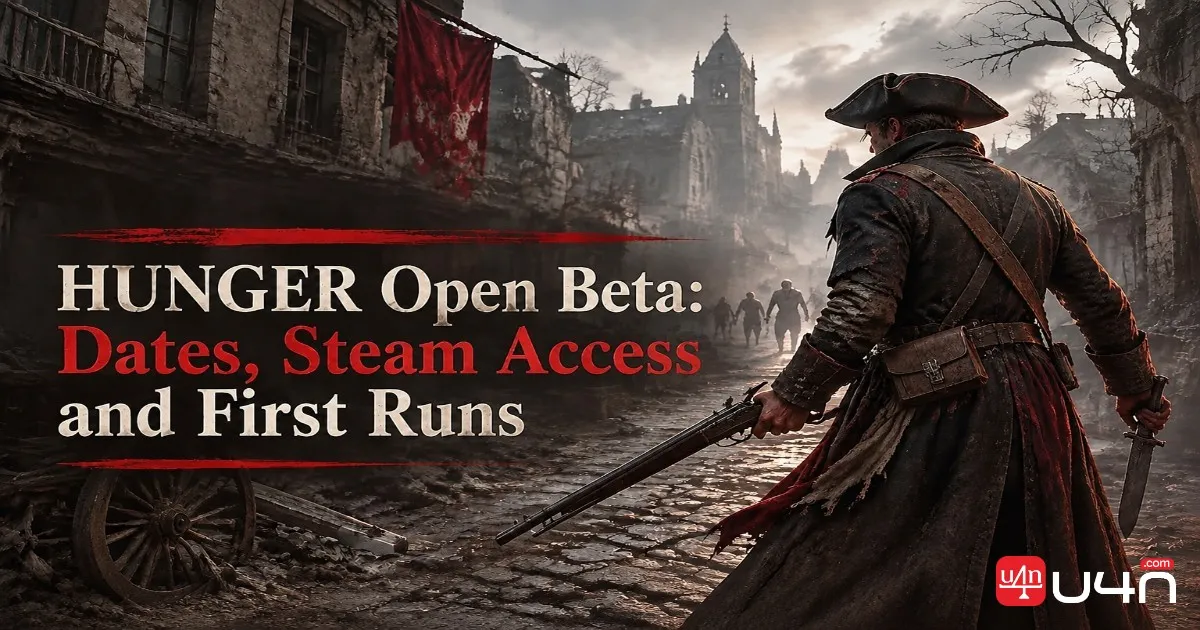
A short beta weekend goes quickly if we spend the opening session sorting out access, adjusting controls, and wandering without a plan. Our team would approach HUNGER's Open Beta with a narrower goal: understand how an expedition works, complete an extraction, and decide whether the combat and progression make another run appealing.
For readers already looking ahead to Hunger Gold and their launch preparations, we recommend putting the economy behind those immediate questions. A useful test weekend should leave us with better decisions about equipment, routes, and recovery. We can build that knowledge without turning a temporary character into a full-time project.
HUNGER Open Beta Dates and Launch Schedule
The schedule gives us two separate events to prepare for: a free testing window and the subsequent Early Access release. The developer's announcement specifies the Early Access launch hour, but it does not provide equivalent opening and closing hours for the beta.
| Event or requirement | Announced details |
|---|---|
| Open Beta dates | November 27 to November 29, 2026 |
| Test platform | PC through Steam |
| Participation cost | Free |
| Access route | Request access through the HUNGER Steam store page |
| Early Access launch | December 3, 2026, at 10:00 AM GMT |
| US launch times | December 3 at 5:00 AM EST or 2:00 AM PST |
| Exact beta server hours | Not specified in the dates announcement |

We would leave some flexibility around the first beta session. A calendar date alone does not establish when a download becomes available or when a server accepts connections. Before arranging a group session, check the latest announcement for an explicit server opening time.
The Early Access hour should also stay separate from the beta schedule. Copying December's launch time into a November beta countdown would give readers a precise answer without supporting evidence.
For planning purposes, our preference is simple: handle account preparation beforehand, then confirm server availability before asking everyone to log in. That saves the group from spending its first scheduled evening troubleshooting a test that has not opened.
How to Request Access Through Steam
Start with the HUNGER store listing identified in the schedule above. We recommend handling the request from the Steam account you intend to use during the test, particularly if you switch between several accounts on the same PC.
The application sequence is straightforward:
- Sign in to Steam.
- Search for HUNGER and check the developer name.
- Open the game's store page.
- Locate the playtest participation area.
- Select Request Access when the option is available.
- Follow Steam's instructions once access and installation become available.

After submitting the request, treat access, installation, and server availability as separate checks. An application records your interest. An available client lets you prepare the software. A running server lets you play. Checking those states individually makes an apparent access problem easier to understand.
We would also check the Steam Library before repeating the process. If a test entry is already present, read its current status and the latest instructions. Repeatedly pressing an application button is unlikely to explain why a client cannot connect.
What to Check Before the First Session
Our preparation list would stay short: available storage, the current store requirements, the correct Steam account, and working audio. Leave time for the installation when Steam makes it available, rather than assuming the full process will fit into the first few minutes of a group session.
If something fails, record the exact stage. “The game does not work” could describe a missing installation option, a startup crash, or a connection error. A screenshot of the message and a short description of the steps taken provide a much clearer starting point for troubleshooting.
We would avoid reinstalling immediately. Read the current test instructions first, then make a targeted change that addresses the symptom.
What the Open Beta Includes
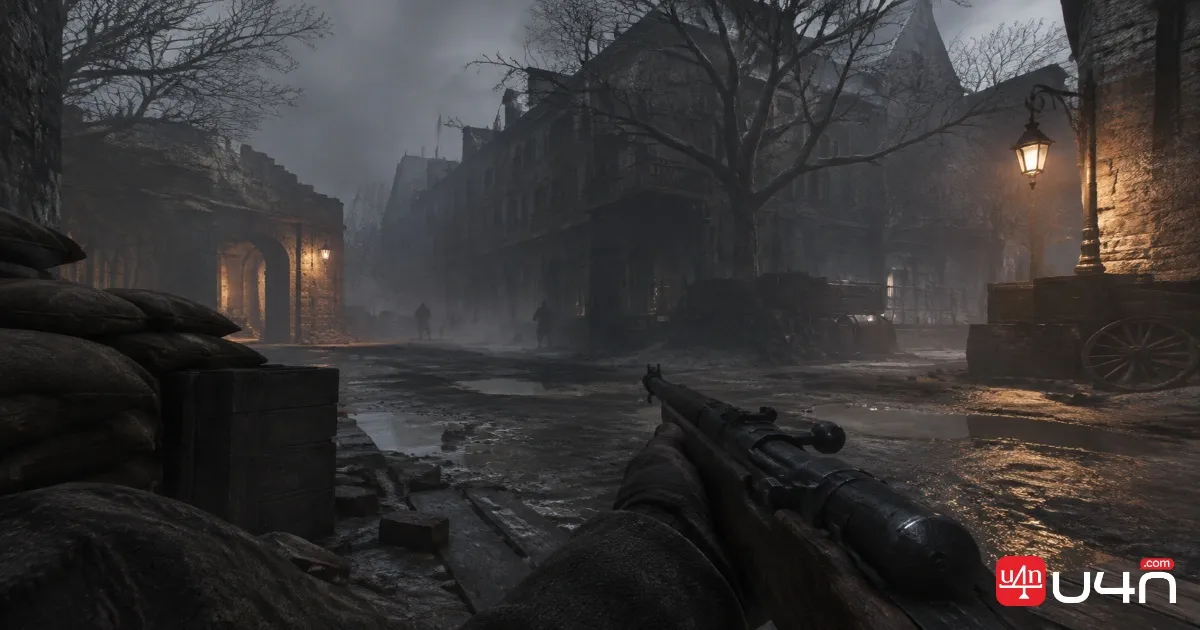
GOOD FUN CORP lists the Chateau social hub, three gameplay maps and dungeons, six playable characters, five Mastery trees with more than 100 Masteries, and more than 40 weapons. Characters have unlockable Passive, Tactical, and Ultimate abilities, while expeditions combine shooting and melee combat with quests, gathering, professions, and crafting. The announcement also states that Open Beta progress will not transfer to Early Access.
That is enough material to justify a selective approach. Our team would use the available systems to answer a few practical questions instead of trying to sample every option.
| System to examine | Question we would try to answer |
|---|---|
| Chateau and preparation | Can we understand what to do before departing? |
| Character abilities | Do we recognize useful situations for each available ability? |
| Ranged and melee combat | Can we judge distance and switch weapons deliberately? |
| Quests and gathering | Can we connect an expedition objective to a useful return trip? |
| Masteries and professions | Can we explain the benefit of our next progression decision? |
The hub deserves attention because preparation can become part of the session's rhythm. We would identify the services needed for the next expedition and avoid turning the opening visit into an attempt to memorize every menu.
For character selection, we would choose an understandable starting option and keep it long enough to establish a baseline. Switching after every defeat makes it difficult to separate unfamiliar controls from a character decision.
The same applies to weapons. An impressive selection matters less during the opening hour than knowing what the weapon in hand can accomplish. We would compare a small number of options under reasonably similar conditions before drawing conclusions about balance.
How We Would Approach the First Expeditions
Our opening objective would be a complete, understandable trip: prepare, enter, pursue a modest task, and attempt to leave. That sequence gives later experiments a reference point. Without it, every additional system competes for attention before we understand the basic loop.
Keep the First Objective Small
Choose one task that can be described in a sentence. It could be learning a section of the environment or working toward an available introductory objective. We would resist combining exploration, aggressive combat, and ambitious resource collection in the same first attempt.
A small objective makes the result easier to evaluate. If we fail, we can ask what prevented completion. If we succeed, we can repeat the route while changing one part of the plan.
We would also decide when to turn back before becoming distracted. “One more building” is a tempting justification, but it rarely explains what the extra risk is supposed to achieve. An expedition should have a purpose that survives contact with an interesting side path.
Test Combat Deliberately
Our first combat questions would concern control and commitment. Can we maintain a useful distance? Do we recognize when an attack leaves us exposed? Can we return to cover after attempting a shot?
We would test weapon handling in manageable encounters before seeking complicated fights. The purpose is to learn the relationship between an input, its animation, and the resulting opening. Repeatedly rushing into a crowded situation produces plenty of action but poor comparisons.
For a group, we would agree on a few simple calls: contact, retreat, regroup, and prepare to leave. Clear decisions are easier to follow than several overlapping descriptions of the same threat.
Learn the Return Trip Early
We would attempt an early extraction even with an ordinary haul. Completing the return process provides information that another few minutes of unfocused searching cannot.
During that attempt, pay attention to the approach, the instructions presented by the game, and the time spent exposed or uncertain. Record what actually happened. Avoid filling gaps with extraction rules remembered from another title.
Once the group understands a return route, we would increase the ambition of the next expedition gradually. That creates a useful comparison between a conservative trip and a more demanding one.
Progress, Performance and Useful Beta Feedback
The progress rule above should shape how we spend the weekend. We would prioritize knowledge that remains useful after the test: reading an encounter, finding a route, understanding a menu, and preparing another attempt efficiently.
That does not make progression irrelevant. We would still follow enough of it to judge whether the next upgrade is understandable and appealing. The question is whether the system gives us a reason to continue, rather than whether we can finish every available branch before the servers close.
Our team would keep a small session log:
| Observation | Detail worth recording |
|---|---|
| An unsuccessful encounter | Position, equipment, intended action, and what interrupted it |
| A confusing objective | The instruction shown and the point where its meaning became unclear |
| A performance problem | Location, current activity, settings, and whether it happened again |
| A progression decision | Expected benefit and the difference we could actually identify |
| A successful extraction | Route taken, preparation used, and decisions worth repeating |

For performance testing, change one setting at a time. We would compare similar scenes and note the symptom we are trying to improve. A frame-rate number without context tells us little about a sudden pause, delayed input, or difficulty reading movement.
We would also keep visual quality and readability as separate observations. A setting can make a scene look cleaner while making a distant shape harder to interpret. During a limited test, a stable and readable presentation would be our preferred baseline.
Useful feedback describes a reproducible problem. “The interface was confusing” becomes more actionable when we identify the screen, the action we intended, and the response we expected. For a crash or connection failure, include the exact message when possible.
Before making a purchase decision, we would ask whether the uncertainty comes from the game's underlying loop or from a specific issue that needs further information. That distinction helps us judge the experience without treating every frustrating moment as the same problem.
Our Plan for a Productive Beta Weekend
Before we search for ways to buy Hunger Gold, we would want reliable answers about our own preparation: which equipment we can use confidently, how we plan a return route, and what makes a replacement loadout practical. Those answers give later economy decisions a purpose. They also keep a short testing window focused on learning the game.
Our suggested finish line is modest: complete an extraction, understand one character well enough to make deliberate choices, and identify one progression path worth revisiting. Save a few notes about controls, routes, and unresolved problems. That leaves us with a useful plan for the next release stage and a clearer reason to return.
HUNGER Open Beta FAQ
Where Should We Check the Exact Beta Opening Time?
Check the latest developer announcement linked from Steam before the planned session. Use an explicitly stated beta opening time when one is published. We would avoid building a group schedule around an assumed midnight start or borrowing the Early Access launch hour.
Do We Need to Buy Early Access to Apply?
Use the free application route described in the schedule and participation sections above. Our recommendation is to finish the access process through Steam before making any separate purchase decision. Keep test participation and the decision to own the Early Access release as two distinct steps.
Will Our Beta Character Transfer to Early Access?
The developer's progress statement is included in the beta content section above: the test does not provide a transferable head start. We would spend accordingly, testing understandable builds and learning preparation routines rather than organizing the weekend around preserving a character.
What Should We Do If Access Is Requested but We Cannot Play?
Identify the missing step: access confirmation, client installation, launch, or connection. Then compare that specific problem with the current test instructions. We would capture any error message before changing files or reinstalling, so the original symptom remains available for troubleshooting.
Should We Try Every Character During the Test?
We would establish a baseline with one character, then compare another if time allows. A focused comparison tells us more than several rushed introductions. Look for differences in the decisions we make during an expedition, including positioning, preparation, and how we respond when a plan breaks down.
What Is the Most Useful Goal for a Short Session?
Attempt one complete expedition with a clear objective and a planned return. Afterward, write down one decision that worked and one that needs another test. That gives the next session a specific purpose, even if the first attempt ends before extraction.