



The Diablo 4 Season 16 PTR gives us a chance to explore several promising builds before the new season takes shape. Recent patch notes point toward meaningful changes across multiple classes, with revised skills, stronger set bonuses, and new ways to combine equipment. For our team, the biggest question is not simply which build receives the largest damage increase. We want to know which changes create genuinely different ways to play. Players comparing their next character setup can also review available Diablo 4 Items as they consider the gear requirements behind each potential build. Blizzard's official Season 16 PTR overview outlines the upcoming test period and the major systems available for evaluation.
The early outlook is particularly interesting for Warlocks, Barbarians, Rogues, and Paladins. Some builds already have encouraging results from preliminary testing, while others depend on mechanics that still need to be verified on the PTR. Necromancer, Druid, Spiritborn, and Sorcerer also have ideas worth exploring, although their potential is less certain. We should treat every setup as a starting point rather than a finished endgame recommendation. The goal is to identify promising interactions, test their limits, and determine which changes actually improve performance.
The strongest-looking builds are not necessarily the ones that will perform best after extensive testing. We need to verify how skills, set bonuses, equipment, and resource management interact under different combat conditions before treating any setup as a reliable endgame recommendation.
Season 16: Set Bonuses Could Change Build Priorities
One of the most interesting directions in the Season 16 preview is the potential to combine multiple set bonuses. This could change how players evaluate established builds, especially when a new combination strengthens a skill without requiring a complete redesign of its rotation.
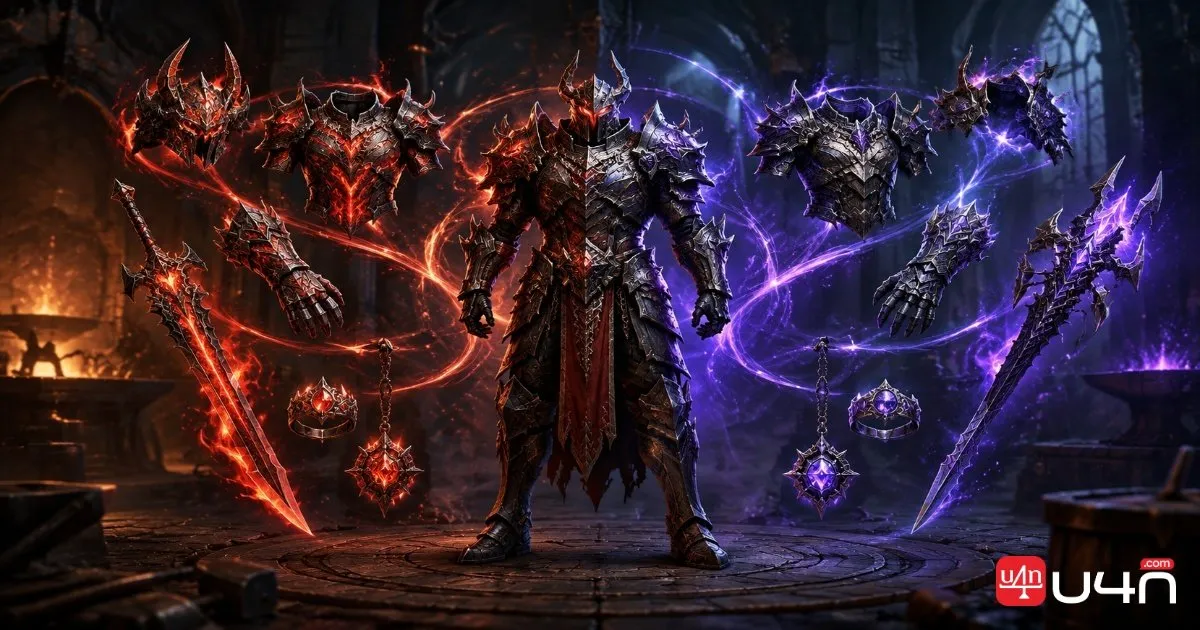
For example, a Barbarian build might gain more from combining complementary sets than from following a traditional single-set setup. A Rogue could potentially use one set to support a core attack while another improves mobility or damage. These combinations are worth investigating because a strong build depends on how its bonuses work together, not just on the strength of one individual item.
War Plans, new Horadric items, and additional boss content also give us more reasons to test complete character setups rather than isolated skills. However, the exact value of each combination depends on the final rules, available equipment, and interactions confirmed during testing.
Our team would prioritize three questions:
- Does the new set combination improve damage enough to justify giving up another established bonus?
- Does it change the rotation or simply increase existing damage?
- Can the build maintain its performance against both dense enemy groups and tougher bosses?
These questions matter more than an early damage number. A build that looks impressive in a short demonstration may struggle when cooldowns, positioning, or resource costs become relevant.
Warlock and Barbarian: Strong Early Candidates
Warlock: Shadow, Abyss, and Summoning Builds
Warlock looks like one of the most interesting classes to investigate in Season 16. Although some existing fire setups are facing reductions, other changes could open the door to stronger Shadow and Abyss builds.
One promising direction involves Terror Claw and Shadow Form. The early concept revolves around triggering Terror Claw more automatically while building stacks in Shadow Form. The build performed well even without the new seasonal mechanics, suggesting that the build could benefit further from additional set bonuses and seasonal effects.

Summoning builds are another area worth watching. Abyss-focused summons could provide substantial damage while letting players concentrate on positioning and skill timing. Shadow Chain is also worth testing because improvements to its associated effects may create stronger damage interactions.
However, we should be careful with mechanics that echo previously dealt damage. These effects can become exceptionally powerful when combined with other multipliers, but their actual value depends on how the game calculates damage and applies each bonus.
Barbarian: Frenzy, Double Swing, and Whirlwind
Barbarian offers three distinct directions for early testing.
| Build | Main attraction | What we need to verify |
|---|---|---|
| Frenzy | Improved skill interactions and a potentially distinctive combat rhythm | Damage consistency, resource management, and effective attack range |
| Double Swing | Higher damage potential and the removal of an attack-speed penalty | Clear speed, sustained damage, and performance against bosses |
| Whirlwind | Familiar area damage with potential double-set combinations | Whether new bonuses compensate for other reductions |
Double Swing deserves particular attention. Our testing showed a fast-paced playstyle, with a clear time approaching one minute under the demonstrated conditions. That is encouraging, but we should not treat a single run as proof of endgame dominance. Blizzard's Season 16 PTR information provides the official context for testing upcoming changes before the season's release.
The more important change is the combination of increased damage and improved attack-speed behavior. Faster attacks can make combat feel more responsive, but the final result still depends on resource generation, enemy density, and how consistently the build can maintain its rotation.
Whirlwind remains worth testing despite the War Cry reduction mentioned in the preview. If the new set combinations deliver enough additional value, the build could remain a reliable farming option. Our team would compare its consistency against Double Swing rather than assuming the newer setup automatically wins.
Rogue and Paladin: Mobility Meets Damage Potential
Rogue: Shadow Imbuement and Blade Dance
Rogue has several promising options, especially if Shadow Imbuement performs as expected after its mechanical changes.
The key question is how the revised shadow damage application affects builds centered on rapid attacks. If the new behavior favors direct damage over repeatedly refreshing damage over time, Blade Dance could become an attractive option for players who prefer an aggressive, mobile playstyle.

The potential combination of five-piece set bonuses is another reason to pay attention. The original concept pairs a set supporting cutthroat skills with another that may improve mobility skills. Blade Dance could benefit from both offensive pressure and frequent movement, creating a setup that stays active rather than relying on a stationary damage cycle.
Rain of Arrows also remains on the testing list despite a reported adjustment. Its viability will depend on how much damage it retains and whether additional set bonuses can compensate for the reduction.
For Rogue, we would focus on three areas: how reliably Shadow Imbuement applies its damage, whether mobility skills fit naturally into the rotation, and how the build performs against bosses compared with large enemy groups.
Paladin: Zeal and Zenith
Paladin's Zeal builds could become more appealing if the planned changes address their traditional weaknesses in both survivability and damage.
Zenith is particularly interesting because the preview describes a change involving a multiplicative critical damage bonus. Combined with improved cooldown behavior and movement skills, this could support a hybrid playstyle built around repeated attacks and rapid engagement.
The practical benefit is not limited to damage. A build that can reach enemies quickly, deliver its main attack, and return to its next rotation with minimal downtime can feel substantially smoother during ordinary farming.
However, cooldown reduction alone does not guarantee an effective build. We still need to establish whether the rotation remains sustainable under real combat conditions and whether the character can survive the content it is expected to clear.
Our team would test Zeal with the proposed set combinations first, then compare its performance with alternative Paladin setups if the initial results justify further investment.
Necromancer, Druid, Spiritborn, and Sorcerer
Not every class has an equally clear path to a strong new build. Some of the most interesting ideas are also the least certain, making them better candidates for targeted experiments than immediate endgame recommendations.
Necromancer: Bone Spear
Bone Spear remains worth revisiting, even if the latest adjustments leave it behind stronger alternatives. Its value in PTR testing is partly about discovering whether the revised numbers can support a viable build and identifying which limitations still need attention.

We would focus on damage consistency, resource efficiency, and whether its performance justifies choosing it over more established Necromancer options.
Druid: Constricting Tendrils
The redesigned Constricting Tendrils effect could be significant, but its damage calculation needs clarification. The preview describes a Lucky Hit interaction involving Nature Magic and Companion skills, with a chance to immobilize enemies and deal additional poison damage over time.
The central uncertainty is how that poison damage is calculated. If the effect scales with damage already dealt, its potential could be very different from a version based primarily on weapon damage.
Until testing confirms the calculation, calling this a top-tier build would be premature. We would first isolate the effect, measure its damage, and check how it interacts with other bonuses.
Spiritborn: Razor Wings
Razor Wings may finally have an opportunity to become more competitive. The proposed interaction between charge-consuming Focus skills and Ultimate casts could allow players to restore charges and maintain a more active skill cycle.
The concept is promising, but its effectiveness will depend on charge generation, cooldown timing, and whether the resulting damage justifies the investment.
Sorcerer: Incinerate
Incinerate is one of the more interesting experimental options because its redesigned channeling behavior could create a very different combat experience.
The early concept centers on reaching maximum channel intensity and using a unique item to increase damage against surrounding enemies. If the effect delivers consistent area damage, Incinerate could become a strong option for players who enjoy sustained fire-based attacks.
Several details remain unresolved, including its effective radius, damage frequency, and the time needed to reach maximum intensity. These factors will determine whether the build feels powerful in practice or loses too much time while channeling.
For this reason, we would evaluate Incinerate based on both damage output and practical usability, rather than assuming that a visually impressive skill will automatically become an efficient farming build.
Summary
Season 16 offers several promising directions for PTR testing, but the strongest-looking builds are not necessarily the ones that will perform best after extensive testing. Warlock, Barbarian, Rogue, and Paladin stand out as early priorities because their proposed changes offer identifiable opportunities for new skill interactions, improved damage, or more flexible set combinations.
Necromancer, Druid, Spiritborn, and Sorcerer deserve attention as well, particularly where a small number of mechanical details could significantly change a build's potential.
Our recommendation is to test one interaction at a time, record the conditions, and compare results across different combat scenarios. Players preparing their characters should also consider the equipment and crafting resources required to complete each setup, including the relevant Diablo 4 materials. This makes it easier to distinguish a genuinely efficient build from one that performs well only under ideal conditions.
The PTR is an opportunity to discover what works, identify what does not, and provide useful feedback before the season settles into its final balance. Until the key mechanics have been verified, these builds are promising candidates—not definitive rankings.
FAQ
Which Diablo 4 Season 16 PTR builds should we test first?
Warlock, Rogue, Paladin, and Barbarian are the leading candidates. Their proposed changes offer several testable interactions involving damage, mobility, and set bonuses. The best starting point will depend on which mechanics receive the clearest confirmation during testing.
Are these builds confirmed to be overpowered?
No. Some have encouraging preliminary results, while others remain theoretical setups based on patch notes. Final performance will depend on damage calculations, equipment interactions, resource management, and the difficulty of the content being tested.
Why is the PTR important for build testing?
The PTR lets players evaluate balance changes before the season's final implementation. It provides an opportunity to identify unexpected interactions, test underperforming skills, and submit feedback that may help developers improve class balance.