

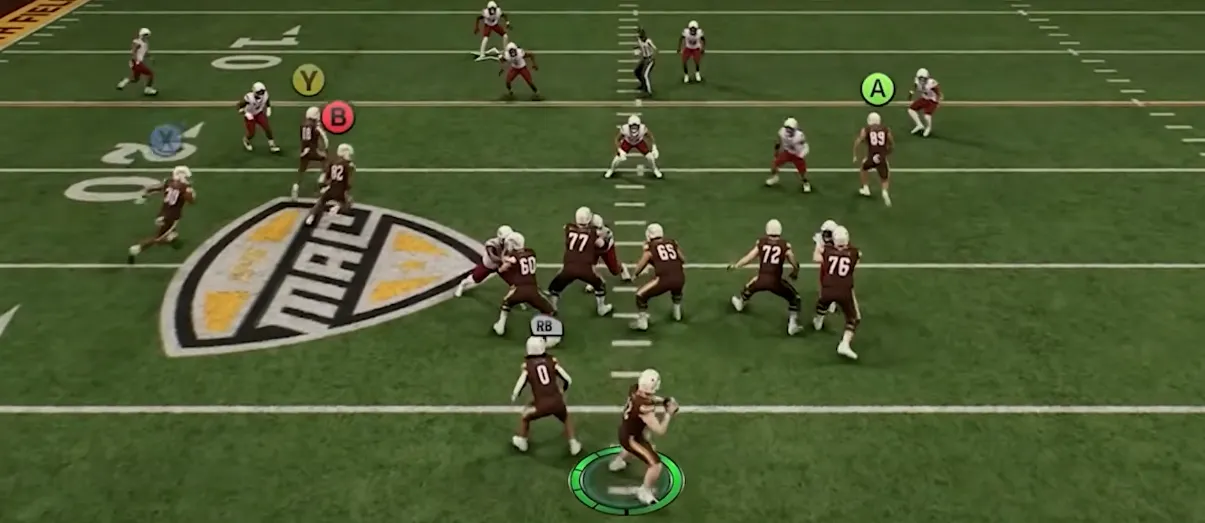
While offense wins headlines, stopping high-tempo college offenses requires a disciplined, strategically deep defensive plan. EA SPORTS College Football 27 shifts significant control back to the defensive side of the ball, introducing sophisticated coverage checks, streamlined pre-play adjustments, and distinct playbook identities.
This guide lists all the defensive upgrades, mechanics, and strategies you need to shut down modern spread offenses.
1. Pre-Play Command & Global Adjustments
The defensive pre-play controls have been completely redesigned to eliminate multi-menu clutter. Holding Left Trigger (LT/L1) now opens a unified Global Coverage Adjustment Hub to execute complex adjustments instantly.
Core Pre-Play Hub Shortcuts
- The Global Hub (Hold LT/L1): From this single overlay, you can press, back off, shade leverage, pass commit, or adjust zone behavior.
- Quick Double Teams: Hold LT/L1, select the target receiver's icon, and press Square/X to instantly bracket the offense's top weapon.
- On-the-Fly Macro Adjustments: Tap L1/LB pre-snap to apply preset defensive game plans instantly:
- QB Scramble
- Play Short Routes
- No Deep Passes
- Defend Screen Pass
- Navigation Realignment: * Up/Down on D-pad: Camera toggles.
- Left on D-pad: Coach Vision HUD.
- Right on D-pad: Dynamic Subs menu.
Note: Players must completely set at the line of scrimmage before a second custom adjustment can be applied. However, these custom shortcuts are entirely immune to Home Field Advantage audio disruptions.
2. Alignment Control & Roll Coverages
You have granular control over the spatial positioning of your defensive backfield to take away specific route variations or protect against explosive boundary plays.
| Mechanic | Alignment Options & Contextual Uses |
|---|---|
| CB Depth | Dictate cushion at the line of scrimmage; vital for implementing sudden press looks or backing off to protect the sticks. |
| CB Width | Adjust inside or outside alignment to cheat against specific route breaks (e.g., shading inside against slants). |
| Safety Depth | Bring safeties down to crack down on the run/box or back them out to prevent deep vertical breakdowns. |
| Safety Width | Pinch or spread safeties to prioritize middle-of-the-field safety shells or sideline boundary help. |
| Safety Midpoint | Shift the alignment safety shell toward the left, right, strong side, weak side, field, or boundary. |
Roll Coverage Strategies
Instead of balanced coverage shells, you can deliberately shade deep safety help toward specific structural threats:
- Fastest / Highest OVR: Automatically shifts coverage priority toward the offense's most dangerous athlete.
- Field / Boundary: Leans deep help toward either the wide open side or the short boundary side of the field.
- Pass Strength: Automatically shades assistance to the side of the formation with the most eligible receiving threats.
3. Smart Zones & Plaster Logic
Zone defenders are no longer restricted to guarding empty space. Smart Zones alter defender awareness and reaction logic based on game context, while Plaster Logic dictates how defenders behave during extended scramble drills.
Smart Zone Mindsets
- Aggressive / Ultra Aggressive: Defenders aggressively jump underneath and shorter routes. This completely chokes out the quick passing game but exposes deep windows over the top.
- Balanced: Traditional, default zone integrity rules.
- Conservative / Ultra Conservative: Prioritizes deep depth and cushions vertical route stems to force the offense to work underneath.
- Look For Work: Zone defenders actively hunt for adjacent offensive threats when their original zone assignment clears out.
- Focus: Directs deep zone priorities to lean strictly toward one isolated receiver.
Plaster Logic Settings (Scramble Drill Defense)
When a mobile quarterback escapes the pocket, Plaster Logic determines how zone defenders transition into coverage.
[Plaster Logic Behavior Levels]
├── Off: Stay locked in original zone assignments
├── Conservative: Backside zone defenders abandon zones to attach to the nearest receiver
└── Aggressive: All zone defenders abandon zones and play strict man coverage
- Trigger Conditions: Can be set to activate Out of Pocket, Time elapsed in the pocket, or Out of Pocket and Time (Safest setting).
- Reaction Speed: Can be adjusted between Aggressive (early trigger), Default, or Conservative.
Mastering complex mechanics like Smart Zones and Plaster Logic will give your defense a massive edge on the field. To truly dominate the competition and build an unstoppable roster from day one, make sure to buy College Football 27 coins directly from our website for safe, instant delivery. Secure your coins today and ensure your team has the elite talent needed to lock down any offense.
4. Man & Match Coverage Checks
Modern offenses utilize tight splits, stack sets, and bunch structures to force natural defensive rubs and picks. College Football 27 introduces automated alignment checks to solve these tactical issues.
Formational Rules
Against Stack Formations
- Combo: Defenders read the immediate release and exchange assignments based on inside/outside paths.
- Triangle: Utilizes a 3-defender-over-2-receiver structure in Cover 2 Man, giving the safety over-the-top bracketing ability.
- Top Hat: Forces defenders to split vertical responsibilities strictly by the front or back receiver in the stack.
- Lock: Zero switching; defenders stay glued to their original matchup regardless of traffic.
Against Bunch Formations
- Point Combo: The defender over the point receiver locks on, while the remaining coverage elements read and exchange the routes behind them.
- Point Triangle: Places 4 defenders over 3 bunched targets, layering a safety bracket over the most dangerous vertical threats.
College Match Coverage Checks
While pro playbooks contain exhaustive adaptations, college playbooks utilize foundational match rules across Cover 3 Match, Quarters, Palms, and Cover 6:
- Box: Four defenders split the bunch into quadrants (deep outside, deep inside, flat, short inside).
- Bingo: The outside cornerback locks onto the #1 receiver if he stays outside, but passes him off if he crosses inside.
- Skate: Underneath hook/curl defenders instantly widen toward heavy trips/bunch structures to deter quick screen throws.
- Solo / Solo Cut: The backside cornerback locks isolated into one-on-one coverage against a lone receiver, freeing the safety to slide inside or across the field to help elsewhere.
- Stubbie / Stump: Special trips-side checks where the cornerback locks onto the #1 target while the nickel, safety, and linebacker share the #2 and #3 options.
5. Playbook Identity & Fronts
Defensive selection is driven by six primary Defensive Styles. The pool of defensive playbooks has expanded from 9 to 31 distinct choices, distributing all 138 teams into realistic structural identities.
The Six Defensive Styles
- Man: Focused on athletic matching and tight individual coverage.
- Man Pressure: Prioritizes aggressive blitz packages out of press man-to-man alignments.
- Shell: Emphasizes split-safety, deep-zone structural integrity.
- Zone: Traditional spot-dropping and rallying to the football.
- Zone Pressure: Centered around simulated pressures and exotic blitzes with safe zone shells behind them.
- Multiple: Combines various schemes to adapt dynamically week to week.
New Personnel Groupings & Formations
To counter explosive spread, RPO, and mobile QB schemes, 16 new formations have been introduced:
- 3-3-5 3 High Over & 4-2-5 3 High: Distinct safety-heavy looks to mitigate perimeter speed.
- 3-4 Grizzly & Wide Jack Fronts: Heavy defensive lines optimized for edge control.
- Nickel Double Mug & Single Mug Dime: Exotic pre-snap positioning to mask interior blitz pathways.
- Tite and Under Fronts: Specialized defensive line adjustments built to crush inside zone run games.
6. Trench Control & Physical WR/DB Battles
Defensive wins are heavily reliant on the outcome of physics-based interactions along the line of scrimmage and on the perimeter.
Run Defense & Box Control
Two new coaching adjustments alter how your defensive front attacks the run game:
- Gap Integrity: Setting this to Conservative commands defenders to prioritize their assigned run fit and maintain leverage (low-risk, low-reward). Setting it to Aggressive gives defenders the freedom to abandon assignment structure to pursue sudden backfield splash plays.
- Defensive Aggression: Conservative tells linebackers to slow-play run keys and protect against play-action. Aggressive commands the box to attack downhill instantly, increasing block-shed speed but leaving the defense vulnerable to play-action fakes.
WR/DB Interactions: Leverage & Jostle
- Route-Aware Press: Defensive backs utilize their pre-snap leverage selection (inside or outside) directly against the receiver's intended path. If an elite corner shades inside against a slant, they will disrupt the route stem dynamically.
- The Jostle Mechanic: Coverage defenders with high physical and coverage metrics can physically engage wide receivers downfield. This disrupts timing and neutralizes pure speed through technical route disruption.
7. The Mental Game: Managing Composure
College environments are volatile, and young defensive backs can spiral mentally after giving up an explosive touchdown or dropping a turnover opportunity.
[Defensive Composure Cycle]
Big Defensive Plays / Sacks ──► Boosts Composure ──► Dynamic Attribute Buffs
Missed Tackles / Blown Zones ──► Lowers Composure ──► Cold Status (Performance Dip)
The Coach Chat Mechanic
When a young defender enters a Cold status under intense road noise or pressure, you can step in to stabilize their composure:
- Press Right on the D-pad to open the Dynamic Subs menu.
- Identify the struggling player marked with a cold indicator.
- Press Triangle/Y to activate a Coach Chat.
This resets the player back to a balanced emotional state for the next possession. You are granted three Coach Chats per game, so preserve them for critical moments or high-stakes rivalry environments.