


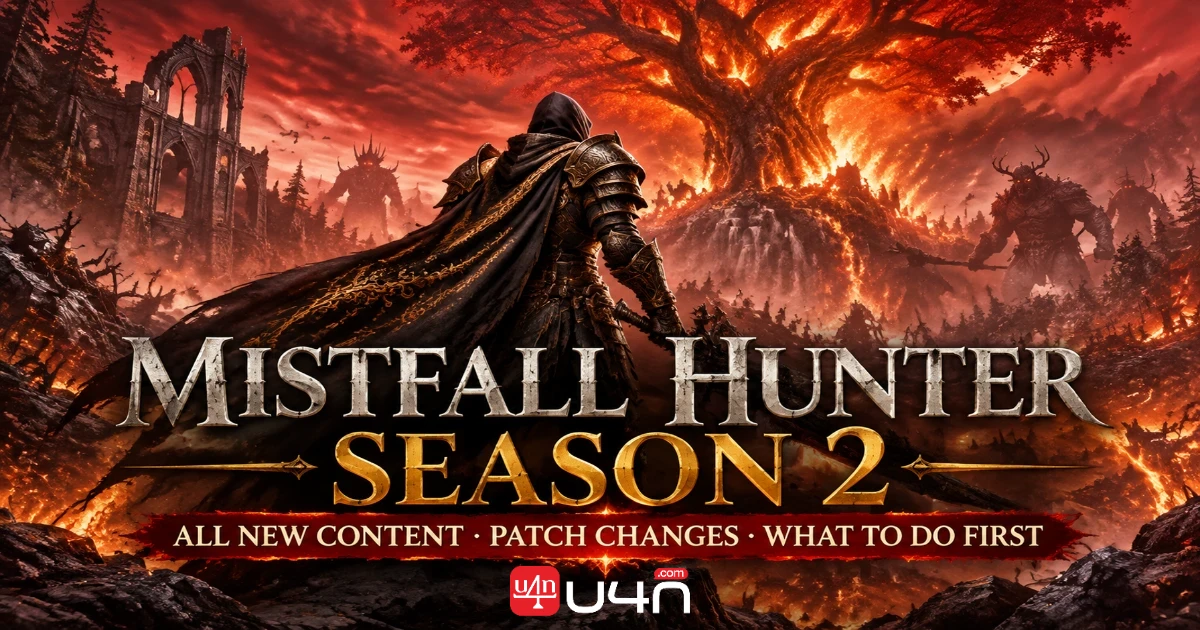
Mistfall Hunter Season 2, Fires of the Past, launched on November 11, 2026, bringing a major shift to the game's PvPvE extraction experience. Hallowgrove is now threatened by spreading Wildfire Zones, Blackarrow players have a new Javelin weapon archetype, and the Soul Brand system introduces another layer of character progression.
But new content is only part of the story. Bellring Games has also addressed several problems players experienced during Season 1, including disappointing loot drops, excessive seasonal grinding, class imbalance, and unstable connections. For returning Gyldhunters, understanding these changes is essential before committing resources to a new build or farming route. If you're also planning your next resource goals, understanding the value of Mistfall Hunter Gyldenblod can help put your progression priorities into perspective.
Whether you're a returning veteran or a newcomer entering Weavereach for the first time, Season 2 offers a different progression experience. Here's what has changed, which new systems deserve your attention, and how we recommend approaching your first few sessions.
Mistfall Hunter Season 2: All Major New Content
The biggest addition in Season 2 is the new seasonal experience, Ordeal of Flames. It transforms Hallowgrove into a more dangerous environment while introducing new enemies, rewards, and challenges.
However, three additions deserve particular attention:
| New Content | Main Features | Player Benefit |
|---|---|---|
| Ordeal of Flames | Wildfire Zones and Forbidden Zones | New farming opportunities and challenges |
| Blackarrow Javelin | Ranged throws and close-range attacks | More flexible combat options |
| Soul Brand | New equipment slot, affixes, and talents | Additional character progression |
| Preacher of the Sun | New boss and seasonal questline | New combat encounters and rewards |
| Shrine of Honor | Achievement display system | Additional collection goals |
The update also introduces new monsters, Holy Collectibles, seasonal events, and the Pyrebound Contract Outfit.
For most players, the Wildfire content and Soul Brand system will have the greatest impact on everyday progression. They are closely connected: exploring dangerous areas provides materials that can be used to develop your character.
Ordeal of Flames: How Wildfire Zones Change Exploration
Ordeal of Flames is the central gameplay addition of Season 2. Instead of simply exploring familiar routes and collecting loot, players must now manage environmental danger while deciding how far they are willing to venture for better rewards.
Wildfire spreads across Hallowgrove in every match. The Divine Anchor area remains permanently affected, while other parts of the map can randomly become Wildfire Zones.
Understand Heat Before Entering
Staying inside a Wildfire Zone continuously builds Heat. When the meter reaches its limit, Lars the Heretic's curse triggers, causing a dangerous stagger and heavy damage before applying the Infernal Flame effect, which continues draining health.
Players have two important ways to manage this threat:
- Soothing Elixir: Removes some accumulated Heat and helps prevent the meter from reaching its limit.
- Superb Soothing Elixir: Removes ongoing burning effects and prevents additional Heat accumulation for an extended period.
- Froststrawers: Interacting with these marked locations helps cleanse Wildfire corruption.
Our recommendation is to prepare enough consumables before entering the dangerous areas. A common extraction mistake is focusing entirely on valuable loot while ignoring the environmental threat. When Heat is close to its limit, surviving the next encounter should take priority over opening another container.
How to Access the Wildfire Forbidden Zone
The Wildfire Forbidden Zone contains more valuable loot, but its entrances are initially sealed by raging flames.
You can wait for the entrance countdown to finish or obtain a Sacred Branch to activate a Warp Rift and enter earlier.
To get a Sacred Branch, interact with an Oath Altar and defeat the summoned followers of the Preacher of the Sun. The item provides early access to the dangerous zone and its additional challenges.
This creates an important decision during each exploration: take the safer route and collect ordinary supplies, or spend time fighting special enemies to gain earlier access to higher-value areas.
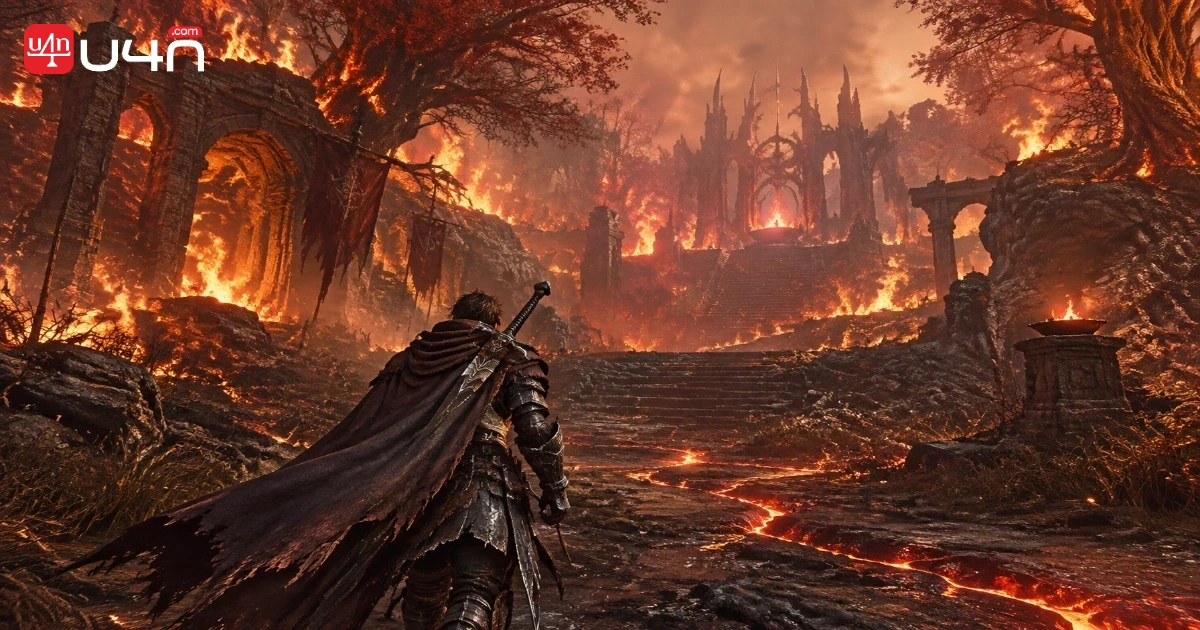
Preacher of the Sun: The Next Major Challenge
The new seasonal storyline also introduces Lars, the Heretic, who serves as the Preacher of the Sun encounter's central figure.
The Duel of the Sacred Tree is scheduled to unlock on November 16, 2026, at 02:00 UTC.
Until this activity becomes available, players should focus on learning Wildfire mechanics, collecting seasonal materials, and improving their equipment rather than rushing into dangerous encounters without preparation.
Blackarrow Javelin: Is It Better Than the Bow?
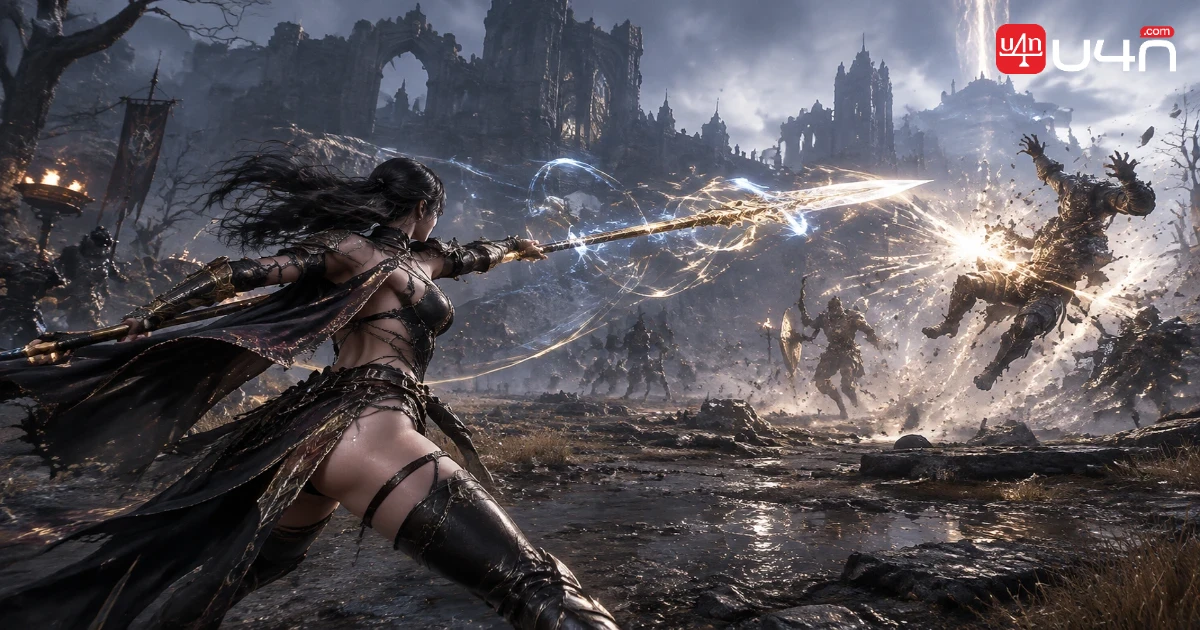
One of the most interesting changes in Season 2 is the addition of the Javelin as Blackarrow's second weapon archetype.
The Bow remains focused on long-range combat, while the Javelin introduces a more flexible style that combines ranged throws with close-quarters counterattacks.
This is particularly important in PvPvE encounters, where enemies can quickly close the distance and punish players who rely too heavily on maintaining range.
Javelin's Main Combat Mechanics
The Javelin offers several ways to adapt to different combat situations:
- Charged Throws: Holding the attack increases damage, range, and impact.
- Close-Range Attacks: Swinging the weapon provides an option when enemies get too close and can help recover Energy.
- Back-Hop: Creates distance after close-range engagements.
- Divine Infusion: Knocks back nearby enemies and activates a Divine Power state that increases Attack.
- Unerring Aim: With the appropriate talent, throws can automatically track targets near the crosshair.
- Swift Shadow: Builds stacks through fully charged throws, skills, and rolls, improving subsequent charging speed and throw effectiveness.
The legendary Javelin Nightveil Needle also arrives with the new weapon archetype.
Javelin vs. Bow: Which Should You Choose?
| Combat Situation | Bow | Javelin |
|---|---|---|
| Long-range pressure | Strong | Good |
| Close-range defense | More limited | More flexible |
| Repositioning during combat | Ranged positioning | Throws and back-hop |
| Crowd control | Depends on build | Additional knockback options |
| Adaptability | Traditional ranged playstyle | Mixed-range combat |
We wouldn't recommend replacing every Bow build immediately. The Javelin offers more tools when enemies get close, but the Bow still has a clear role for players who prefer traditional long-range combat.
The smartest approach is to test both weapons before investing heavily in a new setup. Pay attention to attack timing, Energy consumption, and how comfortably you can maintain distance during player encounters.
Soul Brand Guide: How the New Progression System Works
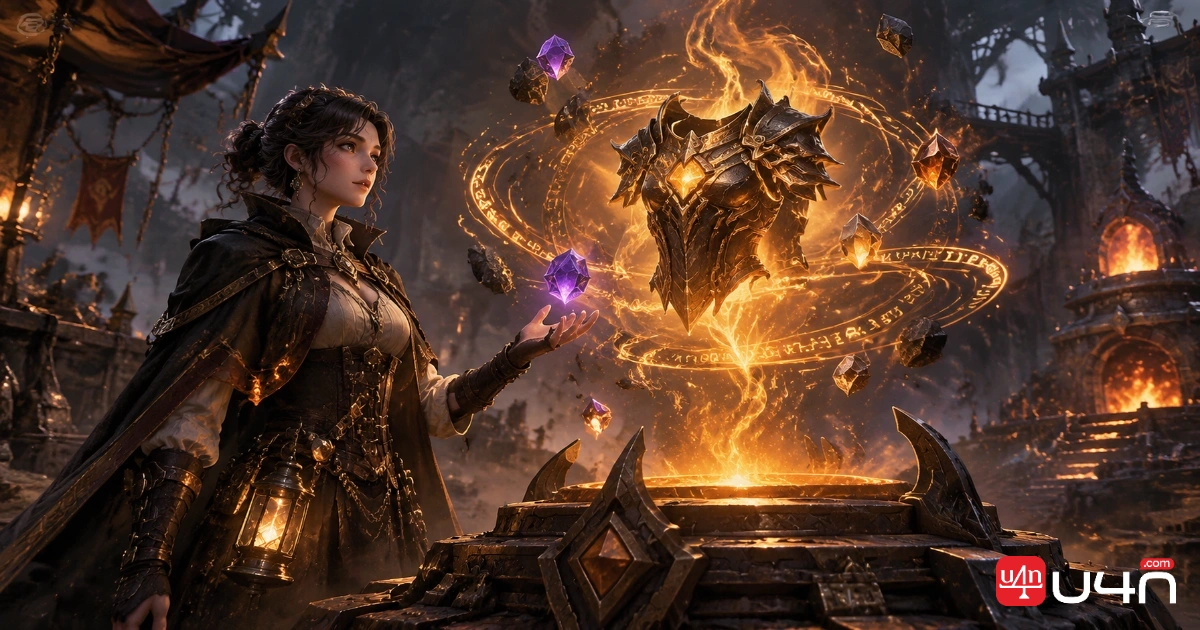
Soul Brand is arguably the most important long-term progression addition in Season 2.
It introduces an independent equipment slot that provides basic attributes, fixed affixes, gem slots, and additional talent unlocks. This gives players another way to customize their characters beyond conventional equipment.
How to Obtain Soul Brand Materials
The progression loop begins in Wildfire Zones.
Players collect Wildfire Relics from containers and encounters, then process these materials to obtain seasonal resources such as Soulcoal.
These materials are used to create and upgrade Soul Brands through Liv the Lamplighter at Windrest.
The Brand Candelabra is another important camp structure, as it unlocks higher-quality Soul Brand crafting and additional progression features.
Upgrade Carefully: Soul Brand Has Real Risks
Soul Brand progression is not entirely risk-free.
Unlike ordinary equipment, a Soul Brand is not automatically lost when an extraction fails. However, it has a chance to lose levels and some of its affixes.
If its level drops below 1, the Soul Brand is destroyed.
There are also different ways to improve its properties:
| Progression Option | Purpose |
|---|---|
| Soul Brand Crafting | Create new Soul Brands |
| Random Upgrade | Obtain additional affixes |
| Targeted Upgrade | Use rare materials to pursue specific affixes |
| Reshaping | Reroll levels and affix combinations |
Our advice is to avoid spending every valuable material on the first Soul Brand you obtain. Compare its affixes with your preferred build first, then decide whether a random upgrade, targeted improvement, or reshaping offers better value.
A good Soul Brand should support your combat strategy, not simply have the highest available level.
Season 2 Class Balance Changes: What Has Changed?
Season 2 includes extensive class adjustments aimed at improving PvP counterplay and giving underused builds more room to compete.
The developers have focused on ranged suppression, Shadowstrix mobility, repeated damage from certain skills, and several individual class archetypes.
Here are the changes worth understanding before returning to your previous build.
| Class | Major Changes | What Players Should Reconsider |
|---|---|---|
| Mercenary | Hammer stun mechanics improved | Experiment with Hammer-focused control |
| Sorcerer | Lightning reactions reworked; Stardust casting adjusted | Reevaluate elemental and Stardust builds |
| Blackarrow | Bow attack effectiveness reduced beyond its effective range | Consider testing Javelin |
| Shadowstrix | Mobility and disengage capabilities adjusted; Edgewalker added | Focus on parrying and precise timing |
| Seer | Zeal and Reverent archetypes adjusted | Revisit support and offensive setups |
| Withered Knight | Greatsword burst reduced; Polearm and Shield options improved | Compare damage and defensive builds |
Shadowstrix: Less Free Mobility, More Counterplay
Shadowstrix has received some of the most noticeable changes.
The class now has more restrictions on its mobility and disengagement tools. Flash Stride has reduced displacement, Swift Sneak has an additional activation condition, and Lightweight has been adjusted.
However, the new Edgewalker skill adds a parry-counter mechanic. Successfully blocking an incoming attack allows Shadowstrix to dash forward and punish enemies.
This changes the way the class approaches combat. Rather than relying entirely on repeated disengagement, players need to pay closer attention to attack timing and counter opportunities.
Sorcerer: Lightning Builds Get More Attention
Lightning Sorcerer has received adjustments to elemental reactions and several skills, including Thunder Pierce and Thunderstrike.
Stardust Sorcerer has also been adjusted. Stardust Arcana now has its own casting animation and can allow the next spell to skip its chanting phase after a successful activation.
However, the developers have also reduced some damage values and added more opportunities for opponents to react.
For returning Sorcerer players, copying an old Season 1 setup without testing the new mechanics is not a good idea.
Other Class Adjustments
Mercenary's Hammer-focused stun playstyle has been improved, creating more opportunities for control-oriented builds.
Seer has received adjustments to Zeal and Reverent talent options, while Withered Knight has seen changes to Greatsword damage and Polearm and Shield specialization.
Blackarrow's charged Bow attacks have also received effective-range adjustments, making positioning more important.
Overall, Season 2 is a good time to experiment with alternative builds rather than assuming the previous meta will remain unchanged.
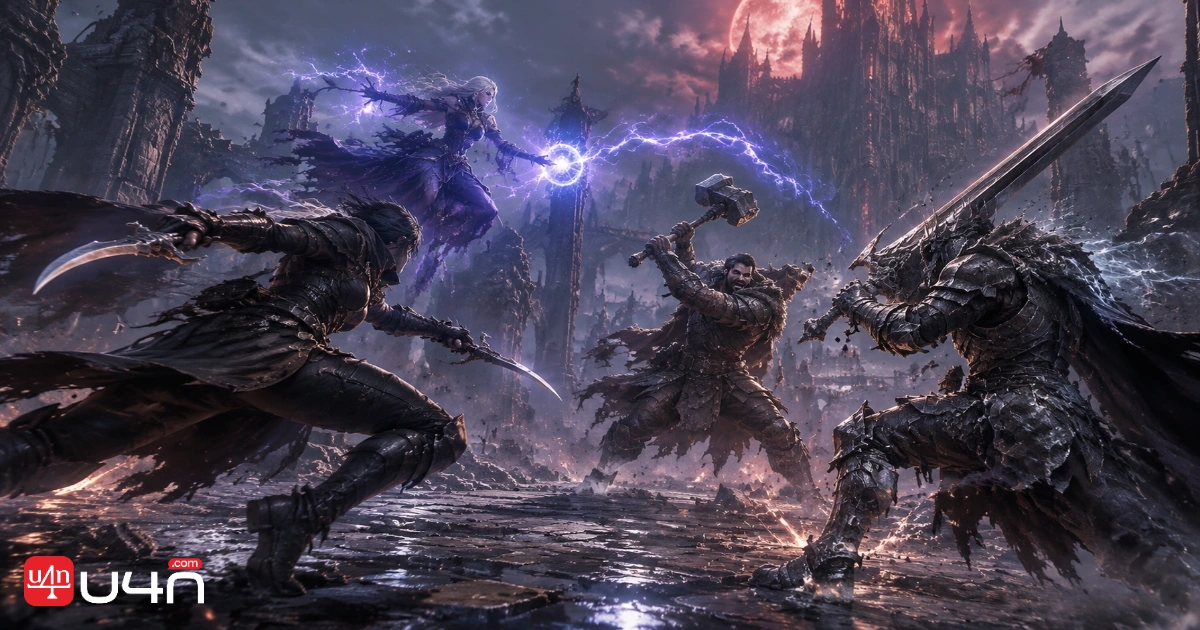
Better Loot, Easier Season Tasks, and Important Quality-of-Life Changes
Some of Season 2's most valuable improvements are not immediately visible during combat.
Bellring Games has made several changes based on Season 1 feedback, particularly around loot availability, progression requirements, and inventory management.
Loot Drops and Forging Are More Rewarding
The developers have increased the number of medium and large containers across maps and improved the chances of obtaining high-value items from both containers and monsters.
Combat Bag affix combinations have also been optimized to make rewards more practical.
Another important change is the removal of forging fees.
For players who frequently upgrade their equipment, this reduces unnecessary progression costs and improves the expected returns from forging.
Seasonal Tasks Are Less Grind-Heavy
The first three chapters of the main seasonal tasks no longer require completion within a single match or single life.
They also no longer require Chaos or Cataclysm difficulty.
Item submission objectives have been moved to side tasks, making the main progression route more straightforward.
Some rewards worth prioritizing include:
| Progression | Reward |
|---|---|
| Chapter 2 Main Tasks | Pip's Rare Pouch |
| Chapters 3 and 4 Main Tasks | Path of Thorns Bell and Extraction Animation |
| Side Tasks | Holy Material Selection Chest and Ferry: Dawnchaser |
For players who struggled with Season 1's progression requirements, these adjustments make it easier to earn meaningful rewards without forcing every session into a difficult task checklist.
Servers and Inventory Improvements
Season 2 also introduces a new US West server, relocates Asian servers to Hong Kong, and activates AWS Global Accelerator to improve network performance.
Other useful improvements include:
- Dedicated Gem Warehouse and Soul Brand Warehouse tabs.
- One-click removal of equipped gems.
- Automatic destruction of starter equipment after Quick Equip.
- An option to skip the Victory Wine animation.
- Improved skill input buffering and combat responsiveness.
These changes may not look as exciting as a new weapon, but they make a real difference when players spend hours managing equipment and repeating extraction runs.
What Should You Do First in Mistfall Hunter Season 2?
With several new progression systems and activities available, returning players should avoid trying to complete everything immediately.
We recommend following a practical order that secures accessible rewards first, builds a stronger character, and gradually introduces the more dangerous seasonal content.
Step 1: Check Your Seasonal Rewards and Events
Start by checking the 7-Day Surprise event and available seasonal activities.
The Weekend Surprise event also provides additional Combat Bags during its scheduled Friday-to-Sunday period.
If you haven't logged in for 14 days, check whether the Return to the Fray event has become available. Eligible returning players can complete its tasks for rewards such as Pip's Rare Pouch Voucher and an Elite Combat Bag.
Step 2: Complete the Main Season Tasks
The first three chapters are now more forgiving, so there is less reason to postpone seasonal progression.
Prioritize the main tasks and aim to complete Chapter 2 first to obtain Pip's Rare Pouch.
Then continue toward the exclusive rewards from Chapters 3 and 4.
Leave item submission objectives for side-task sessions rather than allowing them to interrupt your main progression.
Step 3: Learn Wildfire Mechanics and Farm Relics
Before challenging the most dangerous areas, make sure you understand Heat management, Soothing Elixirs, and Froststrawers.
Start with manageable Wildfire encounters and collect Wildfire Relics and Season Tokens.
These materials contribute to Soul Brand progression and seasonal rewards, making them more valuable than random loot that doesn't support your current goals.
Step 4: Test Your Weapon and Rebuild Your Character
Blackarrow players should test the Javelin and compare it with their previous Bow setup.
Other classes should also review their old talent combinations, especially Shadowstrix, Sorcerer, and Withered Knight.
Don't spend all your resources on an untested build. A few successful runs will help you understand which skills work best with your preferred combat style.
Step 5: Upgrade Soul Brand and Prepare for Lars
Once you have enough materials, start developing your Soul Brand.
Compare affixes, consider your available upgrade options, and avoid unnecessary risks when your current equipment already supports your build.
Finally, prepare for the Duel of the Sacred Tree, which unlocks on November 16.
This progression order gives players a clearer path through the new season: secure easy rewards, improve equipment, learn the new mechanics, and then take on the most dangerous challenges.
Final Thoughts
Mistfall Hunter Season 2 is more than a seasonal content refresh. It addresses several of the biggest frustrations from Season 1 while introducing systems that give players more control over character progression and combat decisions.
The Wildfire Zones and Soul Brand system are the most important additions for long-term progression, while the Javelin gives Blackarrow players a fresh way to approach PvP encounters. Better loot, lower forging costs, and reduced task requirements also make the overall experience more approachable.
For returning Gyldhunters, we recommend focusing on seasonal rewards, Wildfire materials, and a stable build before investing heavily in risky upgrades. If you want to spend less time on repetitive progression and focus more on challenging content, Mistfall Hunter Boosting is another option worth considering alongside your own progression plans.
Season 2 rewards players who understand when to explore, when to extract, and when to take a calculated risk. Build a solid foundation first, and Hallowgrove's most dangerous challenges will become much easier to approach.