

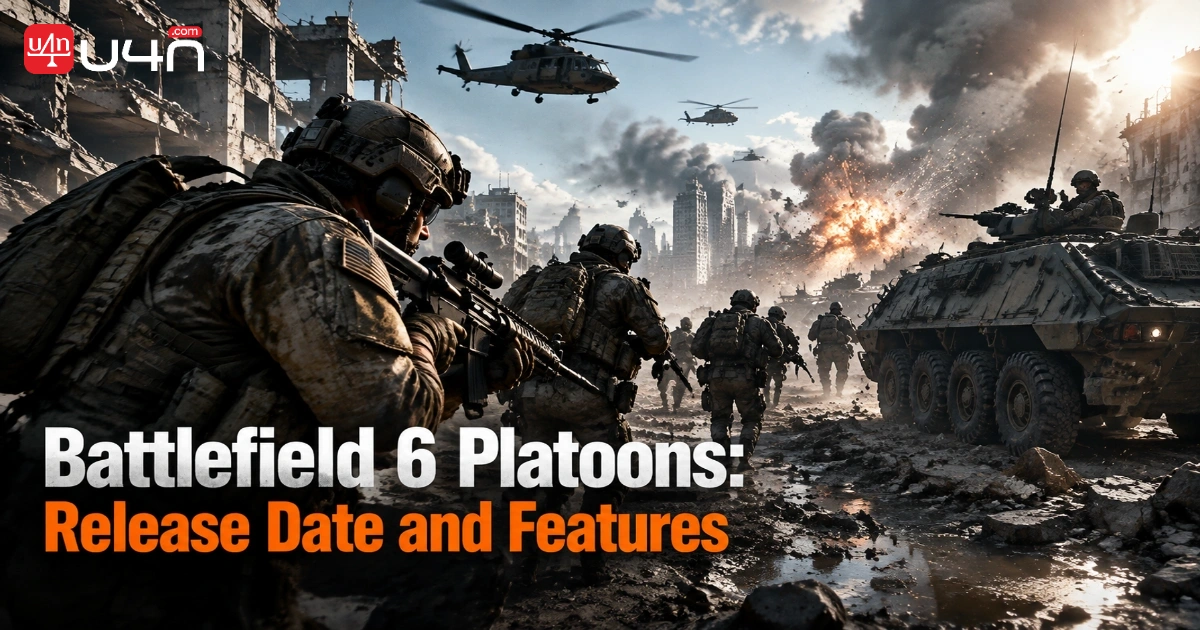
Battlefield 6 is preparing to give players a better way to stay connected beyond individual matches. Platoons, arriving with Season 5 Phase 3 on December 8, 2026, will let players build in-game communities of up to 100 members. For players who regularly squad up with friends, coordinate objective pushes, or enjoy returning to the same group, this could be one of the more meaningful social additions to the game. Alongside familiar weapons and loadouts, Battlefield 6 Items may interest players looking to prepare for their next multiplayer session, but Platoons focuses on something different: building a community that lasts beyond a single match.
Our team has seen how much easier Battlefield becomes when players know their teammates' habits, communicate clearly, and understand their roles. A good squad can turn a messy objective fight into a coordinated push, while a reliable community makes it easier to find people to play with again. Platoons aims to support that experience with custom group names, squad tags, combined gameplay stats, and bonus XP for playing with fellow members. Here's what we know so far, what the feature could change, and what players should check before creating or joining a Platoon.
When Does Battlefield 6 Platoons Release?
Platoons is scheduled to launch on December 8, 2026, as part of Season 5 Phase 3, also known as Frozen Aces. It will arrive alongside other planned updates, including the Server Browser and changes to Blackwell Fields and New Sobek City.
EA has confirmed that Platoons will have its own tab in the main menu. Players will be able to create a group or join an existing one, establish a shared identity, and track combined gameplay statistics.
| Detail | Confirmed information |
|---|---|
| Planned release | December 8, 2026 |
| Update | Season 5 Phase 3: Frozen Aces |
| Maximum membership | Up to 100 players |
| Group identity | Custom names and squad tags |
| Group statistics | Combined gameplay stats |
| Group play incentive | Bonus XP when playing with Platoon members in your squad |
The key thing to remember is that these are planned launch features, not proof that every possible clan-management tool will be available immediately. EA has described the first release as a foundation for expanding the game's social and community features over time.
What Is a Platoon in Battlefield 6?
A Platoon is a persistent in-game community built around a shared identity. Instead of relying entirely on your friends list or searching for teammates before every match, you can create or join a larger group of players who want to play together.
The distinction between a Platoon and a regular squad matters. A squad is the group you coordinate with during a match. A Platoon can bring together many players who share a community, even when they are not all online or playing in the same match.
How Is a Platoon Different From a Squad?
| Feature | Regular squad | Platoon |
|---|---|---|
| Main purpose | Coordinate during a match | Maintain a larger player community |
| Typical use | Combat, objectives, and immediate teamwork | Group identity and long-term connections |
| Membership | Match-level team | Up to 100 members at launch |
| Shared identity | Squad composition | Custom group name and squad tag |
| Progress overview | Match-specific performance | Combined gameplay statistics |
This distinction is particularly useful for players who regularly play with different friends. Your usual four-person group might not always be online together, but a larger Platoon could give you more opportunities to find familiar teammates.
A 100-member capacity does not mean all 100 players can enter the same match as one squad. Players should still expect normal match and squad limits to apply unless EA announces otherwise.
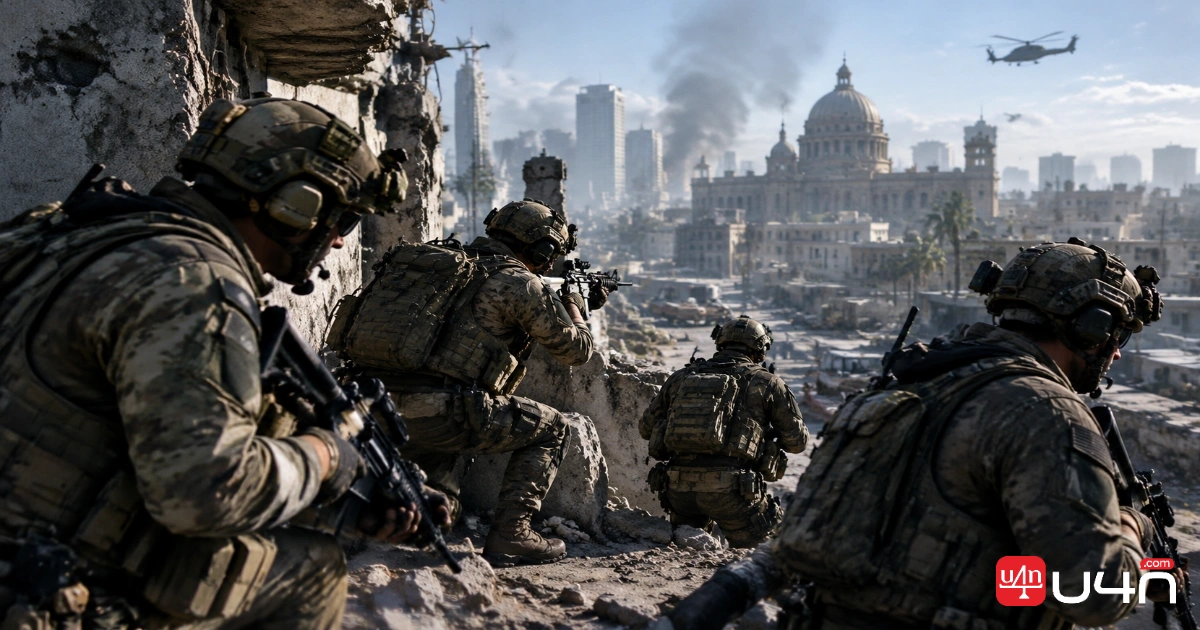
Battlefield 6 Platoons Features Explained
EA has confirmed several core features for launch. Each addresses a different part of community play, from recognizing your group to encouraging members to play together more often.
100 Members and Custom Squad Tags
Platoons will support up to 100 players, with custom group names and squad tags. These features give a community a recognizable identity instead of making it just another collection of usernames.
For established groups, a consistent tag can help members recognize one another. For newer communities, a clear name can make the group feel more organized and welcoming.
We recommend choosing a name that is easy to recognize and a tag that remains readable in-game. A short, distinctive identity is generally more practical than something complicated that teammates struggle to remember.
Combined Gameplay Statistics
Platoons will also support combined gameplay stats. This gives groups a way to view their collective activity rather than focusing exclusively on individual performance.
For players who enjoy improving over time, shared statistics could provide another reason to keep playing together. A group might use its overall activity as a conversation starter or a way to celebrate progress.
However, EA has not yet confirmed every statistic that will be tracked or whether the launch version will include detailed leaderboards, member rankings, or advanced performance breakdowns. We should wait for the actual interface before treating those features as available.
Bonus XP for Playing Together
One of the most practical additions is the XP bonus awarded when you play in a squad with fellow Platoon members.
This creates a direct incentive to play with people from your community. Instead of receiving only the social benefits of a familiar group, members can also earn additional experience through qualifying group play.
The exact bonus amount and any conditions attached to it should be checked after launch. Until then, it is better to view the XP bonus as an incentive for coordinated play rather than assume it will dramatically accelerate progression.
How to Choose the Right Battlefield 6 Platoon
Joining the largest available group is not necessarily the best choice. A smaller, active community with compatible schedules can be more useful than a 100-member Platoon where few people play together.
Before joining, consider what you want from the group.
Match Your Playstyle and Schedule
If you prefer objective-focused multiplayer, look for players who communicate and prioritize team goals. If you enjoy experimenting with weapons, vehicles, or different combat roles, a more casual group may be a better fit.
Time zones also matter. A Platoon filled with players who are rarely online when you are available may look impressive on paper but offer few opportunities to play together.
Look for Activity, Not Just Member Count
A healthy community does not need to be full. What matters is whether its members are active, respectful, and interested in similar types of gameplay.
When evaluating a Platoon, look for:
- Regular players who are available around your usual playtime.
- Clear expectations about communication and teamwork.
- A welcoming attitude toward new members.
- Shared interests in the modes or playstyles you enjoy.
The exact discovery, invitation, and membership-management options will become clearer when the feature is available. Until then, these are practical criteria for evaluating any Battlefield community, not claims about specific in-game filters.
How Platoons Could Improve Battlefield 6 Teamwork
Platoons is a social feature, but its value will ultimately depend on what players do with it. A shared name and tag cannot replace good communication. They can, however, make it easier to build the relationships that support better teamwork.
Familiar Teammates Can Make a Difference
Battlefield matches often change quickly. A team might need to defend an objective, respond to a vehicle threat, or shift its focus when the enemy changes direction.
Players who have worked together before may already understand one another's preferences. One teammate might be comfortable pushing forward, while another prefers to provide support or cover a route. That familiarity can reduce confusion when a fight becomes chaotic.
In our experience, good coordination rarely comes from everyone trying to do the same thing. It comes from understanding the objective, communicating useful information, and adapting to what the team needs.
A Larger Community Can Help Players Stay Connected
A Platoon with multiple active members can give players more opportunities to find teammates when their usual group is unavailable. It may also help returning players reconnect with familiar names rather than starting from scratch.
Still, the number of members alone will not guarantee a strong community. Groups need active participation and reasonable expectations to remain useful.
The most successful Platoons will likely be those that make it easy for members to find people to play with, not simply those that reach the 100-player limit.
What Could Make Platoons Better Over Time?
EA has described the initial release as a foundation that can expand with community feedback. That leaves room for future improvements, but it is important to distinguish possibilities from confirmed plans.
Several areas could make the system more useful if EA chooses to develop them further.
| Potential improvement | Why it could matter |
|---|---|
| Better group discovery | Helps players find communities that match their interests |
| More detailed activity information | Makes it easier to identify active groups |
| Flexible management tools | Could help communities organize membership as they grow |
| Expanded group statistics | Gives players more ways to track shared progress |
| More social features | Could strengthen connections beyond individual matches |
These are suggestions for what could improve the experience, not a list of announced features.
The biggest challenge is balancing flexibility with simplicity. Players should be able to find and manage their communities without navigating an overly complicated interface. If Platoons can make group play easier without adding unnecessary friction, the feature will have a stronger chance of becoming part of players' regular routines.
Is Battlefield 6 Platoons Worth Looking Forward To?
For players who usually queue alone or switch between different groups of friends, Platoons could offer a more consistent way to find familiar teammates. The 100-member capacity, shared identity, combined statistics, and XP incentive provide a useful starting point.
For organized clans, the feature could reduce reliance on external tools for basic group identity and participation. However, players who already have an active community elsewhere may want to wait and see how the in-game management options compare with the tools they already use.
The launch version also has clear limits. A custom tag will not automatically improve teamwork, and a group-level statistic will not explain every reason a match was won or lost. The system needs to be convenient enough that players actually use it.
Our verdict is cautiously optimistic. Platoons addresses a real need in a multiplayer game where familiar teammates can make a major difference. Its long-term success will depend less on the headline membership limit and more on how effectively it helps players build active, reliable communities.
Final Verdict: Build Your Battlefield Community
Battlefield 6 Platoons is scheduled to arrive on December 8, 2026, bringing a dedicated community tab, up to 100 members, custom group names and squad tags, combined gameplay stats, and bonus XP for playing with fellow members in your squad.
Our advice is to decide what you want from a Platoon before joining one. Look for compatible schedules, shared interests, and teammates who value communication. A well-organized group can make multiplayer sessions more enjoyable, but a large membership count alone is not enough.
As the launch approaches, keep an eye on official updates for details about membership management and the final feature set. Players researching their broader Battlefield 6 setup may also come across Battlefield 6 Accounts, but when it comes to Platoons, the real advantage is finding a community you genuinely enjoy playing with.
For now, Platoons looks like a promising step toward making Battlefield 6 more connected. The real test begins when players start using it on the battlefield.