

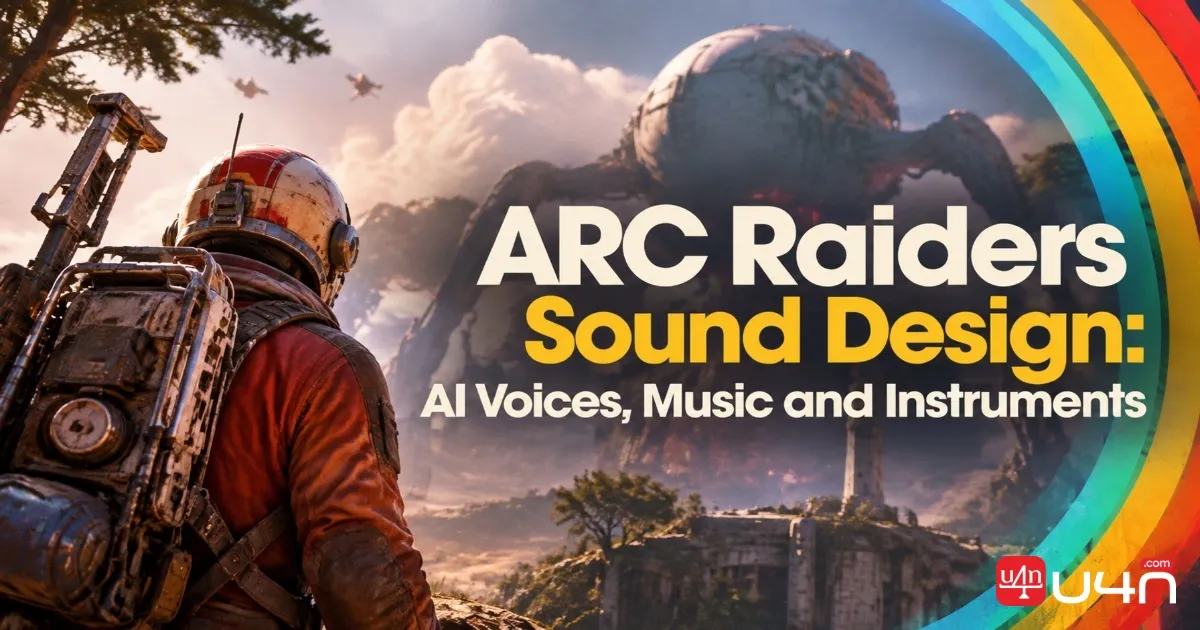
Sound is one of the defining parts of ARC Raiders. It does more than make the Rust Belt feel alive. Character voices give traders their personalities, environmental audio helps establish tension, and music creates contrast between long stretches of exploration and moments of activity. Even seemingly simple features, such as player-operated instruments, have developed into something more meaningful than background entertainment.
Our team sees ARC Raiders' audio design as a combination of creative direction and practical engineering. The studio had to balance authentic human performances with a development process that involved frequent changes, while also building a soundtrack that felt connected to the game's world. Its use of AI-generated dialogue attracted criticism after launch, but the subsequent recording work also showed how much player expectations matter. For players interested in the wider equipment and progression side of the game, our ARC Raiders Items coverage provides a separate reference.
ARC Raiders' audio identity comes from the relationship between character performances, technical production choices, environmental sound, and player interaction. Sound is not simply an additional layer; it is part of how the game communicates its world and creates memorable experiences.
How ARC Raiders Uses Voice to Build Its Characters
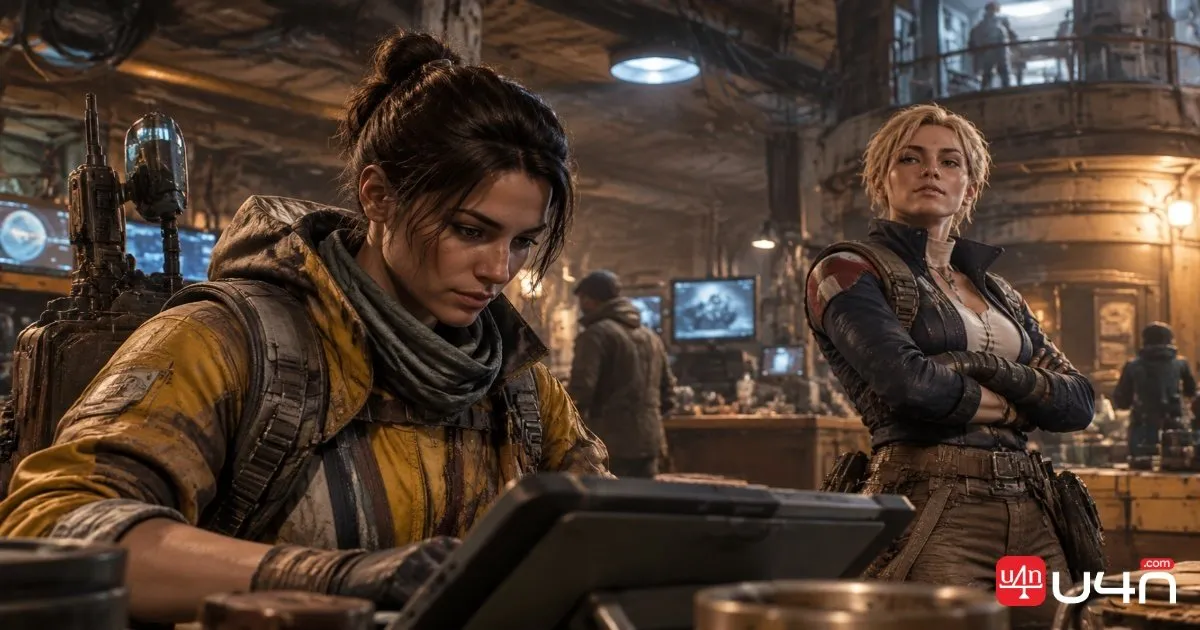
NPC dialogue in ARC Raiders is not simply a way to deliver quests. Traders are part of the game's identity, and their voices help communicate personality, relationships, and the responsibilities each character carries within the settlement.
The development team wanted characters to feel more present than static portraits accompanied by text. That decision also created additional production requirements. Once a game introduces voiced characters, players naturally expect believable performances, convincing facial presentation, and dialogue that fits the character.
The first implementation involved several creative compromises:
| Character | Presentation approach | Design purpose |
|---|---|---|
| Shani | Often shown facing away from the player | Reinforces her busy, task-focused personality |
| Tian Wen | Her face is partially obscured, with her eyes visible | Supports her trader presentation while limiting facial-animation demands |
| Apollo | Wears a baseball helmet that covers much of his mouth | Reduces the need for detailed mouth animation |
| Lance | Presented as a robot | Makes his non-human appearance part of the character design |
These choices helped the team introduce voiced NPCs without requiring every character to have the same level of facial detail from the beginning.
Character relationships matter as much as individual performances
Shani and Celeste are particularly interesting because their personalities create a natural contrast. Both take their responsibilities seriously, but they approach problems differently. Celeste is more willing to take risks, while Shani tends to be more cautious.
This difference gives their dialogue a purpose beyond delivering information. Their interactions help players understand the settlement as a community with different priorities and personalities.
The voice actors also contributed to how these characters developed. Jo Rideout, who performs Shani, and Diana Gardner, who performs Celeste, brought theater, voiceover, and motion-capture experience to their roles.
One detail worth highlighting is Celeste's fascination with bees. The developers discussed dialogue involving her discovering these creatures and connecting their collective behavior with her ideas about community. It is a small narrative detail, but it illustrates how character dialogue can communicate values rather than simply explain quests.
For us, this is where good NPC audio becomes particularly effective: the player starts recognizing characters through their attitudes and reactions, not just their names.
Why Did ARC Raiders Use AI-Generated Voices
ARC Raiders launched with a hybrid approach to voice production. Most character dialogue came from human voice recordings, but some quest lines, mission briefings, and contextual communications used AI-generated speech.
The decision was largely connected to the speed of development. Quest descriptions, features, and item interactions were still changing late in production. Recording every possible line with human actors would have required frequent scheduling, additional studio sessions, and more coordination across different locations.
Where AI-generated voices were used
The system covered several different types of audio content:
| Audio category | Production approach | Main challenge |
|---|---|---|
| NPC dialogue | Primarily human recordings, with some AI-generated lines | Maintaining consistent character performances |
| Quest briefings | Some text-to-speech generation | Handling late quest changes |
| Contextual pings | Combined recorded lines and generated speech | Supporting numerous locations and situations |
| Player voice filters | Processed microphone input | Allowing players to alter their voices |
The ping system was particularly demanding. Players can communicate information about locations, objects, and nearby threats without speaking directly into a microphone. As new items and gameplay features were introduced, the number of possible contextual voice lines increased.
Recording every combination would have created a substantial workload. A line referring to an object near a building, for example, could require different variations depending on the surrounding location and context.
AI-generated speech gave the developers more flexibility when these systems changed. It also helped the writing and localization teams continue working on quests without waiting for every recording session to be completed.
However, production efficiency did not automatically translate into a better player experience.

Why players criticized the AI voices
The main problem was not simply that the voices sounded artificial. Some generated lines were technically understandable but lacked the emotional delivery expected from established characters.
In a game built around atmosphere and environmental storytelling, this difference matters. NPCs are among the few consistent sources of direct human interaction in the settlement. When their voices feel detached from their personalities, the world can become less convincing.
There was also a separate concern about the role of professional voice actors. If an actor provides training recordings but does not perform every final line, questions naturally arise about performance ownership and how their work is represented.
The actors interviewed for the series described the arrangement as a complicated experience. They had been involved in the production, but the final generated output was not always something they could fully identify as their own performance.
How the studio responded
Following the criticism, the development team began replacing generated quest dialogue with recordings from the actors wherever possible.
The studio acknowledged that some of the criticism was fair, particularly regarding the difference between a voice that resembles a human and a performance that actually communicates emotion.
This distinction is important. A generated voice can deliver the correct words, but timing, emphasis, hesitation, and subtle emotional changes are what make dialogue convincing.
The developers also explained that they wanted to give actors more room in the game's future development rather than treating AI as a replacement for human performances.
We assess that the experience highlights a practical lesson for game production: AI can help teams manage large and frequently changing dialogue systems, but important character moments still benefit from deliberate human performance.
AI-generated speech can improve production flexibility, but efficient dialogue generation does not automatically deliver convincing character performances. Human expression remains important when a game's storytelling depends on recognizable personalities and emotional interaction.
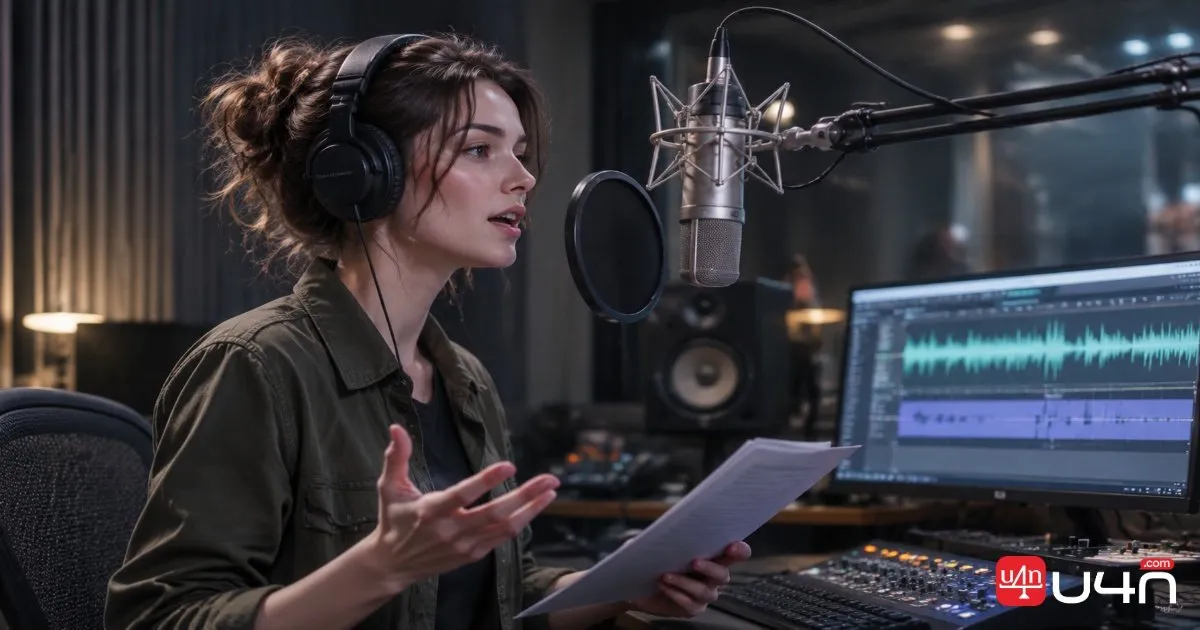
How ARC Raiders Creates Its Original Soundtrack
The music in ARC Raiders follows a different philosophy from the voice system. Rather than relying entirely on conventional orchestral arrangements or familiar post-apocalyptic music, the composers experimented with unusual sounds and built the soundtrack around the identity of the game world.
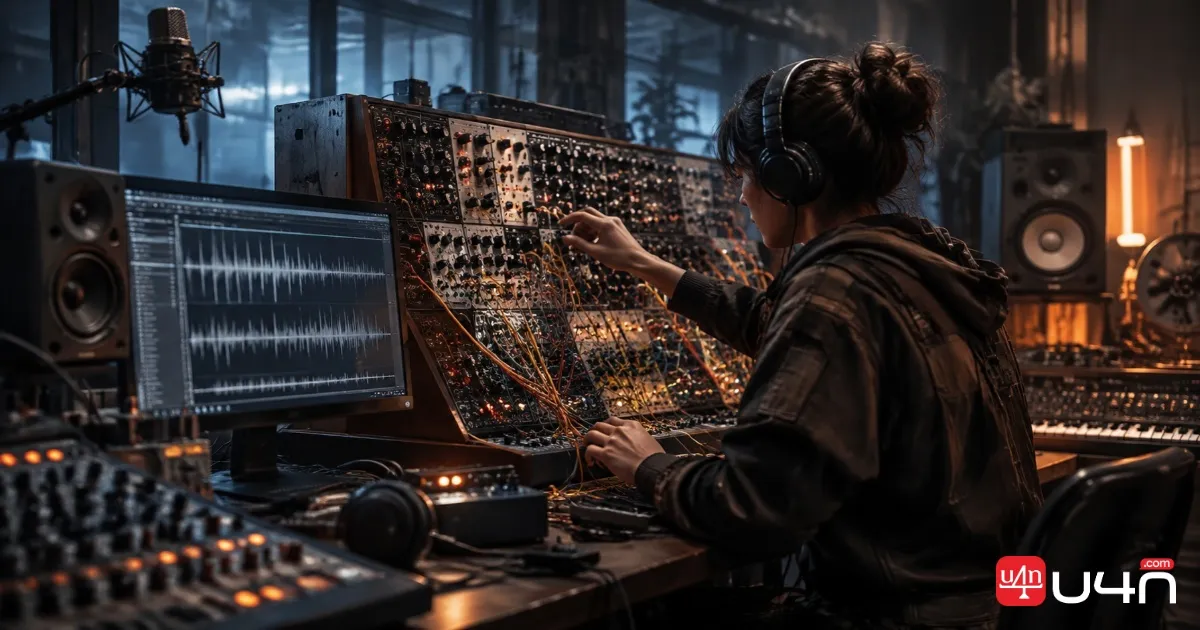
The composers brought experience from live performance and film scoring. Their approach involved exploring raw synthesizers, modular equipment, unusual instruments, and recordings that could be transformed into musical material.
Experimental sounds become musical building blocks
A particularly interesting part of the production process was the use of unconventional sound sources.
The composers experimented with electrical circuits, modular synthesizers, and objects that produced unusual noises. They also recorded sounds generated by placing electrodes into different fruits, including bananas, tangerines, and apples.
These recordings were not necessarily usable as complete musical pieces. Much of the material was experimental, and the team might spend hours recording sounds before finding only a few minutes' worth to incorporate into the soundtrack.
That process gave the music a distinctive texture. Instead of starting with a conventional melody and adding effects afterward, the composers often began with strange noises, electrical crackles, and raw sonic material before gradually shaping them into recognizable musical ideas.
The result fits the game's setting without relying on a predictable soundtrack formula.
Why silence is an important part of the soundtrack
One of the most effective decisions in ARC Raiders is that music does not need to be present constantly.
Exploration often leaves room for environmental audio to take the lead. Players hear movement, distant mechanical sounds, gunfire, and the activity of the surrounding world without continuous background music competing for attention.
When music does appear, it can therefore create a stronger contrast.
This approach is particularly suitable for an extraction adventure. Players need to pay attention to their surroundings, and constant music could reduce the impact of smaller audio cues. Quiet sections also make musical moments feel more deliberate.
Our team considers this an important distinction between a soundtrack that simply fills empty space and one that actively supports gameplay atmosphere.
Music must belong to the world
The composers and developers worked closely together to ensure that the soundtrack felt connected to the setting.
This meant exploring sounds that could plausibly exist within the world of ARC Raiders rather than treating the music as something entirely separate from the environment.
The same philosophy can be heard in the game's broader audio direction. Mechanical noises, weapon sounds, ARC movement, and music all contribute to a consistent atmosphere.
The developers also discussed the importance of physical-sounding audio. Even electronic music needs to feel convincing within its intended context. A sound can be heavily synthesized while still retaining a sense of texture and physical presence.
That balance helps prevent the soundtrack from feeling disconnected from the Rust Belt.
How Player Instruments Became Part of the Game
The musical instruments in ARC Raiders are one of the clearest examples of player behavior influencing game design.
The original idea was much simpler than the system players eventually experienced. A gameplay designer introduced a trumpet-like device that could produce noise and potentially attract ARC enemies.
At first, the concept seemed out of place. A musical instrument might appear too silly for a dangerous extraction environment. But the developers recognized that making noise could itself be a meaningful gameplay interaction.
The initial concept eventually evolved into a more developed instrument feature.
From a single flute melody to multiplayer performances
The development team later introduced a flute with an existing melody. At that stage, it was essentially a simple standalone activity rather than a complete musical system.
What changed was how players used it.
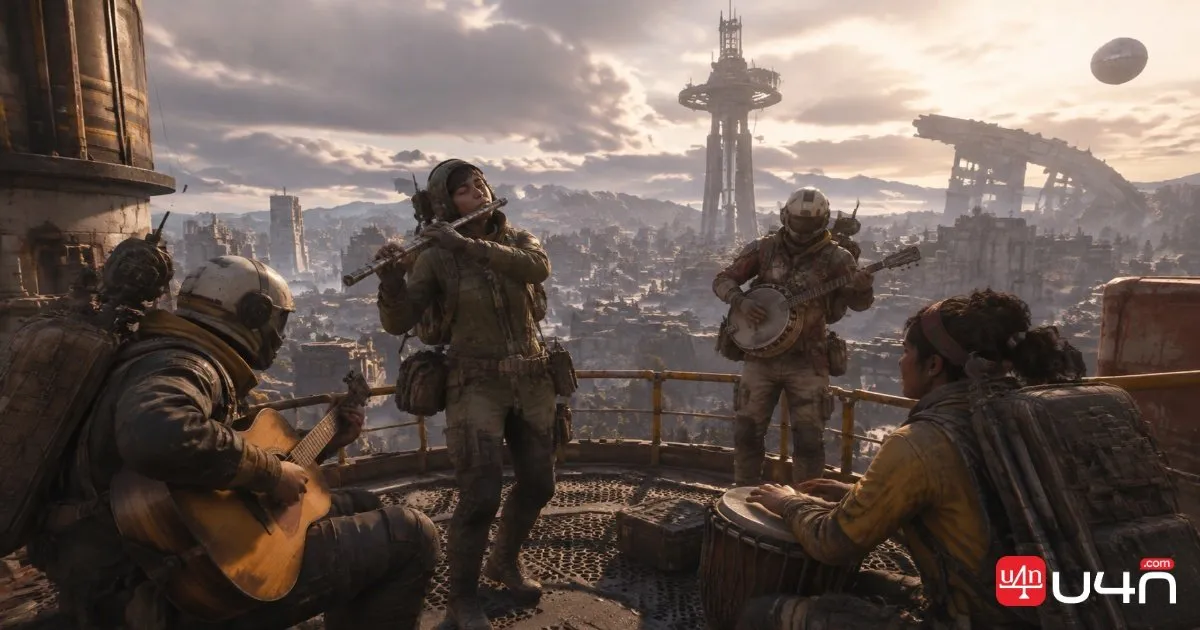
The developers encountered footage of a large group of players standing together and performing the same melody. The unusual scene demonstrated that the instrument could create memorable social interactions without requiring additional combat objectives.
Instead of removing the original melody or replacing the feature, the team decided to build around it.
The result was a more coordinated system involving additional instruments and a shared musical foundation.
| Development stage | Design progression |
|---|---|
| Initial concept | A trumpet-like device capable of producing noise |
| First playable instrument | A flute with an existing melody |
| Player experimentation | Multiple players performing together |
| System expansion | Additional instruments built around two underlying chords |
| Synchronization | A system allowing different instruments to play together |
The synchronization work was more complicated than simply allowing several players to activate sounds simultaneously. The team needed the instruments to fit together musically, so players could contribute different parts without producing a completely disconnected result.
Instruments have both tactical and social value
The instrument feature also fits into a broader gameplay principle: sound can influence encounters.
The original trumpet concept was designed around the idea that ARC enemies could hear the noise. This connected musical experimentation with the game's existing sound-based interactions.
At the same time, instruments created opportunities for players to interact without fighting, looting, or completing objectives.
That is particularly valuable in a multiplayer extraction game. Not every memorable encounter needs to involve a firefight. Sometimes a group of strangers performing together can become the defining moment of a raid.
We think this is one of the more interesting aspects of ARC Raiders' audio design. A feature that initially appeared unnecessary became a recognizable part of the game's social identity because players found ways to use it that the developers had not originally anticipated.
How ARC Raiders Has Improved Its Audio Presentation
The studio's audio work did not stop with the initial release. The development team has continued improving several aspects of the experience, including dialogue, character presentation, and environmental sounds.
Some of these changes are closely connected. Better voice recordings become more convincing when characters also have improved facial animation and lip synchronization.
NPC visuals and lip synchronization
During 2026, the traders received visual updates that improved their presentation and made their facial movements more accurate.
This reduced the need for some of the earlier visual compromises, such as keeping characters' faces partially hidden.
Celeste also received an updated character model connected to the Frozen Trail trailer, for which her voice actor Diana Gardner performed motion capture.
These changes matter because character presentation is a combination of several elements:
- Voice performance establishes personality and emotion.
- Facial animation communicates reactions.
- Lip synchronization connects spoken dialogue with visible character movement.
- Character staging helps establish the relationship between the NPC and the player.
Improving only one element would not necessarily produce a convincing result. The strongest presentation comes when all of them work together.
Audio improvements extend beyond dialogue
The development team's work has also included additional dialogue and audio content across the game.
| Audio area | Development focus |
|---|---|
| NPC voices | Re-recording and expanding dialogue |
| Character presentation | Better facial animation and lip synchronization |
| Environmental audio | Additional sounds supporting the game world |
| Weapons | Continued development of weapon audio |
| ARC units | Further audio work for mechanical enemies |
| Music | Expanding the game's distinctive musical identity |
For experienced players, these improvements can be easy to overlook because they do not necessarily change a weapon's damage, a quest requirement, or an extraction route.
However, audio quality has a direct effect on how readable and believable the game feels. A clearer NPC performance, a more convincing mechanical sound, or a better-balanced environmental mix can improve the experience without introducing an entirely new gameplay system.
We should also distinguish completed improvements from future ambitions. The developers expressed interest in giving characters and performances more room to develop, but that does not mean every planned audio feature has already been implemented.
Summary
ARC Raiders' sound design is built around more than realistic effects or an atmospheric soundtrack. Its audio identity comes from the relationship between character performances, technical production choices, environmental sound, and player interaction.
The initial use of AI-generated voices showed how development flexibility can create problems when generated dialogue does not deliver the emotional quality players expect. The studio's subsequent recording work demonstrated the importance of human performances in character-driven experiences.
The music follows a different creative direction. Experimental synthesizers, unusual recordings, and carefully placed musical moments help establish the identity of the Rust Belt without overwhelming environmental audio. Meanwhile, the instrument system demonstrates how player creativity can turn a small gameplay idea into a memorable social feature.
Our biggest takeaway is that good audio design should support the entire game rather than exist as a separate layer. Whether players are listening to Shani's dialogue, tracking nearby ARC activity, exploring a quiet location, or playing music with strangers, sound helps define what makes ARC Raiders recognizable. Players looking to prepare their next runs can also explore options to buy ARC Coins alongside their equipment and progression plans.
Great game audio is not just about what players hear. It is about how sound connects characters, environments, gameplay mechanics, and the people sharing the experience.
FAQ
Does ARC Raiders use AI-generated voices?
Yes. The game launched with a hybrid voice-production approach. Most dialogue was recorded by human actors, while some quest lines, mission briefings, and contextual communications used AI-generated speech.
Why did ARC Raiders use AI-generated dialogue?
The developers needed flexibility because quest content, gameplay features, and localization were changing throughout production. AI-generated speech helped the team handle dialogue requirements without arranging a new recording session for every adjustment.
Did ARC Raiders replace its AI-generated quest voices?
The development team began re-recording quest dialogue with human actors wherever possible after players criticized the quality of some generated performances. The studio also discussed expanding the role of actors in future development.
Who voices Shani and Celeste in ARC Raiders?
Jo Rideout performs Shani, while Diana Gardner performs Celeste. Both actors have backgrounds in theater and voice performance, and Diana also contributed motion capture for the Frozen Trail trailer.
How is the ARC Raiders soundtrack created?
The composers use experimental synthesizers, modular equipment, unusual instruments, and unconventional sound recordings. Their approach focuses on creating a distinctive atmosphere that fits the game's world rather than relying entirely on traditional orchestral music.
Can players play musical instruments together in ARC Raiders?
Yes. The instrument feature allows players to perform together using different instruments. The developers built a synchronization system around a shared musical foundation so multiple performances can work together.
Can musical instruments attract ARC enemies?
The developers originally explored instruments as noise-producing devices that could attract ARC enemies. This was part of the original trumpet concept and demonstrates how sound can function as both entertainment and gameplay interaction.