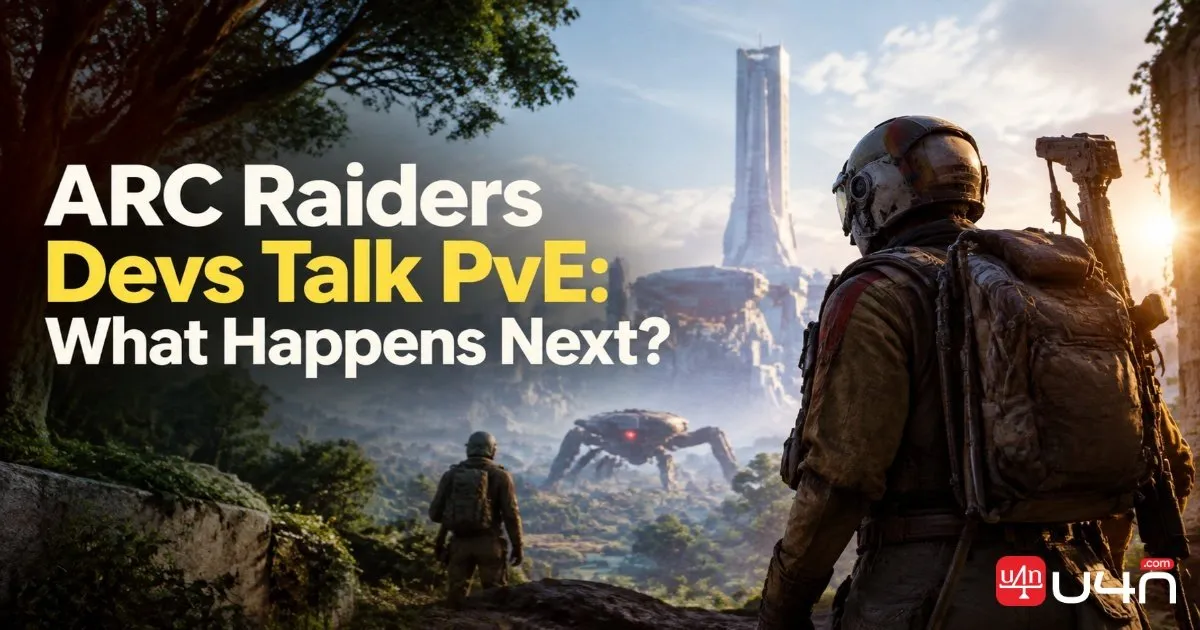
The ARC Raiders PvE test has ended, but the bigger question is only beginning: what kind of PvE experience do players actually want? The limited-time test showed that many players were willing to explore the game without fighting other Raiders, yet it did not settle whether a relaxed mode, tougher AI challenges, or a complete PvE experience would be the right long-term direction. For players who also spend time collecting gear and managing resources through ARC Raiders Items, the answer could affect more than matchmaking. It could reshape progression, rewards, and the game's overall economy.
Embark is now reviewing player feedback and gameplay data, with more information expected in November. The test reportedly recorded more than 30 million PvE rounds, as Embark confirmed in its official post-test announcement, but participation alone does not tell us what players want from a permanent mode. Our team believes the important question is not simply whether PvE should return. It is how Embark can support different playstyles without weakening the extraction tension that defines ARC Raiders.
What the PvE Test Actually Revealed
The limited-time PvE test ran from October 13 to October 20. It removed player-versus-player damage and changed several parts of the normal raid experience. Solo, duo, and trio players also entered a shared matchmaking pool, meaning a solo Raider could encounter a full trio.
The test retained much of the game's familiar progression and core systems, but it was not a complete version of ARC Raiders without PvP. Loot value was reduced, while several activities and locations were unavailable. These included night raids, locked doors, hidden bunkers, and other encounters mentioned during the test coverage.
| Test element | What changed | Why it matters |
|---|---|---|
| Player damage | PvP damage was disabled | Removed direct Raider-versus-Raider combat |
| Matchmaking | Solo, duo, and trio queues were shared | Group sizes could be uneven |
| Loot value | Overall value was reduced | Limited the test's impact on the economy |
| Available content | Several activities and locations were disabled | The test did not represent the full game |
This distinction matters. The test helped Embark observe how players behaved when direct PvP pressure was removed. It could also provide information about matchmaking and participation. However, it could not fully demonstrate how a permanent PvE mode would work with dedicated AI challenges, exclusive progression, or a long-term reward structure.
In other words, the test answered whether players would enter a PvE playlist. It did not answer what would keep them playing for months.
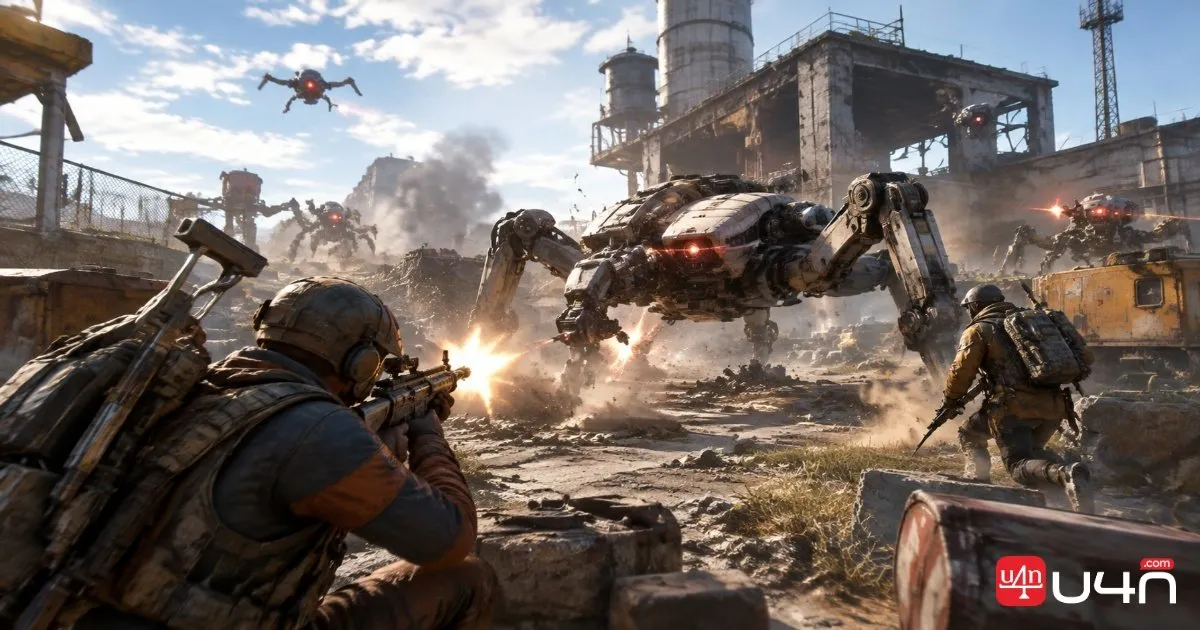
Three Possible Directions for ARC Raiders PvE
The discussion around PvE points toward three different player needs. These should not be treated as simple difficulty settings, because each direction would require a different approach to content and progression.
1. A Relaxed Mode for Exploration and Quests
The first option is closest to the recent test. Players could complete quests, explore maps, gather resources, and fight ARC machines without constantly worrying about hostile Raiders.
This would suit players who enjoy the atmosphere and exploration but find repeated PvP encounters stressful. It could also make routine objectives easier to complete, especially for players who prefer shorter, more predictable sessions.
The challenge is keeping this mode engaging over time. If the danger is too low and the available rewards are too limited, players may finish their objectives quickly and have little reason to return. Embark would need to preserve meaningful combat and progression without simply turning every raid into a low-risk resource run.

2. A More Challenging PvE Experience
A second direction would focus on players who want difficult encounters but do not want PvP to be the main source of pressure.
This version could feature stronger ARC enemies, dedicated combat objectives, more demanding encounters, and rewards tied to performance. It would preserve the danger of a raid while shifting the main threat from other players to the machines.
For this approach to work, enemy difficulty needs to come from more than increased health or damage. Different attack patterns, coordinated enemy groups, environmental hazards, and objectives that require preparation would create more meaningful challenges.
The reward structure would matter just as much. High-value loot could give players a reason to attempt difficult encounters, but the risk and time investment should remain relevant. Otherwise, challenging PvE could become either an inefficient grind or the easiest way to obtain valuable equipment.
3. A Complete PvE Experience
The broadest possibility is a full PvE experience designed to stand on its own. This would go beyond restoring a matchmaking option. It could require dedicated content, a long-term progression path, and systems built around players who do not intend to enter PvP raids.
That is a much larger development commitment. A complete PvE experience would need enough objectives, enemy variety, rewards, and progression goals to support regular play. It would also need an economy that makes sense without relying on the risks and player interactions of the original extraction format.
This is why we should be careful about interpreting the developer discussion as a promise. A full PvE experience has been raised as a possibility, but that does not mean Embark has confirmed it for an upcoming update.
Why a Permanent PvE Mode Is Difficult to Balance
The main design challenge is not just creating a separate playlist. ARC Raiders is built around tension, resource decisions, extraction risk, and unpredictable encounters with other players. Removing PvP changes how players approach nearly every part of a raid.
The main design challenge is not just creating a separate playlist. ARC Raiders is built around tension, resource decisions, extraction risk, and unpredictable encounters with other players.
In a normal PvP match, a valuable item carries a different kind of risk. Players must consider ARC enemies, other Raiders, extraction routes, and the possibility of losing what they have collected. In a PvE-only environment, some of those risks disappear. If both modes provide identical rewards and share the same progression, players may find that one mode offers a more efficient path to the same equipment.
That creates several questions Embark would need to address:
- Loot and rewards: Should PvE provide the same high-value equipment as PvP, or should each mode have its own reward pool?
- Shared storage: Could resources collected in PvE be transferred freely into PvP?
- Character progression: Should quests, levels, and unlocks carry over between modes?
- Matchmaking: Would separate queues affect waiting times or player distribution?
- Long-term content: Could PvE receive enough dedicated objectives and encounters to remain interesting?
There is no automatic solution. Reducing PvE rewards might protect the original economy, but it could also make the mode feel less rewarding. Sharing everything would be convenient, yet it could create an easier route to equipment intended to carry a higher risk in PvP.
The right balance depends on what Embark wants each mode to offer.
Should PvE and PvP Have Separate Progression
One possible solution is to separate the two modes more clearly. PvE and PvP could use different characters, progression paths, or reward systems. This would give Embark more control over balance and reduce the chance that low-risk PvE farming directly affects the competitive extraction economy.
| Progression model | Main advantage | Main drawback |
|---|---|---|
| Shared progression | Easy to switch between modes | PvE rewards may affect PvP balance |
| Separate progression | Keeps each mode's economy independent | Players may need to repeat progression |
| Partial progression sharing | Preserves some convenience | Requires more complicated reward rules |
Our team sees separate progression as a practical option worth considering, particularly if Embark eventually builds a complete PvE experience. Players who want to focus on PvE could develop their characters without directly changing the balance of PvP raids.
However, a fully separate system also has a cost. Players who enjoy both modes may not want to repeat quests, unlocks, and equipment progression. A hybrid approach could allow some shared account features while keeping valuable gear and mode-specific rewards separate.
Seasonal progression is another possibility. Some extraction games use wipes or seasonal resets to keep their economies moving and give players new goals. That approach can help control long-term inflation, but it is not a simple fix for ARC Raiders. Players who value permanent character development may not welcome regular resets.
For that reason, we would treat seasonal servers or separate progression as design options rather than assume either one is the answer. The important thing is to prevent one mode from becoming a shortcut that undermines the other.
Other ARC Raiders Updates: Soul Offering and Developer Insights
While the PvE discussion continues, ARC Raiders also has other developments worth watching.
The Soul Offering project was announced for October 27 and is themed around honoring Raiders who fell in Toledo. Its teaser showed a nighttime atmosphere, memorial imagery, and fireworks.
Embark also released another episode of Evolution of ARC Raiders, covering the development of ARC machines. The episode discusses enemies added after launch, the studio's machine-learning work, the origins of ARC enemy names, and other behind-the-scenes details. It offers useful context for understanding how the game's enemy roster has evolved, although it does not confirm the future design of PvE.
Summary
The recent PvE test gave Embark useful information, but it was only one step toward deciding what the mode should become. A relaxed playlist, tougher AI-focused challenges, and a complete PvE experience would each serve different players and require different systems.
The biggest issue is how to make PvE rewarding without disrupting the progression and economy of PvP. Separate progression could help, but it would also introduce new demands on players who enjoy both modes. As Embark reviews the test data and community feedback, the November update should provide a clearer picture of its next steps. Until then, players should distinguish confirmed plans from possible design directions and keep an eye on official announcements, especially when planning their resources around ARC Raiders Coins.
FAQ
Will ARC Raiders keep a permanent PvE mode?
A permanent PvE mode has not been confirmed in the information covered here. Embark is reviewing the recent test data and player feedback, with more information expected in November.
What were the three possible PvE directions?
The discussion points toward a relaxed mode for exploration and quests, a more difficult PvE experience focused on ARC combat, and a complete PvE experience with its own long-term structure.
Did the PvE test include all normal ARC Raiders content?
No. The test changed matchmaking and combat rules, reduced loot value, and disabled several activities and locations. It should be treated as a limited experiment rather than a complete preview of a permanent mode.
Could PvE and PvP have separate progression?
That is one possible design solution, but it has not been confirmed by Embark. Separate progression could protect each mode's economy, while shared or partially shared systems would make switching between modes more convenient.