



Season 35 gives guilds three extra weeks to compete, but our team would not treat that extension as permission to spend harder from opening weekend. Higher rank requirements and stronger late-season scoring call for a longer plan. We would budget Albion Online Silver around repeatable attendance, replacement equipment, and the objectives our roster can realistically contest.
The season runs from November 21, 2026, to February 8, 2027. Its announced changes include the returning 1v1 Arena, another territory reset, higher guild rank thresholds, and improved Conqueror's Challenge chests. Our priority is understanding how those changes fit together before committing players and resources to a season-long push. The format changes are tied to Dragonfire Patch 5, rather than automatically becoming active at the season's opening.
Season 35 Dates and the Patch Timing
The calendar crosses into a new year, so guild schedules should include the year as well as the server. A February deadline written without that context is easy to misread when an announcement gets shared outside the game.
| Server | Season starts | Season ends |
|---|---|---|
| Albion Asia | November 21, 2026, 00:00 UTC | February 8, 2027, 00:00 UTC |
| Albion Europe | November 21, 2026, 11:00 UTC | February 8, 2027, 11:00 UTC |
| Albion Americas | November 21, 2026, 11:00 UTC | February 8, 2027, 11:00 UTC |
The other timing issue concerns implementation. The announcement places the season changes with Dragonfire Patch 5 later in November. Until that update arrives, some interfaces can display outdated season information. We would separate the confirmed season calendar from whatever an unchanged panel happens to show during that transition.
That distinction matters for the returning Arena and revised progression targets. An old timer is a poor reason to abandon a planned activity, but an announced feature is also a poor reason to assume its update has already deployed. Before organizing a session around the new rules, we would check the patch status and the relevant activity screen together.
For guild officers, the practical task is simple: publish one shared calendar using UTC, then add local conversions for the roster. Keep season boundaries, territory resets, and organized match sessions clearly labeled. Those events serve different purposes, even when they fall close together.

Territory Resets and the Value of Late Scoring
Season 35 adds an extra Invasion Day to accommodate its extended duration. The three announced territory resets fall on December 19, January 16, and February 6.
| Territory reset | Season Point multiplier afterward | Our planning priority |
|---|---|---|
| December 19, 2026 | 1.5x | Review attendance and reassess achievable objectives |
| January 16, 2027 | 3x | Commit a prepared roster to the highest-value scoring phase |
| February 6, 2027 | No further increase announced | Protect the remaining route to the season target |
The January transition deserves particular attention. For an eligible source producing the same base points, the jump from 1.5x to 3x doubles its scoring value. That is a comparison between scoring phases, not a promise that every guild activity or personal reward receives the same multiplier.
Our reading is that early preparation becomes more valuable, even though later scoring becomes stronger. A guild still needs organized players, workable equipment requirements, and enough resources to keep fielding a team. Waiting until January to solve those problems leaves very little room for correction.
We would use the opening phase to test what the roster can sustain. Can the group assemble on time? Are support roles consistently filled? Can members replace their equipment without disappearing for several sessions? Those answers tell us more about a credible rank target than one successful evening.
The final reset comes only two days before the season closes. We would approach it with a specific objective already agreed upon. A clear remaining points requirement supports a focused decision; a vague desire to finish with a large fight does not provide the same basis for spending the guild's remaining resources.
Higher Rank Thresholds Need a Revised Target
Every listed guild rank requires more Season Points in Season 35. Copying a previous season's target into the guild announcement will leave the plan short.
| Guild rank | Previous requirement | Season 35 requirement | Additional points needed |
|---|---|---|---|
| Iron | 1,000 | 1,500 | 500 |
| Bronze | 7,500 | 11,000 | 3,500 |
| Silver | 25,000 | 35,000 | 10,000 |
| Gold | 80,000 | 120,000 | 40,000 |
| Crystal | 250,000 | 350,000 | 100,000 |

We would set a baseline target and a stretch target before assigning the season budget.
- The baseline should reflect attendance the guild can maintain.
- The stretch target should require an identifiable improvement, such as another dependable group or better coverage during the later scoring phase.
Gold illustrates the change clearly. Its requirement rises from 80,000 to 120,000 points. A guild that previously finished just above the old threshold needs a revised route to that rank, even with the longer season and increased multipliers.
Progress reviews should account for the changing scoring rate. Dividing the final requirement into identical weekly targets ignores the calendar. We would instead compare current progress with the activities and attendance planned for each remaining phase.
Rank thresholds also need a separate place in the guild's records from personal challenge progress. A number on one progression screen should never be treated as interchangeable with a number on another. Clear labels prevent players from working toward the wrong objective.
The Returning 1v1 Arena Rewards Focused Preparation
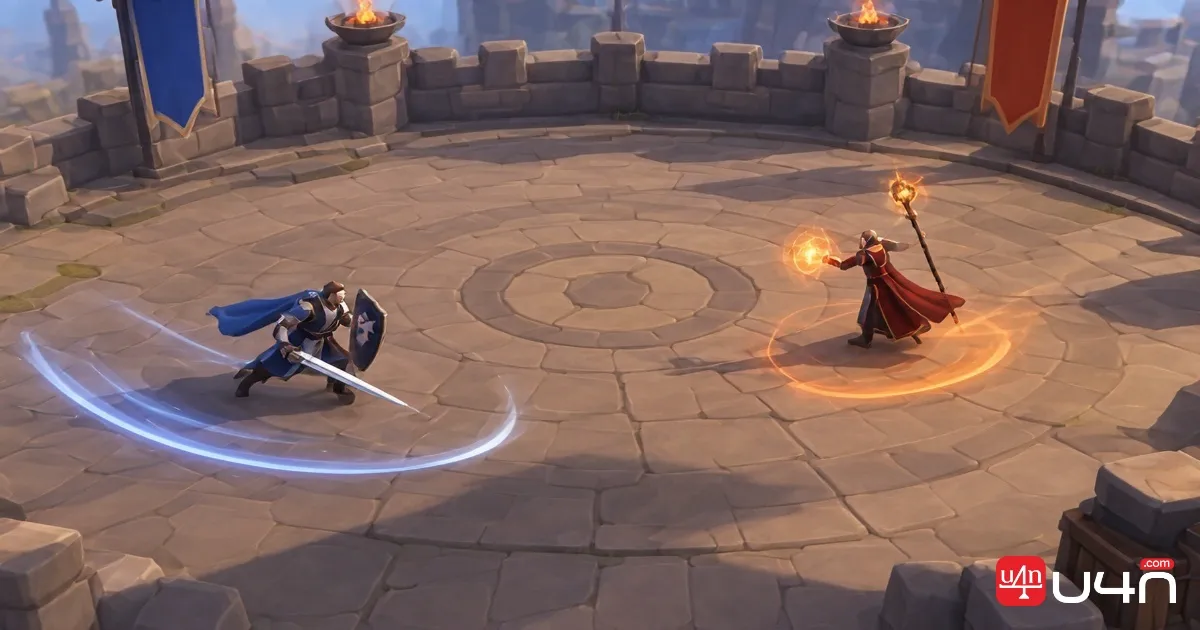
The announced Arena format uses best-of-three matches, a 900 Item Power softcap, and a dedicated ranking and reward system. It is intended to run throughout Season 35, despite temporary interface information suggesting otherwise during the update transition.
We would begin with a familiar weapon and a defined learning goal. Trying several unfamiliar setups in quick succession makes it difficult to identify why a round went wrong. Keeping the build stable gives each match a clearer purpose.
A useful review starts with the exchange that decided the round.
- Did we commit damage while the opponent still had a defensive response available?
- Did we spend mobility to engage and then lose the ability to disengage?
- Did an unnecessary chase put us in a poor position?
These questions lead to changes we can test in the next series.
The 900 IP softcap also needs careful wording. A softcap is not a declaration that every character has identical effective strength. The announcement gives the threshold without detailing the reduction formula, so we would avoid calculating an exact advantage from equipment above it.
Our spending priority would be a complete, repeatable setup: the intended equipment, selected abilities, and any consumables permitted by the mode. We would check the displayed effective stats before paying for upgrades. A purchase should solve a clear problem in the setup rather than serve as a substitute for reviewing losses.
The best-of-three structure makes adaptation worth practicing. We would note what the opponent revealed in the opening round and decide which response needs to change. Even a lost series can produce a useful result if the next attempt tests a specific adjustment.
Conqueror's Challenge Offers a Higher Ceiling
Season 35 introduces a new Conqueror's Challenge milestone at 2,000,000 points. Chest reward value also increases by 50% across all levels, giving personal progression a stronger place in the season plan.
Our first recommendation is to choose a milestone that fits the available time.
The new top level creates a larger target for highly active players. It does not make that target sensible for everyone.
The chest increase should be described precisely.
Higher announced reward value does not guarantee that every individual opening produces exactly 50% more spendable currency. It also does not establish a fixed resale return for the items inside. We would treat the improvement as a reason to reassess participation, while keeping expected proceeds out of the equipment budget until rewards are actually received.
For a player balancing several activities, we would review personal progress at regular intervals. If the next milestone remains within reach through sessions already planned, continuing is easy to justify. If reaching it requires abandoning the guild's most important events, the tradeoff needs a deliberate decision.
We would keep two separate records: the guild's Season Point target and each player's chosen personal milestone. This helps officers explain what a scheduled activity is intended to achieve. It also gives members a clearer answer to the practical question, “What are we working toward tonight?”
Crystal League Adds Tristone and More Matches
The Crystal League changes affect both preparation and scheduling. The 20v20 mode receives Tristone, a map described as emphasizing group combat. Both 5v5 and 20v20 move from two matches per hour to three, and the announcement adds a new Crystal League challenge tied to personal progression. These are confirmed changes; the team routines below are our recommendations for responding to them.
Three matches per hour increases the number of scheduled opportunities. We would not assume every team should immediately fill all of them. More sessions are useful only if the group can maintain the preparation and attention required to learn from each match.
Before entering a match block, we would confirm roles, substitutes, equipment, and who makes the main combat decisions. Between matches, we would pick one correction that the group can apply immediately. A concise instruction such as “wait for the defensive call before re-engaging” is easier to execute than a rushed discussion of every mistake.

For Tristone, the announcement's emphasis on group combat supports preparing coordinated movement, engagement timing, and protection for vulnerable teammates. It does not establish an optimal composition or a proven opening route. We would learn the actual layout before presenting either as settled advice.
Our first reviews on the map would focus on observable questions.
- Where does the group become separated?
- Which approaches leave support players exposed?
- Can the team disengage together after a failed attack?
Those checks produce a stronger foundation than assigning blame based only on damage numbers.
We would also reserve time to compare matches. If the same mistake appears repeatedly, another immediate queue is unlikely to fix it by itself. A short review, a clear adjustment, and a prepared roster give the additional match opportunities a useful purpose.
Our Season 35 Plan
We would build the season around sustainable attendance, a realistic guild rank, and preparation for the January scoring increase. Equipment spending belongs inside that plan. For readers considering whether to buy Albion Online Silver, our budgeting advice starts with a concrete need, such as replacing approved sets for scheduled sessions, and a firm limit on discretionary upgrades.
Our team's priority order is to confirm the patch state, publish the reset calendar, choose guild and personal targets separately, and prepare for each competitive mode on its own terms. By February 6, the remaining objective should be specific enough that every member understands why the guild is committing to it.
FAQ
When does Albion Online Season 35 end?
Season 35 ends on February 8, 2027. Albion Asia closes at 00:00 UTC, while Albion Europe and Albion Americas close at 11:00 UTC. We would put the server-specific time in the guild calendar rather than use a single unlabeled deadline.
When do the Season Point multipliers increase?
The announced multiplier becomes 1.5x after the December 19, 2026, reset and 3x after the January 16, 2027, reset. We would use those transitions to schedule progress reviews and confirm the roster available for the later phase.
How many points are required for Gold and Crystal?
Gold requires 120,000 Season Points, and Crystal requires 350,000. The other listed thresholds are 1,500 for Iron, 11,000 for Bronze, and 35,000 for Silver. These are guild rank requirements, separate from the personal Conqueror's Challenge milestone.
Is the 1v1 Arena available throughout Season 35?
The announced plan is season-long availability, with best-of-three matches and a 900 IP softcap. The announcement also ties the season changes to Dragonfire Patch 5 and warns about temporarily incorrect interface information, so we would confirm deployment before scheduling around the returning mode.
What changes for personal rewards and Crystal League players?
Conqueror's Challenge gains a 2,000,000-point milestone, and chest value increases by 50% across all levels. Crystal League receives the Tristone 20v20 map, three matches per hour for both formats, and a new personal challenge. We would choose a progression target and match schedule that the team can maintain.