

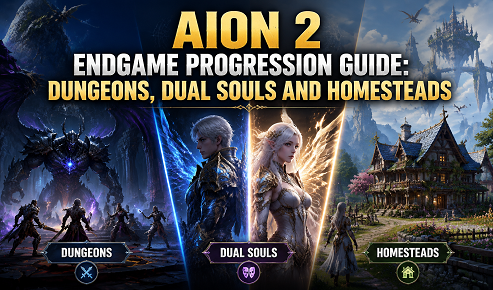
The launch of Aion 2 is shaping up to be very different from the original game. Rather than making PvP the only major endgame pursuit, the game is building a much broader progression system around structured PvE, flexible class customization, raids, crafting, and player housing. For players planning to push hard after the global launch on September 30, 2026, understanding how these systems connect will be important from the beginning. Managing your Aion 2 Kinah, equipment, materials, and upgrade resources efficiently could make a noticeable difference during the first few weeks.
The latest information points toward three major areas that deserve attention: five-player Master Dungeons, the new Class Concept Enhancement and Dual-Soul systems, and the Daeva Homestead housing feature. Each system contributes to the larger progression loop, meaning players who prepare for one activity can often benefit from another. Instead of simply chasing higher gear scores, successful players will need to think about team roles, resource management, crafting materials, and long-term character development.
Master Dungeons Become the First Major PvE Test
Five-player Master Dungeons are expected to form one of the most important steps between campaign progression and high-end raiding. These instances are designed to punish careless play, so having strong equipment alone will not guarantee a successful clear.
A balanced party remains the safest approach. A traditional setup of one Templar, one Cleric, one Chanter, and two high-burst DPS classes such as Assassin or Sorcerer gives the group access to tanking, healing, support, and reliable damage. Groups may eventually experiment with more specialized compositions, but balanced roles should make progression smoother for most players.
Movement will also matter more than it does in many conventional dungeon encounters. Some of the revealed dungeon mechanics make use of Aion 2's aerial combat system. When certain bosses trigger attacks that cover the ground, players may need to deploy their wings, remain airborne, and attack during specific windows to break defensive mechanics before returning to the ground.
That means learning encounter patterns could be just as important as upgrading gear. Players should avoid treating Master Dungeons as simple damage races. Watching boss animations, recognizing attack patterns, and communicating with teammates can prevent unnecessary wipes and save valuable repair and consumable resources.
Prepare for the Weekly Raid Progression
After reaching an Average Item Level of around 450 through Master Dungeon progression, players can move into 10-player Abyssal Raids. These encounters introduce another layer of coordination because raid rewards are subject to weekly restrictions.
With each boss offering limited reward opportunities, wasting a weekly attempt can be costly for players trying to progress quickly. Groups should therefore establish roles and strategies before entering rather than learning every mechanic through repeated wipes.
Damage checks are another important consideration. The reported seven-minute enrage mechanic means raid teams will need enough sustained DPS to finish encounters before bosses become extremely difficult to handle. This makes gear optimization, class synergy, and properly timed cooldowns increasingly important as players move deeper into the endgame.
Players should also avoid entering raids simply because they meet the minimum gear requirement. A character with suitable equipment but poor positioning or an incomplete understanding of their class may contribute less than a slightly weaker character controlled by an experienced player.
Dual-Soul Builds Add More Flexibility
The Class Concept Enhancement system is one of the more interesting changes to traditional class design. Instead of locking characters into one narrow combat role, the Dual-Soul weapon system allows players to switch between different approaches during combat.
A Templar, for example, can use a Sword and Shield setup when acting as the primary tank, focusing on physical defense and enmity generation. During a suitable boss stun window, the same character can switch to a Greatsword configuration for heavier offensive attacks. This creates opportunities for tanks to contribute meaningful damage without abandoning their main role.
Clerics can also benefit from this flexibility. A traditional healing setup can prioritize mana regeneration and area healing, while a more offensive configuration can take advantage of Holy-based attacks. The Battle Cleric concept could allow offensive abilities to provide additional healing value, giving experienced players another way to contribute during difficult encounters.
The important point is to avoid building around only one situation. Players should consider which weapon setup works best for dungeon phases, solo activities, boss mechanics, and group content. Having a second viable setup can be especially useful when a party suddenly needs more damage or additional utility.
Start Preparing for Daeva Homestead
Housing may initially look like a side activity, but the Daeva Homestead system is expected to connect with the wider progression economy. Players interested in maximizing its benefits should begin collecting useful crafting resources rather than selling everything they find.
Lower-tier ore, lumber, and magical essences may become valuable once woodworking, alchemy, furniture production, and property upgrades become available. Holding onto useful materials can save players from having to purchase them again later when demand increases.
Boss trophies could also become desirable collectibles. Specific Master Dungeon bosses are reported to have a chance to drop unique trophies that can be displayed inside a homestead. If these trophies provide passive benefits such as increased rested experience, faster gathering or crafting, or additional inventory capacity, farming them could become part of the broader progression routine.
For this reason, players should avoid treating every low-level material or dungeon reward as worthless. Storage space will always be limited, so prioritize materials that have clear crafting or upgrade potential, but keep a reasonable reserve for future systems.
A Practical Day-One Progression Plan
The most efficient approach is to avoid spreading resources across too many systems at once. Start by pushing through the main campaign and unlocking important movement and class features. Once dungeon access becomes available, concentrate on learning your role and building a dependable party setup.
Solo players should also pay attention to role-based dungeon queues. Playing a needed Tank or Healer role may provide additional rewards, making these positions useful for players who want to accelerate early progression. Even if your main character is built around DPS, understanding the basics of another role can make group matchmaking more flexible.
Guild participation should also happen early. Rather than spending Guild Points immediately, saving Guild Tokens may prove useful if future housing systems require them for premium property plots or related upgrades. Joining an active guild can also make dungeon and raid recruitment much easier during the busy launch period.
Finally, keep your economy under control. Avoid spending all of your currency on temporary upgrades while ignoring crafting materials and future systems. Smart resource management can be just as valuable as raw combat power during a new MMORPG launch.
Players who want to accelerate certain parts of their progression may also consider cheap Aion 2 Boosting options for difficult content or time-consuming progression goals. This can be particularly useful for players who have limited time but still want to keep pace with the evolving endgame.
Whether you focus on Master Dungeons, raids, Dual-Soul builds, or Daeva Homestead progression, the best strategy is to prepare before each system becomes important. Save useful resources, understand your class, build reliable group habits, and avoid unnecessary spending. With a clear progression plan, the first weeks of Aion 2 can be much more manageable and rewarding.
The U4N Team