Leatherworking is a useful crafting profession in WoW Forever, allowing players to turn leather, hides, and scales into Leather and Mail armor, armor kits, ammunition pouches, and other practical items. It is particularly valuable for Rogues, Druids, Hunters, and Shamans, who can benefit directly from many of the items they craft. With new armor sets, additional recipes, and profession-specific progression, Leatherworking offers more than a simple way to produce leveling gear. Players who want to prepare their crafting materials, recipes, or training expenses should also plan their gold budget in advance rather than relying entirely on farming.
Our team recommends pairing Leatherworking with Skinning, especially if you want to reach 300 without spending too much time buying materials from the Auction House. This combination lets you collect leather while questing and leveling your character. If you prefer to spend more time crafting and less time farming, you can also buy WoW Forever Gold to cover material purchases and other profession expenses. The key is to follow a reliable leveling route, learn the required recipes before reaching each skill breakpoint, and avoid wasting valuable leather on inefficient crafts.
WoW Forever Leatherworking Overview
Leatherworking transforms materials obtained from Beasts and other sources into equipment and useful crafting items. Its main products include Leather armor, Mail armor, armor kits, ammunition pouches, and camp objects. The profession is especially relevant to classes that wear Leather or Mail, but armor kits and several utility items can benefit a much wider range of characters.
WoW Forever also introduces new crafting opportunities beyond the traditional Classic profession system. New role-based armor sets, upgraded armor kits, and recipes purchased with Merchant's Favor give Leatherworkers more reasons to continue progressing after reaching the basic skill milestones.
What Can Leatherworking Craft?
| Crafting Category | Main Purpose |
|---|---|
| Leather Armor | Equipment for Rogues, Druids, and other Leather wearers |
| Mail Armor | Gear for Hunters and Shamans |
| Armor Kits | Additional defensive or offensive stats |
| Ammunition Pouches | Useful equipment for Hunters |
| Camp Objects | Rested XP and additional crafting functions |
| Advanced Recipes | Specialized gear and endgame equipment |
Several new armor families support different combat roles, including Brawler's, Defender's, Trapper's, Wisdom's, Stormrider's, and Totemic sets. This gives Leatherworkers more flexibility when crafting equipment for physical damage, tanking, healing, and spellcasting.
One important detail is that some crafted pieces are Bind on Pickup. These items must be made on the character who intends to use them, so players should consider their main character before investing heavily in the profession.

How to Learn Leatherworking and Choose a Specialization
Leatherworking can be learned from profession trainers in major cities and selected starting areas. The first rank has no character-level requirement, making it possible to start collecting materials and crafting basic items early in the game.
However, each higher rank requires additional skill and character progression. Planning trainer visits ahead of time helps prevent unnecessary travel.
Leatherworking Ranks and Requirements
| Rank | Maximum Skill | Requirements |
|---|---|---|
| Apprentice | 75 | No requirements |
| Journeyman | 150 | 50 skill, Level 10 |
| Expert | 225 | 125 skill, Level 20 |
| Artisan | 300 | 200 skill, Level 35 |
For Artisan Leatherworking, Alliance players need to visit Drakk Stonehand in Aerie Peak, The Hinterlands. Horde players can learn it from Hahrana Ironhide in Camp Mojache, Feralas.
Expert training is also faction-specific. Alliance characters can visit Telonis in Darnassus, while Horde characters need to find Una in Thunder Bluff.
Which Leatherworking Specialization Should You Choose?
At higher skill levels, Leatherworkers can choose one of three specializations. Each specialization unlocks exclusive recipes, so your decision should reflect the armor and equipment you intend to craft.
| Specialization | Main Focus | Suitable Classes |
|---|---|---|
| Dragonscale | Mail armor | Hunter, Shaman |
| Elemental | Leather armor for physical damage | Rogue, Druid physical builds |
| Tribal | Specialized Leather armor | Druid, Rogue |
Dragonscale is worth considering if you want to craft Mail equipment for Hunters or Shamans. Elemental focuses on physical-damage-oriented Leather gear, while Tribal provides additional options for Leather wearers, including Frostsaber Boots.
Remember that specialization quests are character-specific, and completing one prevents you from learning the other two on that character. The specialization quest requires Level 40. The traditional 225 Leatherworking requirement should be checked against the current WoW Forever implementation before you commit to the quest.
The standard 1–300 route does not require a specialization. This is useful if you want to reach Artisan first and make your specialization decision afterward.
Best Profession Pairings and Materials for Leveling 1–300
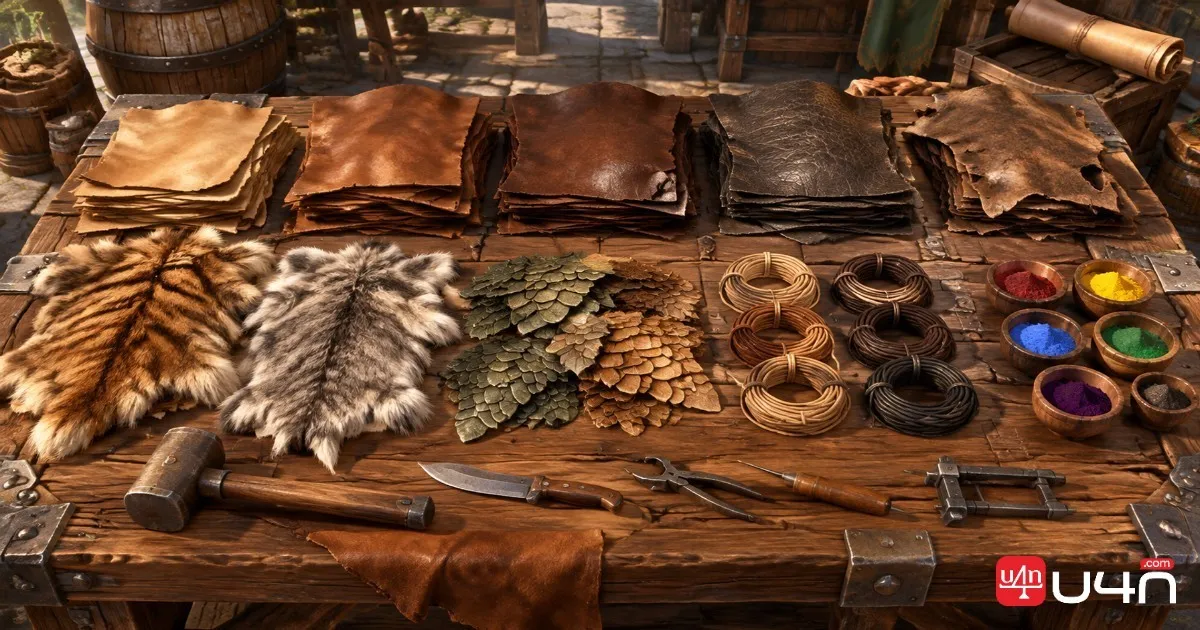
Skinning is the most practical profession to pair with Leatherworking because nearly every stage of the leveling process consumes leather, hides, or scales. Instead of purchasing everything from the Auction House, you can skin Beasts while completing quests and exploring different zones.
Other professions can also provide useful support, particularly when you reach the more demanding crafting recipes.
| Profession | Benefit for Leatherworking |
|---|---|
| Skinning | Supplies most leather, hides, and scales |
| Engineering | Provides access to the Salt Shaker for refining Deeprock Salt |
| Alchemy | Supplies elixirs and potions used in certain recipes |
| Enchanting | Provides dusts required for advanced armor kits |

Materials Required for Leatherworking 1–300
The following estimates provide a useful starting point for preparing your inventory. Actual requirements can vary depending on skill-up luck, recipe availability, and the route you follow.
| Material | Estimated Quantity | Main Source |
|---|---|---|
| Ruined Leather Scraps | 150 | Skinning |
| Light Leather | 387 | Skinning |
| Medium Leather | 174 | Skinning |
| Heavy Leather | 238 | Skinning |
| Thick Leather | 474 | Skinning |
| Rugged Leather | 902 | Skinning |
| Heavy Hide | 60 | Skinning |
| Thick Hide | 13 | Skinning |
| Heavy Scorpid Scale | 360 | Skinning |
| Heavy Scorpid Hide | As needed | Skinning |
| Deeprock Salt | 13 | Drops or Auction House |
| Refined Deeprock Salt | Around 4 | Engineering or Auction House |
| Runecloth | Around 80 | Humanoid drops or Auction House |
You will also need vendor supplies such as Coarse Thread, Fine Thread, Silken Thread, Rune Thread, Salt, and dyes. Some recipes require additional materials from Alchemy or Blacksmithing, including Elixir of Minor Agility, Elixir of Defense, and Iron Buckles.
We recommend preparing around 10% more than the estimated material quantities. This gives you some flexibility when recipes stop providing consistent skill points.
WoW Forever Leatherworking Leveling Guide 1–300
The following route focuses on trainer recipes and accessible patterns, allowing you to reach 300 without choosing a specialization. The complete process takes approximately 455 crafts, although the actual number depends on skill-up results.
The key is to follow a reliable leveling route, learn the required recipes before reaching each skill breakpoint, and avoid wasting valuable leather on inefficient crafts.
A useful rule is to pay attention to recipe colors. Orange recipes reliably provide skill points, yellow recipes often provide them, and green recipes have a much lower chance. Continuing to craft a green recipe for too long can waste materials.
Leatherworking 1–75
The early stages mainly use Ruined Leather Scraps and Light Leather. Most recipes are available from the beginning or can be learned from an Apprentice trainer.
| Skill Range | Recipe | Approx. Crafts | Main Materials |
|---|---|---|---|
| 1–36 | Light Leather | 50 | 3 Ruined Leather Scraps each |
| 36–45 | Light Armor Kit | 14 | Light Leather |
| 45–49 | Handstitched Leather Boots | 6 | Light Leather, Coarse Thread |
| 49–75 | Embossed Leather Gloves | 27 | Light Leather, Coarse Thread |
You can collect most of the required leather from Beasts in starting zones. Coarse Thread is sold by trade supply vendors.
Once you reach 50 skill and Level 10, train Journeyman Leatherworking. Doing this before reaching the skill cap prevents an unnecessary return trip.
Leatherworking 75–150
This stage introduces Medium Leather, cured hides, and recipes that require additional materials from other professions.
| Skill Range | Recipe | Approx. Crafts | Main Materials |
|---|---|---|---|
| 75–85 | Medium Leather | 30 | Light Leather |
| 85–106 | Fine Leather Belt | 35 | Light Leather, Coarse Thread |
| 106–125 | Nimble Leather Gloves | 20 | Medium Leather, Elixir of Minor Agility, Fine Thread |
| 125–145 | Cured Heavy Hide | 60 | Heavy Hide, Salt |
| 145–150 | Hillman's Leather Gloves | 6 | Medium Leather, Fine Thread |
The most important preparation step is securing Elixir of Minor Agility before crafting Nimble Leather Gloves. You can obtain it from an Alchemist or purchase it through the Auction House.
Do not sell the Cured Heavy Hides you produce between 125 and 145. Keep them for later recipes, especially Green Leather items and Guardian Gloves.
At 125 skill and Level 20, train Expert Leatherworking. Alliance players should visit Telonis in Darnassus, while Horde players need to visit Una in Thunder Bluff.
Leatherworking 150–225
Heavy Leather becomes the main material during the first part of this stage. After reaching 197 skill, the route begins using Thick Leather.
| Skill Range | Recipe | Approx. Crafts | Main Materials |
|---|---|---|---|
| 150–159 | Green Leather Belt | 10 | Heavy Leather, Cured Heavy Hide, Green Dye, Iron Buckle |
| 159–165 | Green Leather Bracers | 6 | Heavy Leather, Cured Heavy Hide, Green Dye |
| 165–197 | Guardian Gloves | 38 | Heavy Leather, Cured Heavy Hide, Silken Thread |
| 197–213 | Nightscape Headband | 24 | Thick Leather, Silken Thread |
| 213–225 | Thick Leather Ammo Pouch | 13 | Thick Leather, Cured Thick Hide, Elixir of Defense |
Two materials deserve special attention here. Iron Buckles come from Blacksmithing, while Cured Thick Hide requires Thick Hide and Deeprock Salt.
Prepare the required cured hides before starting the ammo pouch recipe. This avoids interrupting your crafting session to search for missing materials.
Once you reach 200 skill and Level 35, train Artisan Leatherworking. This unlocks the final 75 points of profession progression and access to important recipes such as Nightscape Pants.
Leatherworking 225–300
The final stage requires Rugged Leather, Heavy Scorpid Scales, Rune Thread, and several recipes that are not all learned directly from trainers.
| Skill Range | Recipe | Approx. Crafts | Recipe Source |
|---|---|---|---|
| 225–235 | Nightscape Pants | 16 | Artisan Trainer |
| 235–255 | Wicked Leather Gauntlets | 21 | Vendor |
| 255–280 | Heavy Scorpid Gauntlets | 33 | Pattern Drop |
| 280–290 | Wicked Leather Headband | 30 | Pattern Drop |
| 290–295 | Runic Leather Headband | 8 | Vendor |
| 295–300 | Heavy Scorpid Helm | 8 | Vendor |
For the 235–255 step, Alliance players can purchase the Wicked Leather Gauntlets pattern from Leonard Porter, while Horde players should visit Werg Thickblade.
The Heavy Scorpid Gauntlets pattern drops from Blackrock Soldiers in Burning Steppes. Wicked Leather Headband patterns can be obtained from Jadefire Tricksters in Felwood. If farming takes too long, check the Auction House before spending more time hunting for a specific drop.
There are also several limited-stock vendor patterns in this section. We recommend purchasing them as soon as you reach the appropriate stage instead of assuming they will always be available.
Tribal Leatherworkers have another option between 255 and 280: Frostsaber Boots. The pattern is sold by Qia in Everlook and provides an alternative to Heavy Scorpid Gauntlets.
Before crafting the final Heavy Scorpid Helms, prepare four Cured Rugged Hides using Rugged Hide and Refined Deeprock Salt. This is an important step because the final recipe requires the cured material rather than ordinary Rugged Leather.
Once you reach 300, you can focus on advanced recipes, specialization-exclusive equipment, and the new armor kits introduced in WoW Forever.

Best Endgame Recipes and Gold-Making Opportunities
Reaching 300 is only the beginning if you want to make Leatherworking a long-term investment. The profession offers several useful crafting options for Level 60 characters, particularly through specialized armor, role-based sets, and upgraded armor kits.
Best Recipes to Unlock at 300
| Recipe Category | Examples | Main Use |
|---|---|---|
| Dragonscale Equipment | Black Dragonscale Helm, Blue Dragonscale Helm | Mail gear |
| Leather Equipment | Warbear Helm, Living Crown | Physical and healing builds |
| Special Equipment | Outlaw's Collar | Specialized Leather gear |
| Class Sets | Druid, Rogue, Hunter, Shaman tier pieces | Endgame equipment |
| Advanced Armor Kits | Forceful Rugged Armor Kit, Mystic Rugged Armor Kit | Offensive and spell-power upgrades |
Some high-end recipes have limited or unconfirmed acquisition sources. Before investing in rare materials, check the current recipe availability and verify that the pattern can actually be obtained in your version of WoW Forever.
Merchant's Favor Recipes
Merchant's Favor provides access to another group of Leatherworking recipes. These patterns are sold by trade camp vendors, with different reputation and currency requirements depending on the recipe tier.
The available designs include role-based armor pieces and advanced armor kits. Players can earn Merchant's Favor by completing Waylaid Supply Crates and turning them in at the relevant trade camps.
At 300 skill, you can also purchase Leatherworking Certification for 1,000 Merchant's Favor, unlocking the account-wide title "the Leatherworker."
How to Make Gold with Leatherworking
Leatherworking can generate income through armor kits, crafted equipment, and materials needed for supply crates. However, not every crafted item sells at the same speed.
Armor kits are worth monitoring because players from different classes can use them. Supply crate materials also create demand for common leather types and selected crafted items.
For expensive equipment, always compare the Auction House price with the total cost of the materials. In some cases, selling Rugged Leather or Pristine Leather directly is more profitable than crafting a finished item.
Players who want to expand their crafting options should also keep an eye on the cost of rare patterns and cross-profession reagents. A recipe is not automatically profitable simply because it requires a high Leatherworking skill. We recommend checking current market demand before committing valuable materials. If farming and material purchases are taking too much time, cheap WoW Forever Gold can also be considered when planning your in-game budget.
Summary
WoW Forever Leatherworking is a flexible crafting profession that supports both character progression and endgame preparation. Its combination of Leather and Mail equipment, armor kits, camp objects, and specialized recipes makes it useful for several classes.
For most players, Skinning is the natural profession pairing because it supplies the majority of materials required for the 1–300 route. The most efficient approach is to prepare your leather in advance, train each profession rank as soon as you meet its requirements, and obtain important vendor and drop recipes before reaching the final stages.
Our team also recommends treating specialization as a long-term crafting decision rather than a requirement for leveling. You can reach 300 without choosing one, giving you time to compare the available recipes and decide which direction best supports your character.
WoW Forever Leatherworking FAQ
Is Leatherworking Worth Leveling in WoW Forever?
Yes. Leatherworking is particularly useful for Rogues, Druids, Hunters, and Shamans because they can equip many of the items they craft. Armor kits and utility products also provide value to other classes.
What Is the Best Profession to Pair with Leatherworking?
Skinning is the most practical pairing. It provides the leather, hides, and scales needed for most recipes, reducing your reliance on the Auction House.
How Many Materials Do You Need for Leatherworking 1–300?
The route requires a substantial amount of leather, including Light, Medium, Heavy, Thick, and Rugged Leather. You will also need hides, scales, thread, dyes, and several materials supplied by other professions. Prepare extra materials because skill-up results are not guaranteed.
Do You Need a Specialization to Reach 300?
No. The standard Leatherworking 1–300 route works without a specialization. However, Tribal Leatherworking provides Frostsaber Boots as an alternative recipe for part of the 255–280 stage.
Where Do You Learn Artisan Leatherworking?
Alliance players learn Artisan Leatherworking from Drakk Stonehand in Aerie Peak, The Hinterlands. Horde players train with Hahrana Ironhide in Camp Mojache, Feralas. Both require 200 Leatherworking skill and character Level 35.
What Is the Best Way to Make Gold with Leatherworking?
Armor kits, supply crate materials, and selected crafted equipment are worth monitoring. Always compare material costs with current Auction House prices before crafting expensive items.
How Long Does It Take to Reach 300 Leatherworking?
The suggested route requires approximately 455 crafts. However, the total time depends more on material collection, pattern availability, and travel than on the crafting process itself.
Can You Change Leatherworking Specializations?
Specialization selection is a meaningful character-specific decision. Completing one specialization quest prevents you from learning the other two on that character, so compare the exclusive recipes before committing.