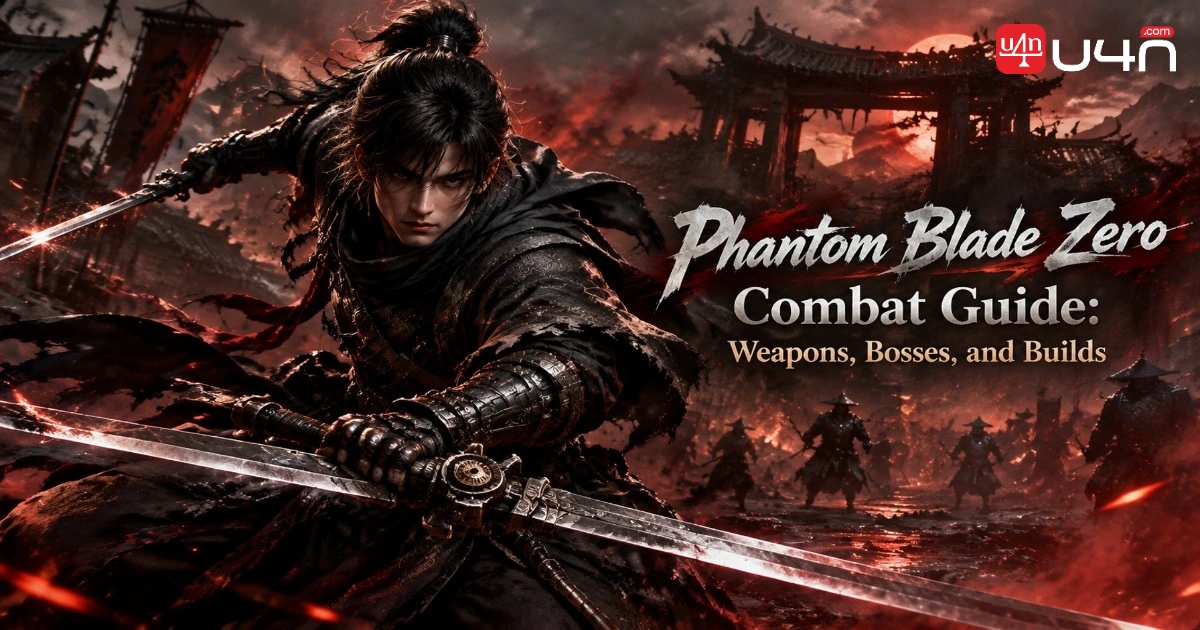
Phantom Blade Zero is built around fast, aggressive combat, but winning a fight takes more than knowing how to chain attacks together. Every encounter asks you to make decisions about timing, positioning, weapon choice, and when to switch from offense to defense. A few missed parries or poorly timed attacks can quickly turn an easy-looking fight into a difficult one.
What makes the combat especially interesting is how its systems work together. Soul can equip two main weapons, manage his Sha-Chi meter, unleash powerful attacks, and use Phantom Edges to create different opportunities during a fight. Bosses also bring their own attack patterns and mechanics, so relying on one familiar combo will not always work.
In this Phantom Blade Zero combat guide, our team breaks down the main combat mechanics, weapon choices, boss strategies, and build considerations. Whether you are just starting your journey or trying to overcome a difficult encounter, understanding how these systems connect will help you fight with more control and confidence.
How Does Combat Work in Phantom Blade Zero?
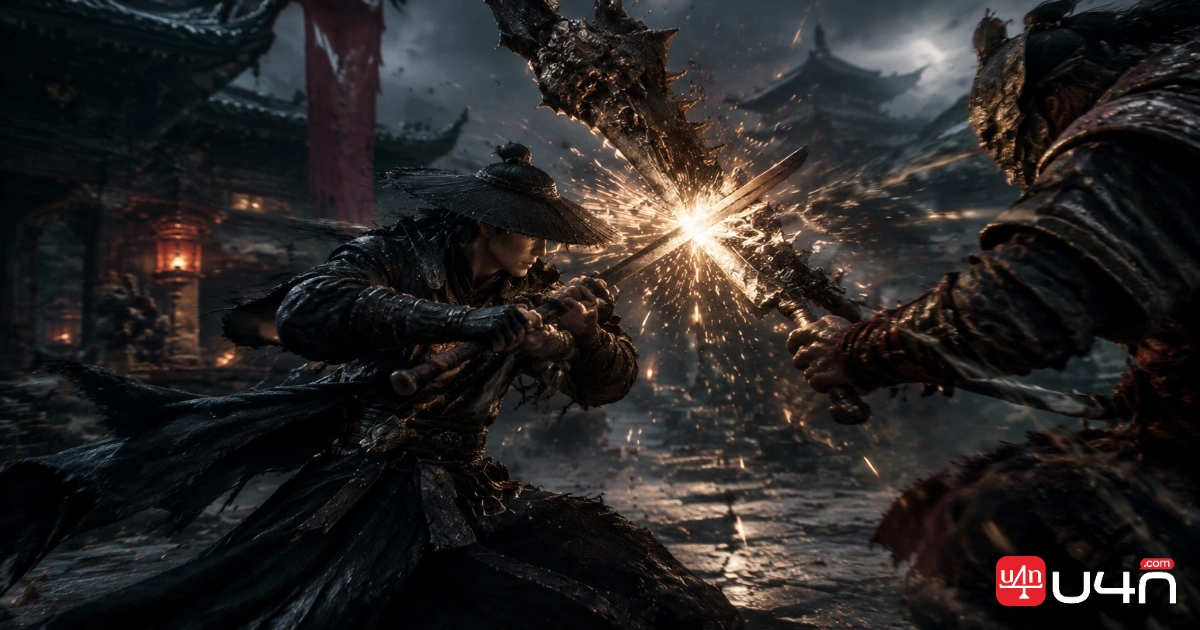
Phantom Blade Zero combines fast-paced action with timing-based defense. Rather than encouraging players to attack continuously, the combat system rewards those who understand when to strike, block, dodge, and counter.
The most important mechanic to learn early is Sha-Chi. It directly affects how safely you can defend yourself and how you manage the flow of a fight.
Understanding the Sha-Chi System
Sha-Chi is one of the central resources in combat. Blocking incoming attacks consumes your Sha-Chi, and allowing the meter to run out can leave Soul vulnerable to enemy attacks.
However, defense is not simply about holding the block button. Perfect parries, successful dodges, and well-timed attacks can pressure an enemy's Sha-Chi, gradually creating opportunities to break through their defenses.
Here is how we recommend approaching the system:
- Avoid holding block continuously, especially against enemies with long attack combinations.
- Use well-timed parries to reduce the pressure on your own defense.
- Attack between enemy moves instead of trying to force damage during every opening.
- Switch between your equipped main weapons when you need to restore your Sha-Chi.
Sha-Chi management is part of your offensive strategy, not just a defensive concern. Players who understand this relationship will usually find combat much easier to control.
Perfect Parries, Dodges, and Counterattacks
Knowing when to defend is just as important as knowing how to attack.
A perfect parry can help disrupt an enemy's rhythm, while dodging provides another way to avoid dangerous attacks. These options serve different purposes, and choosing the wrong response can cost you valuable health.
We recommend learning to recognize three situations:
| Combat situation | Recommended response | Why it works |
|---|---|---|
| A predictable attack with a clear opening | Timed parry | Helps pressure enemy Sha-Chi |
| An attack that is difficult or unsafe to block | Dodge | Avoids unnecessary defensive pressure |
| An enemy recovering after an attack | Counterattack | Creates a safer damage window |
Do not treat every enemy attack as something you must parry. Some encounters are easier when you prioritize positioning and wait for a reliable opening.
A common mistake among action-game players is trying to repeat the same defensive timing they learned in another game. Phantom Blade Zero has its own combat rhythm, so spend time learning how its attacks actually behave.
When to Use Power Surge and Phantom Edges
Power Surge and Phantom Edges give Soul additional ways to control a fight.
As you land attacks, you build Sha-Chi Essence. Once the resource is fully charged, Power Surge becomes available, allowing you to unleash a powerful attack that can interrupt an opponent and deal substantial damage.
Phantom Edges serve a different purpose. These secondary weapons offer specialized attacks and effects, including ranged options, additional damage, and other tactical advantages. Unlike your regular weapon attacks, they have limited uses.
Our advice is to avoid spending these resources automatically whenever they become available. Against a difficult boss, saving a powerful attack for a vulnerable moment can be more valuable than using it immediately.
Best Weapons to Use in Phantom Blade Zero
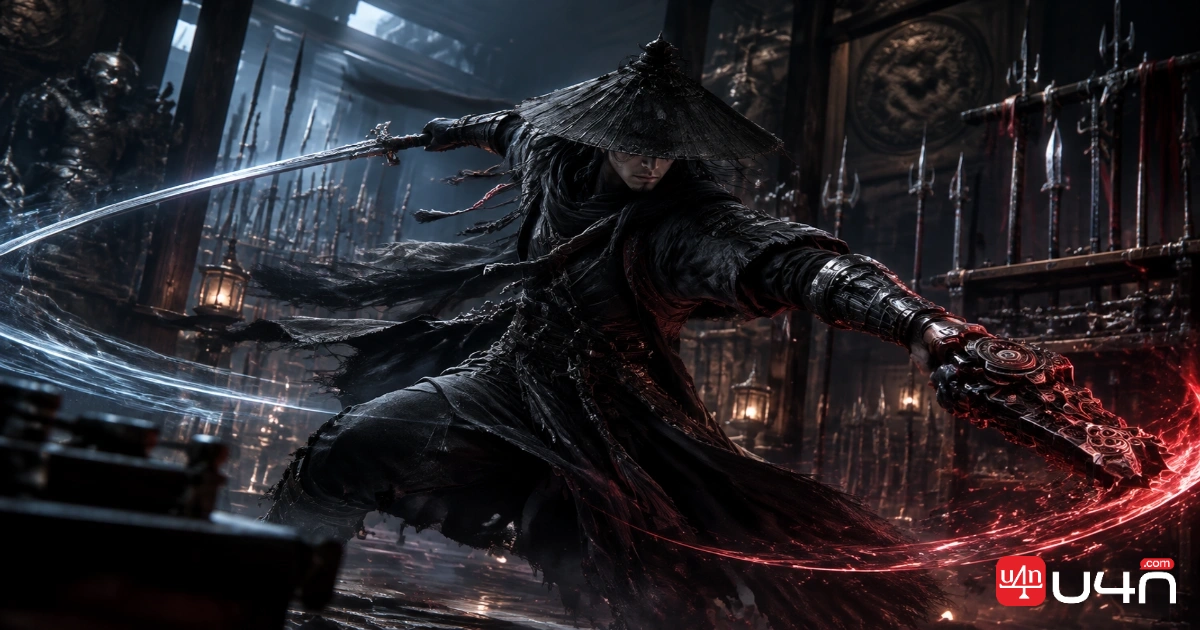
Weapon selection has a major impact on how you approach combat. Two players facing the same boss can have very different experiences depending on their equipped weapons and how effectively they combine their attacks.
Phantom Blade Zero offers more than 30 main weapons and 25 secondary weapons known as Phantom Edges. Many main weapons are obtained by defeating enemies and bosses, giving players a reason to experiment with the weapons they encounter.
How Weapon Switching Changes Your Playstyle
One of the most important features is the ability to equip two main weapons and switch between them during combat.
This is more than a convenient way to access different movesets. Switching your main weapons can also restore your Sha-Chi, making it an important part of resource management.
We recommend treating your two weapon slots as complementary tools rather than simply equipping whichever weapon deals the most damage.
For example, you might prefer one weapon for maintaining pressure and another for creating different attack opportunities. The goal is to build a combination that lets you move naturally between attacking and defending.
A few things are worth considering:
- Choose weapons with movesets that complement each other.
- Practice switching during natural gaps in your attack combinations.
- Pay attention to how each weapon handles groups and individual enemies.
- Avoid choosing weapons based on appearance or damage alone.
The best combination is ultimately the one you can use consistently without sacrificing defensive timing.
Understanding Weapon Strengths and Combat Styles
Instead of looking for one weapon that is supposed to outperform everything else, we recommend evaluating weapons according to their practical strengths.
| Weapon characteristic | What to look for | Potential advantage |
|---|---|---|
| Fast attack sequences | Short recovery and smooth combos | Maintaining offensive pressure |
| Heavy attacks | Strong impact and guard pressure | Smaller openings for powerful attacks |
| Dual-wield combinations | Different attack patterns and transitions | More flexible combo options |
| Special effects | Bleed, healing, or battlefield control | Additional tactical value |
These are evaluation criteria rather than official weapon classes. Individual weapons can have overlapping strengths, so their actual movesets and special effects matter more than a simple category label.
Why Boss Weapons Are Worth Collecting
Boss encounters are not just obstacles between story chapters. They are also an important part of expanding your arsenal.
Defeating certain bosses allows you to obtain weapons associated with their fighting styles. This creates an interesting progression loop: you first learn how to survive an enemy's attacks, then gain access to some of the tools that made that enemy dangerous.
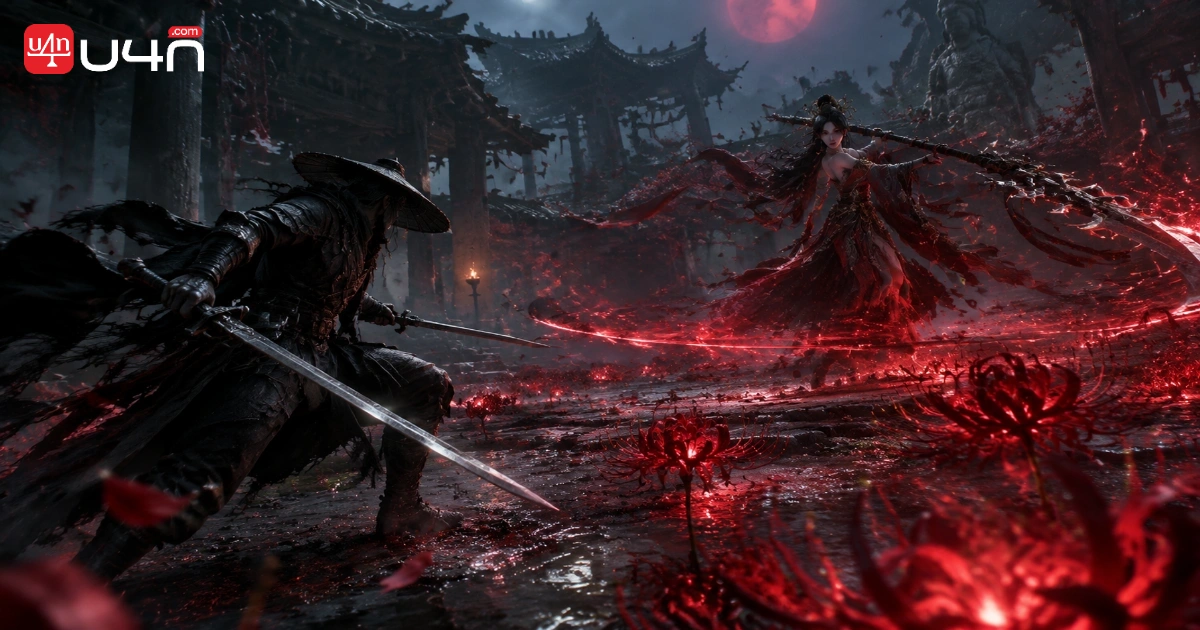
A good example is Hua, Deadly Betrothed. Defeating her allows Soul to obtain the Scarlet Wraithblade, which can summon spider lilies during combos. These effects slow enemies and provide additional battlefield control.
The White Serpent and Crimson Viper also demonstrate how different weapons can work together. Their individual attacks and combined moves give players more ways to approach an encounter.
Our recommendation is to experiment with newly acquired boss weapons instead of immediately returning to your previous setup. A weapon that feels unfamiliar at first might become especially useful against a later opponent.
How to Beat Bosses in Phantom Blade Zero
Boss fights are where the combat system really comes together. These encounters test your ability to recognize attack patterns, manage resources, and adjust your approach when an enemy changes tactics.
Rather than relying on a single combination, we suggest breaking every difficult fight into smaller decisions.
Learn Boss Attack Patterns Before Attacking
Your first attempt against an unfamiliar boss should be about understanding its behavior.
Pay attention to how the boss starts its attacks, how many hits are included in each combination, and how long it remains vulnerable afterward.
We usually recommend focusing on three things:
- Identify which attacks can be blocked or parried safely.
- Learn which attacks require you to move out of the way.
- Find the recovery windows where you can deal damage without immediately being punished.
This approach might make the opening attempts feel slower, but it prevents you from repeatedly making the same mistakes.
Adapt Your Strategy to Different Boss Mechanics
Not every boss tests the same skills. Some focus on fast melee attacks, while others use large-area attacks, environmental hazards, or unusual combat mechanics.
Hua, Deadly Betrothed, is a useful example. Her spider lilies can create dangerous areas that restrict movement and leave you vulnerable to heavy attacks. Simply staying close and attacking continuously is not a reliable strategy.
Jing Ye, The Outlaw, presents a different challenge. His mounted attacks, disruptive tactics, and later ground-based attacks require players to adjust their positioning and recognize changes in his fighting style.
Here is a practical way to approach different encounters:
| Boss behavior | Main challenge | Recommended approach |
|---|---|---|
| Fast melee combinations | Limited recovery time | Prioritize defensive timing |
| Large-area attacks | Restricted safe space | Maintain distance and reposition |
| Environmental hazards | Reduced movement options | Watch the arena as well as the boss |
| Multiple combat phases | Changing attack patterns | Adapt instead of repeating one combo |
These are strategic categories rather than fixed boss classifications. Always pay attention to the actual mechanics of the encounter.
What to Do When You Keep Losing
Repeatedly attacking a boss without changing your approach rarely produces better results.
If you are struggling, take a moment to review what is causing the most problems.
- Running out of Sha-Chi: Improve your defensive timing and switch weapons more deliberately.
- Taking damage during long combos: Shorten your attack sequences and leave room to react.
- Struggling with a particular attack: Focus on learning its timing instead of trying to overpower it.
- Dealing too little damage: Experiment with another weapon combination or look for better opportunities to use Power Surge.
- Losing during later phases: Pay attention to how the boss changes its behavior as the encounter progresses.
Sometimes the solution is not a stronger weapon. It is simply a better understanding of the fight.
Best Builds and Combat Strategies
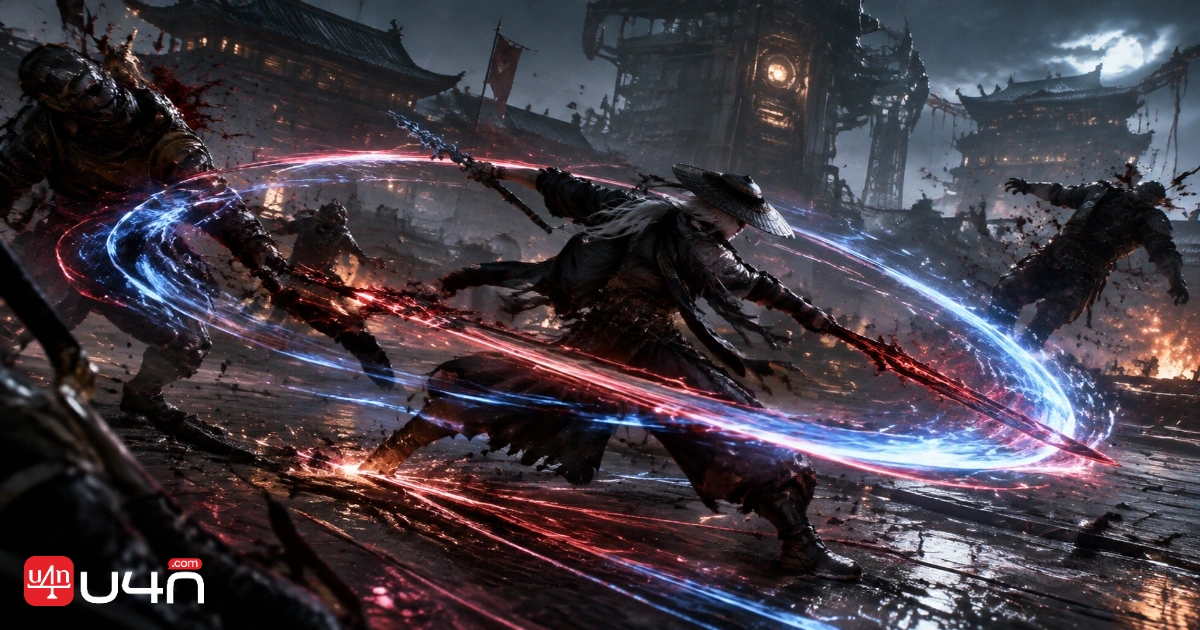
Build customization allows players to shape Soul's combat style around their preferences. Weapon upgrades, accessories, Phantom Edges, and other equipment choices all contribute to how you approach difficult encounters.
However, we would not recommend treating every build as a universal solution. A setup that works well against regular enemies might not be the most comfortable choice for a boss that constantly pressures your defense.
Aggressive Builds for Fast Combat
An aggressive setup focuses on maintaining pressure and creating opportunities through continuous attacks.
When putting together this type of setup, consider:
- Main weapons with attack sequences that feel comfortable to chain together.
- Special effects that reward consistent offensive pressure.
- Phantom Edges that help create openings or extend your damage opportunities.
- Enough defensive awareness to avoid becoming vulnerable during long combinations.
This approach suits players who enjoy taking control of an encounter instead of waiting for every enemy to finish attacking.
However, aggression should not mean ignoring defense. Even an offensive setup needs room for parries, dodges, and weapon switching.
Defensive Builds for Difficult Bosses
A more defensive approach is useful when learning unfamiliar encounters or fighting enemies with demanding attack patterns.
Instead of focusing entirely on damage, prioritize a setup that allows you to survive mistakes and respond consistently.
Consider the following:
- Accessories that support your preferred defensive approach.
- Weapons with movesets you can use safely after a successful defense.
- Phantom Edges that provide useful utility during dangerous encounters.
- A balanced approach to damage and survivability.
For players who are still learning a boss, consistency is often more valuable than squeezing out a little extra damage.
Elemental and Status-Based Weapon Strategies
Special weapon effects add another layer to combat customization.
Some weapons provide effects such as bleeding, life recovery, or battlefield control. These abilities can influence how you approach an enemy and which weapons work well together.
For example, a weapon that creates additional battlefield pressure can be useful when dealing with multiple enemies, while an effect that supports sustained damage may be more appealing during longer encounters.
When evaluating these options, ask yourself:
- Does the effect help against the enemy I am currently fighting?
- Can I trigger it reliably with my normal attack combinations?
- Does it complement my second main weapon?
- Is the effect useful enough to justify changing my existing setup?
There is little reason to use a complicated combination if you cannot activate its benefits consistently.
How to Upgrade Weapons Without Wasting Resources
Weapon upgrades can improve your overall combat experience, but players should not feel pressured to invest in every weapon they collect.
One useful feature is the ability to reforge upgraded weapons and recover their materials, allowing you to reinvest those resources into another setup.
We recommend the following progression approach:
- Start with two main weapons that feel comfortable.
- Learn their attack patterns and how they work together.
- Upgrade the weapons you use most frequently.
- Experiment with newly acquired boss weapons.
- Reforge and redistribute materials when you decide to change your setup.
This gives you room to experiment without treating every upgrade as a permanent commitment.
Common Combat Mistakes New Players Should Avoid
Even players with experience in other action games can make avoidable mistakes when starting Phantom Blade Zero. The combat system rewards flexibility, and relying too heavily on familiar habits can make encounters unnecessarily difficult.
Relying Too Much on Dodging
Dodging is important, but it should not become your only defensive response.
Learning when to parry helps you manage enemy pressure and create better opportunities to counterattack. Use dodges when they are the safer option, not simply because they are familiar.
Ignoring Weapon Switching
Keeping the same weapon equipped throughout an encounter means missing one of the system's most useful mechanics.
Switching weapons restores your Sha-Chi and gives you access to different attack sequences. Make it part of your regular combat rhythm.
Using the Same Strategy Against Every Boss
Different bosses demand different responses. A weapon combination that works well against a slower opponent may feel uncomfortable against an aggressive enemy with frequent area attacks.
Be willing to change your setup when the situation calls for it.
Spending Resources Without a Plan
Power Surge, Phantom Edges, and weapon upgrades all have practical uses. Using them without considering the encounter can make difficult fights harder than necessary.
Think about what each resource contributes before committing to it.
Is Phantom Blade Zero Difficult for Beginners?
Phantom Blade Zero has a learning curve, especially for players who are unfamiliar with timing-based combat. However, difficulty does not come from memorizing endless combinations. Much of it comes from understanding how the different combat systems work together.
The game also offers several difficulty options, allowing players to choose an experience that better suits their preferences.
| Difficulty mode | General focus |
|---|---|
| Wayfarer | A more accessible experience focused on enjoying the journey |
| Hellwalker | A greater challenge with more advanced and adaptive enemy behavior |
| Sixty-Six Days | A demanding experience for players looking for a serious challenge |
We recommend that new players focus on learning the basic combat rhythm before worrying about advanced weapon combinations.
Start by understanding Sha-Chi, practice recognizing enemy attack patterns, and become comfortable switching between your two main weapons. Once these habits feel natural, experimenting with different builds becomes much easier.
You do not need to master every mechanic immediately. A consistent approach will take you further than trying to perform complicated combos before understanding the fight.
Master the Combat, Not Just the Combos
Phantom Blade Zero stands out because its combat is built around more than fast attacks and impressive animations. Weapon switching, Sha-Chi management, defensive timing, and boss-specific mechanics all influence how an encounter unfolds.
Our team's biggest recommendation is to treat combat as a balance between aggression and control. Learn when to attack, recognize when to defend, and experiment with different weapons until you find a combination that fits your playstyle.
There is no single setup that solves every encounter. The most effective approach is the one that helps you understand your opponents and respond to their attacks consistently.
Master the rhythm of combat first, and the more advanced techniques will become much easier to use.