Choosing the best class in Icarus Online is not simply about finding the character with the highest damage. Your class determines how you approach solo leveling, survive dangerous encounters, and contribute to dungeon parties. Our team compares all eight classes by combat role, versatility, survivability expectations, and group utility to help you make a practical choice. Before planning your progression, understanding the role of Icarus Online Gold in the in-game economy can also help you prepare your character without losing sight of your priorities.
The timing matters, too. The global service is scheduled to launch on October 22, 2026, following a closed beta test that ran from September 29 to October 6. According to Inven Global's launch report, the CBT recorded a peak day-over-day retention rate of 70.4% based on daily active users. That figure indicates encouraging early engagement, but it does not prove that any particular class is stronger than another. Our tier list therefore separates role-based recommendations from rankings that require verified combat data.
Icarus Online Class Tier List: Overall Rankings
The current version features eight classes: Berserker, Guardian, Assassin, Ranger, Wizard, Priest, Idol, and Magician. Their official descriptions establish distinct roles, from Berserker's aggressive melee combat to Guardian's defensive focus and Priest's healing abilities. However, those descriptions do not establish a definitive DPS hierarchy.
For a useful launch-period ranking, we evaluate how clearly each class fits common player needs rather than pretending to know its unverified endgame performance.
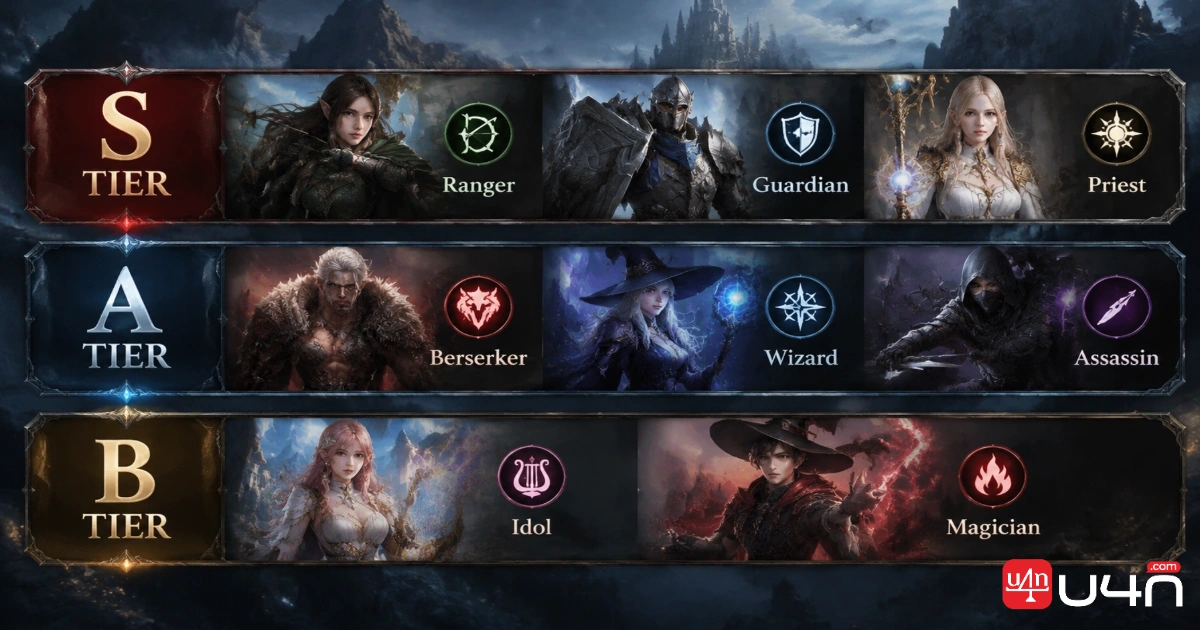
| Tier | Class | Primary Reason to Consider It |
|---|---|---|
| S | Ranger | An appealing option for players who want ranged combat and tactical flexibility |
| S | Guardian | A clear choice for players who prioritize frontline protection |
| S | Priest | A natural fit for players who value healing and party support |
| A | Berserker | A strong thematic fit for aggressive melee players |
| A | Wizard | An option for players who enjoy elemental spellcasting |
| A | Assassin | A fit for players who prefer fast, precision-focused combat |
| B | Idol | Worth exploring for its distinctive Shaling mechanics |
| B | Magician | Worth exploring for its demonic-magic playstyle |
Important: These are provisional role-fit tiers, not measured power rankings. S-tier means the class has a particularly clear use case for a common playstyle; it does not mean that it has the highest damage, fastest clear times, or best performance in every encounter. A and B placements reflect the confidence of these initial recommendations, not proof that those classes are weaker.
As players collect comparable launch-version data, the tiers should be revised. A credible class ranking must be willing to change when actual performance contradicts initial expectations.
Best Classes for Solo PvE and Leveling
For solo progression, we care about three things: how quickly a class defeats enemies, how reliably it survives, and how much time it spends recovering between encounters. Damage alone cannot tell the whole story.
Ranger: A strong starting point for flexible combat
Ranger is worth investigating first if you prefer ranged attacks and tactical positioning. Its official description emphasizes precise, magic-infused shots. This makes it an intuitive choice for players who want to attack from a distance, although its actual leveling speed still depends on skill behavior, enemy design, and equipment.
Berserker: For direct, aggressive combat
Berserker is designed around overwhelming offensive power. Players who enjoy staying close to enemies and dealing direct damage should find its identity appealing. The key question is whether its damage and recovery requirements remain efficient during longer sessions, particularly when enemies attack in groups.
Wizard: For players who favor elemental magic
Wizard offers a spell-focused combat style built around elemental power. It may appeal to players who enjoy planning attacks and managing combat distance. However, we should not automatically rank it above other classes for solo leveling without verifying its casting times, defensive tools, and actual clear speeds in the current version.
Assassin also deserves attention, especially for players who enjoy fast-paced combat. Its mobility and lethal-strike identity are attractive, but the practical difficulty depends on its current skill rotation and how forgiving the class is when a player makes a mistake.
Our recommendation is to test each candidate against the same type of encounter. Record the time needed to defeat a fixed group of enemies, the number of deaths, and the recovery time between fights. That gives you a more meaningful comparison than isolated damage numbers or short promotional clips.
Best Classes for Dungeons and Group Content
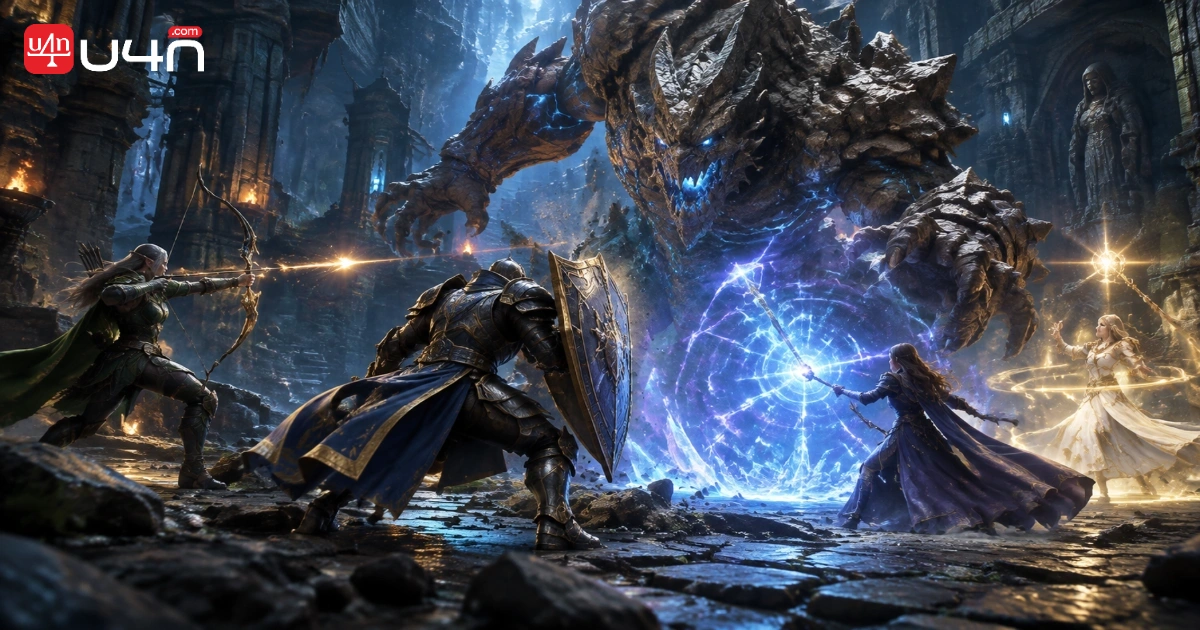
Dungeon performance depends on the entire party. A class that contributes less personal damage may still be valuable if it helps the group survive, while a high-damage character may struggle when encounters demand careful positioning or sustained support.
Guardian is the defensive choice.
Its official description centers on protecting allies through sacred power and swordsmanship. That makes it a logical candidate for parties that need a frontline role. Its actual value should be measured by how effectively it handles incoming damage and supports the group, not just by its personal damage output.
Priest is the support-focused choice.
The official class description identifies healing and guiding allies as its central purpose. In difficult group encounters, reliable healing can help prevent mistakes from turning into a full party defeat. Players who primarily enjoy solo combat, however, should investigate its independent damage and leveling efficiency before committing.
Berserker, Assassin, Ranger, and Wizard provide different approaches to dealing damage. Which performs best will depend on encounter mechanics, equipment, skill execution, and the composition of the party. Idol and Magician may also fill valuable niches, but their current group contributions need to be assessed through actual skill interactions.
For a practical party evaluation, use these questions:
- Can the group survive the encounter without excessive recovery?
- Does it have enough consistent damage to finish fights efficiently?
- Can its members handle mechanics without leaving essential roles uncovered?
A balanced party does not necessarily need a predetermined combination of classes. The right lineup depends on what the encounter demands and which roles your existing teammates already cover.
Which Icarus Online Class Is Best for Beginners?
New players should prioritize a class whose combat style they understand and enjoy. A complicated rotation can become manageable with practice, but a class that constantly frustrates you is unlikely to be a good long-term choice.
| Player Preference | Classes to Try | Main Decision Factor |
|---|---|---|
| Aggressive melee combat | Berserker | Comfort with close-range fighting |
| Defensive play | Guardian | Interest in protecting allies |
| Ranged attacks | Ranger | Preference for distance and positioning |
| Elemental spells | Wizard | Enjoyment of spell-based combat |
| Fast-paced fighting | Assassin | Comfort with active movement and execution |
| Healing and support | Priest | Interest in group responsibilities |
| Distinctive mechanics | Idol or Magician | Interest in their unique combat identities |
We would not automatically label Guardian or Priest the easiest classes simply because their roles are easy to describe. A clear role does not necessarily mean simple controls or forgiving combat mechanics.
Before settling on a main character, learn the basic skill rotation, test several different encounters, and pay attention to how often you need to recover from mistakes. If a class feels comfortable and gives you room to improve, that is a better starting point than following an unverified ranking.
How Equipment and Familiars Affect Class Performance

Class choice is only one part of progression in Icarus Online. Equipment development, skill selection, combat habits, and Familiar progression can all influence how a character performs.
The official game overview highlights several Familiar systems, including taming, flight, growth, and enhancement. These mechanics add another layer to character development and make Familiar management worth considering alongside class selection.
Equipment matters for a similar reason. Stronger gear may improve a character's performance, but it does not automatically solve poor positioning or an ineffective skill rotation. A class that looks impressive on paper may also underperform when its player has not learned how to use its abilities effectively.
Our team recommends tracking three factors when comparing builds:
- Combat consistency: Can you defeat enemies reliably rather than relying on occasional high-damage moments?
- Survivability: How often do mistakes lead to defeat, and how much time does recovery consume?
- Progression efficiency: Do your equipment, skills, and Familiar development support your chosen role?
These factors also explain why two players using the same class can have very different experiences. As the global service develops, controlled comparisons between similar characters will be more useful than unsupported claims that one class dominates every activity.
Common Mistakes When Following a Tier List
The first mistake is treating a tier list as a permanent ranking. Balance changes, skill discoveries, and new equipment options can alter the relative value of different classes.
The second is confusing burst damage with sustained performance. A character may deal impressive damage in a short window but struggle when a fight lasts longer or its preferred rotation is interrupted.
The third is evaluating every class using the same criteria. Guardian should not be judged only by personal damage if its defensive role is central to its value. Priest should not be dismissed because a damage-focused class defeats a particular enemy faster.
Finally, avoid choosing a class solely because it occupies the highest tier. If you dislike its combat pace or responsibilities, its theoretical advantages may not translate into better results for you.
The best tier list is a starting point, not a guarantee. Choose a class based on your preferred role, then validate its performance through consistent testing and real gameplay experience.
Which Class Should You Choose
Our initial recommendations are straightforward: explore Ranger if you prefer ranged combat, Guardian if you value protection, Priest if you enjoy supporting a party, and Berserker if you want an aggressive melee experience. Wizard and Assassin offer distinct alternatives, while Idol and Magician are worth considering if their specialized mechanics appeal to you.
These recommendations are based on class identity, not verified endgame superiority. We will need comparable launch-version combat results before confidently declaring a single best class for solo PvE or group content.
Choose according to the content you expect to play, then improve your build as you learn the class. If additional resources fit your progression plans, you can also evaluate whether buying Icarus Online Items makes sense for your goals. No purchase, however, replaces understanding your skills, positioning, and role.
The best class is ultimately the one you can play consistently, develop confidently, and enjoy across the content that matters most to you.