Cart Empty
Continue ShoppingIn College Football 27, Dynasty Blueprint is the core system that defines how you build and manage a football program over multiple seasons. It connects program expectations with resource allocation, forcing players to make strategic decisions about where to invest and how to shape long-term success.
Athletic Director (AD) Expectations set the baseline goals for your program. These expectations define what counts as success for your school, while the Dynasty Blueprint determines how you achieve those goals using available resources.
At its core, Dynasty Blueprint functions as an annual planning system where every decision matters. You are not only coaching games—you are managing an entire program structure.
| Component | Description | Impact on Program |
|---|---|---|
| Athletic Director Expectations | Required goals set by school leadership | Determines performance pressure and rewards |
| Dynasty Blueprint | Annual resource allocation system | Controls program development strategy |
| Coaching Staff | Hiring and upgrading coordinators and staff | Improves gameplay performance and tactical edge |
| Facilities | Investments in training and infrastructure | Boosts player development and long-term growth |
| NIL Strategy | Managing player compensation and retention | Affects recruiting and roster stability |
Each school in Dynasty Mode operates differently based on prestige, tradition, and available funding. A top-tier program may invest heavily across all areas, while smaller schools must prioritize specific strengths.
Every program has a unique identity shaped by its history and resources. These factors influence how effective your Dynasty Blueprint can be.
| Factor | Description | Gameplay Effect |
|---|---|---|
| Conference Prestige | Strength of your conference | Impacts resource generation and reputation |
| Brand Exposure | National visibility of the program | Affects recruiting and funding |
| Stadium Atmosphere | Home field environment quality | Boosts performance and recruiting appeal |
| Program Tradition | Historical success level | Influences baseline expectations and resources |
Because of these differences, no two Dynasty Blueprints look the same. The system encourages adapting strategy based on school identity rather than using a universal build.
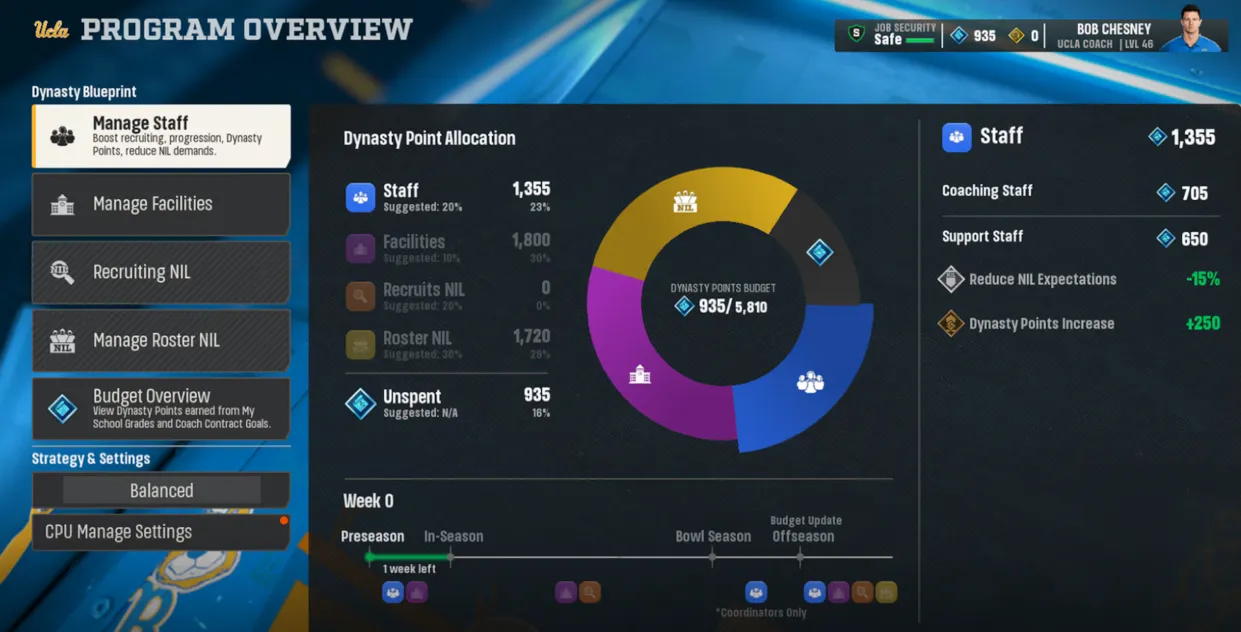
Dynasty Points are the primary currency used to execute your Blueprint. Each season, your program receives a new allocation of Dynasty Points, which must be spent before the next cycle begins.
These points are used to fund coaching improvements, facility upgrades, and NIL operations.
| Source | Description | Result |
|---|---|---|
| Base School Identity | Derived from program grades (prestige, tradition, etc.) | Annual baseline budget |
| Conference Performance | Success within your conference | Bonus Dynasty Points |
| Postseason Success | Bowl games, playoffs, championships | Large point rewards |
| AD Expectations | Completing assigned school goals | Targeted performance bonuses |
| Contract Incentives | Coaching abilities that boost rewards | Increased payout efficiency |
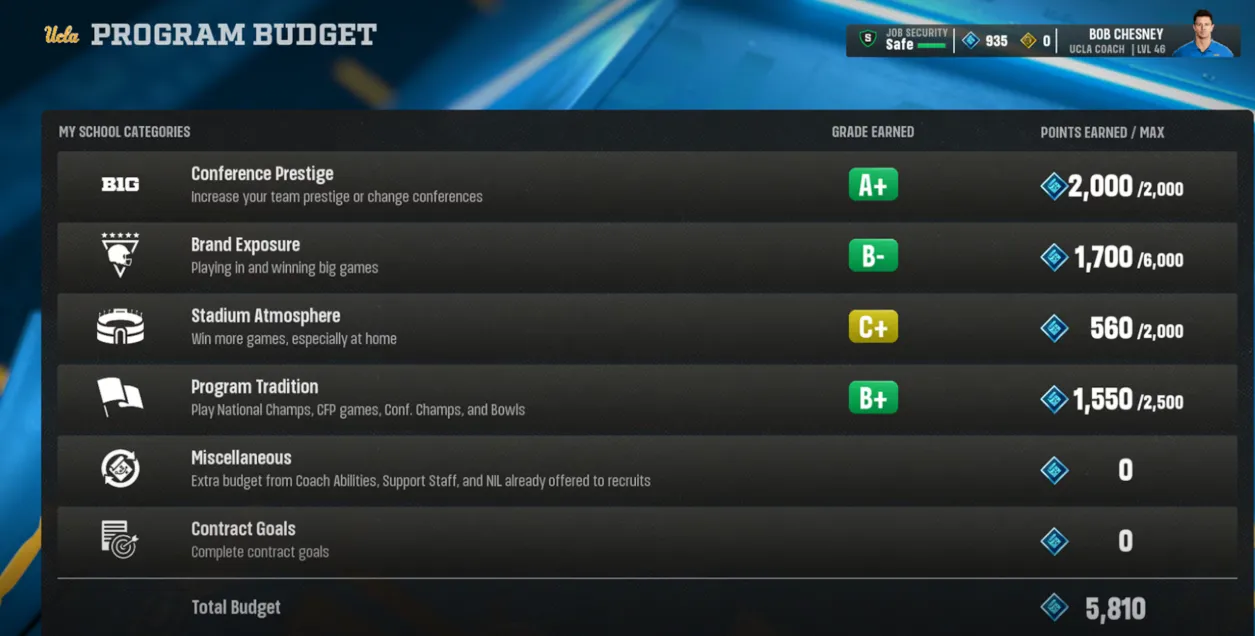
Dynasty Points in College Football 27 serve as the main currency for building and upgrading your program, with each season providing a fresh budget that must be carefully allocated before the next cycle begins. These points are earned through school identity, conference performance, postseason success, AD Expectations, and contract incentives, rewarding both consistency and high-level achievements. Smart management of these resources is key to long-term dynasty success.
For players looking to progress faster and stay competitive, many choose to buy College Football 27 coins from the our website to support their Dynasty Blueprint strategy and strengthen program development options.
Dynasty Points must be carefully distributed across three main investment areas. Each category influences different aspects of program growth.
| Category | Purpose | Long-Term Effect |
|---|---|---|
| Coaching Staff | Hire and upgrade coordinators | Improves gameplay execution and tactical depth |
| Facilities | Upgrade training and infrastructure | Enhances player development and progression |
| NIL | Manage athlete compensation and retention | Strengthens recruiting and reduces roster loss |
Players can choose to specialize heavily in one area or maintain balance across all three, depending on program goals and available resources.
Dynasty Points operate on a strict yearly reset system. They do not carry over between seasons, making budget planning critical.
| Stage | Action |
|---|---|
| End of Season Recap | Dynasty Points are calculated and refreshed |
| Reward Distribution | Postseason and AD bonuses are added |
| Annual Budget Start | New Dynasty Points become available |
| Spending Phase | Points are allocated to staff, facilities, and NIL |
| Season Progression | Investments influence performance and recruiting |
Because unused points are lost at the end of each cycle, players must decide whether to spend aggressively for immediate success or invest strategically for long-term growth.
The Dynasty Blueprint system is designed to create meaningful tradeoffs. There is no single optimal build, and success depends on balancing short-term performance with long-term development.
Each approach changes how your program evolves over time, making every Dynasty save unique.
Dynasty Blueprint and Dynasty Points form the foundation of program management in College Football 27. The system combines resource planning, school identity, and performance-based rewards into a single annual cycle. Success depends not only on winning games, but also on how effectively you allocate your budget across staff, facilities, and NIL while adapting to your school's expectations and long-term goals.
Authored by elite gamers and industry insiders, the U4N Editorial Team delivers authoritative game updates, patch notes breakdowns, and expert strategies for trending titles including World of Warcraft, Path of Exile 2, MapleStory, Aion 2, and Arc Raiders.
From deep-dive guides to the latest meta shifts, our in-house veterans test every tactic firsthand to keep you ahead of the game.