Brown Dust 2's Mirror Wars environment has become more difficult to predict following changes to opponent visibility, character affinity bonuses, and costume Cost restrictions. Players can no longer rely as heavily on inspecting an opponent's lineup before building a counter-team. Instead, consistent results depend on flexible formations, reliable opening damage, and defensive setups that can survive different attack patterns. For players reviewing their Brown Dust 2 Accounts, understanding these changes is now an important part of deciding which characters and costumes deserve investment.
Our team approaches the new PvP environment from three practical angles: how matchmaking affects offensive decisions, which defensive mechanics remain useful when opponents are harder to read, and how to build effective teams without wasting limited Cost capacity. Whether you are pushing for a higher rank or simply trying to collect regular Arena rewards, the goal is the same: build a team that performs consistently rather than one that only works against a specific opponent.
Quick Answer: What Should You Change After the PvP Update?
The biggest adjustment is moving away from highly specialized counter-teams and toward formations that can handle several possible enemy setups.
| PvP Area | Recommended Adjustment | Main Reason |
|---|---|---|
| Matchmaking | Prepare flexible offensive formations | Opponent information is less useful during team selection |
| Offense | Prioritize opening damage and reliable buffs | Early eliminations reduce the opponent's response options |
| Defense | Combine damage absorption, Taunt, and Evasion | A fixed defense needs to survive different attack patterns |
| Costume Cost | Use efficient support costumes | High-cost combinations can limit team flexibility |
| Daily rewards | Set up a repeatable attack team | Reduces the time spent on routine battles |
The biggest adjustment is moving away from highly specialized counter-teams and toward flexible offensive formations, reliable opening damage, and defensive setups that can handle different enemy strategies.
For most players, we recommend building one dependable physical or magic offensive core first, then developing a defensive formation around the characters and costumes already available. There is little value in copying an expensive top-ranking team if its skill rotation or upgrade requirements are beyond your current account.
How the New Matchmaking Changes Mirror Wars
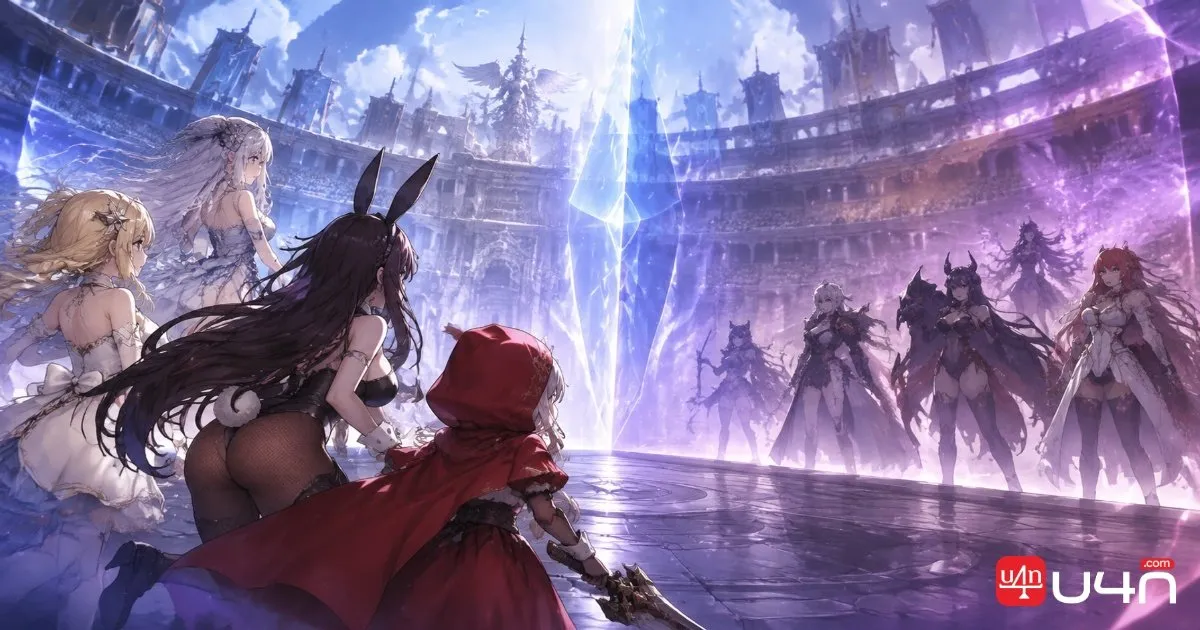
The most important strategic shift is the reduced value of opponent-specific preparation. When enemy lineup information is hidden during matchmaking, players have fewer opportunities to select a direct counter before entering battle.
Previously, inspecting the opposing formation could help determine whether to prioritize physical damage, magic damage, frontline elimination, or attacks against particular positions. Under a blind-matchmaking environment, that approach becomes less dependable.
Build Around Probability Instead of Perfect Counters
We recommend evaluating offensive teams according to three factors:
- Coverage: Can your attacks threaten multiple common formations rather than relying on one specific target?
- Opening pressure: Can your team create a meaningful advantage during the first turn?
- Consistency: Does the formation still function when the opponent's frontline or defensive setup differs from expectations?
This does not mean counter-picking has become completely irrelevant. Positioning and skill targeting still matter once combat begins. The difference is that players need to prepare for uncertainty before the battle rather than assuming they already know the enemy formation.
How Affinity Bonuses Affect Damage and Defense
Character affinity bonuses also deserve attention. Community discussion highlights substantial critical damage potential from affinity progression, making offensive investment increasingly important.
However, players should distinguish between critical rate, critical damage, and other damage modifiers. These attributes do not provide interchangeable benefits.
For team building, the practical lesson is to reassess defensive equipment and character investment rather than automatically stacking physical and magic defense. A defensive team still needs enough effective durability to survive the opening attacks, but excessive defensive investment can become inefficient if it sacrifices too much utility or protection against specific damage patterns.
Best Offensive Teams After the Matchmaking Changes
A reliable offensive team needs to generate pressure without depending on perfect knowledge of the enemy lineup. We generally recommend two main approaches: physical or magic burst, and shield-based formation disruption.
Physical and Magic Burst Teams
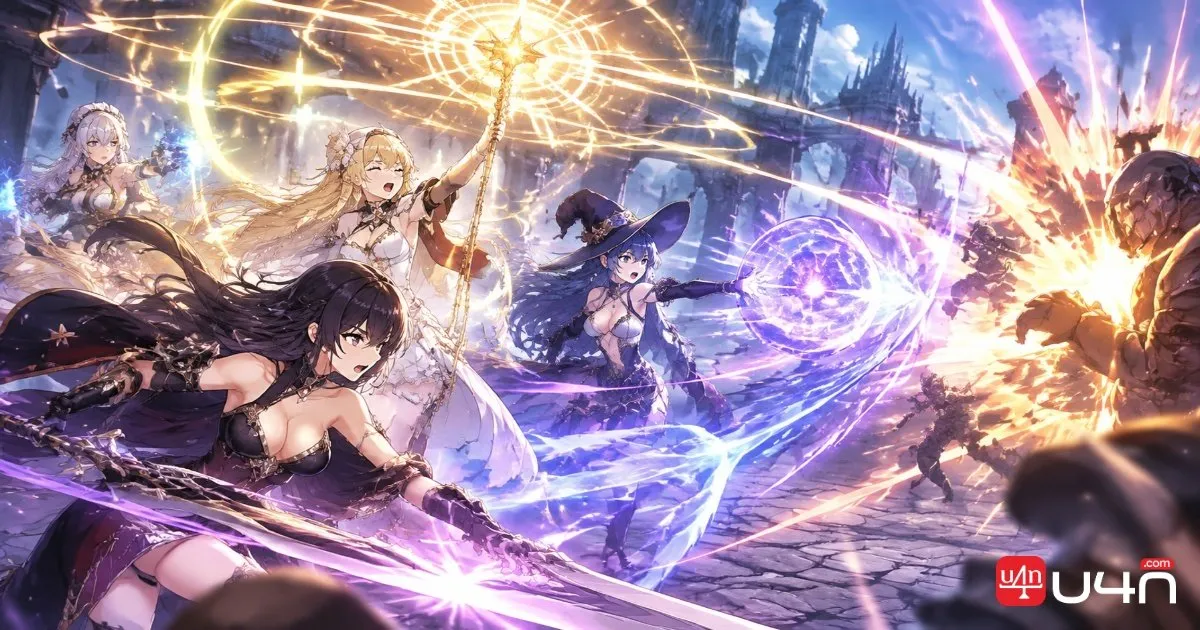
Burst teams focus on concentrating buffs and damage during the opening turn. Their objective is to remove an important enemy unit before the opposing formation can fully use its defensive tools.
| Role | Recommended Character | Main Function |
|---|---|---|
| Physical support | Arines | Physical attack and critical-rate support |
| Magic support | B-Idol Helena | Magic attack support and defensive utility |
| Alternative magic support | Elpis | Magic attack and critical-rate support |
| Physical damage | Scheherazade or other suitable attackers | Opening damage and target elimination |
| Additional damage | Levia or other multi-hit attackers | Follow-up pressure and damage coverage |
The exact lineup should depend on available costumes, enhancement levels, and the current Cost rules.
For physical teams, Arines remains an accessible support option. Her buffs make her useful when players want to build around physical attackers without committing all their resources to premium support costumes.
Magic teams can use B-Idol Helena as a central support option, while Elpis provides another route for players with fewer developed costumes. We recommend comparing their actual skill levels and available upgrades before deciding which one deserves priority.
Opening-Turn Skill Management
A common mistake is spending SP without considering the entire attack sequence.
Before entering battle, check:
- Which support skills must be activated before the main damage dealers attack?
- How much SP does the complete rotation require?
- Can the first attack remove or weaken a key defensive unit?
- Does the team retain enough SP for follow-up pressure?
A five-SP opening budget may support a particular burst setup, but it should not be treated as a universal requirement. Skill costs and rotations vary with the selected costumes.
The most effective opening is not necessarily the one with the highest theoretical damage. It is the one that produces the most useful result against an unknown formation.
Shield-Based Pressure Teams
Shield-focused teams offer a different approach. Instead of relying entirely on immediate damage, they combine defensive protection with attacks that disrupt enemy positioning.
Red Hat Rou and Teresse are among the characters worth considering for this style of formation. Depending on the available costumes and skill interactions, the team can use shields to improve survivability while pushing or repositioning enemy units.
This approach is useful when a straightforward burst setup cannot reliably eliminate the enemy frontline. However, players should avoid assuming that shields automatically make a team durable against every attack type. Skill timing, shield scaling, and enemy damage composition still determine the result.
Defensive Teams: Taunt, Evasion, and Formation Control
Defense is more difficult to optimize under blind matchmaking because the same formation must respond to several possible offensive strategies.
We recommend prioritizing defensive mechanics that provide reliable value across different matchups instead of building an overly specialized counter-team.
Gran and Olivier: A Defensive Combination
Gran and Olivier are two characters highlighted in community discussions about Mirror Wars defense.
Their proposed combination revolves around absorbing early pressure and disrupting the opponent's follow-up attacks.
| Character | Defensive Role | Tactical Purpose |
|---|---|---|
| Gran | Frontline protection and damage absorption | Takes early pressure away from more vulnerable units |
| Olivier | Evasion-based protection | Can disrupt follow-up attacks through available Evasion effects |
Olivier's Evasion mechanics are particularly relevant when an opponent relies on a sequence of attacks to eliminate a key character. If those attacks fail to connect, the offensive rotation may lose much of its intended value.
However, this combination is not guaranteed to stop every burst team. Evasion charges, skill interactions, attack coverage, and the opponent's remaining damage sources all affect the outcome.
Improve Formation Coverage
A defensive lineup should also avoid unnecessary clustering.
Large-area attacks can punish formations that place several important units within the same attack pattern. When arranging your team, consider:
- Separating vulnerable support units from the most obvious attack lanes.
- Avoiding unnecessary overlap between high-value targets.
- Protecting key characters without sacrificing the entire frontline.
- Accounting for both cross-shaped and wider area attacks.
There is no universally safe formation. The objective is to make the opponent's opening attack less efficient and force them to spend more resources to reach your important units.
When Should You Use a More Defensive Setup?
A defensive formation is worth considering when your available characters have strong Taunt, damage absorption, or Evasion mechanics but lack the burst damage needed for a fast offensive team.
Still, defense should be judged by actual results rather than how durable the lineup looks on paper. A team that survives several attacks but cannot protect its important units may perform worse than a more balanced formation.
How to Manage Costume Cost and Find Budget Alternatives
Cost restrictions can change which combinations are practical, especially when several premium costumes compete for the same team budget.
Players should therefore evaluate the value of each costume rather than simply choosing the highest-rarity option available.
Prioritize Efficient Support Costumes
The following characters offer alternative support options worth considering:
| Character | Team Type | Main Utility | Why Consider Them? |
|---|---|---|---|
| Arines | Physical | Physical attack and critical-rate buffs | Accessible physical support |
| Elpis | Magic | Magic attack and critical-rate buffs | Alternative magic support |
| Samay | Flexible | Attack buffs for physical and magic teams | Potentially efficient support option |
Highlights Arines, Elpis, and Samay as budget-friendly choices. Their actual efficiency depends on costume availability, skill investment, and the current Cost calculation.
Choose Cost Efficiency Over Rarity
When building around a limited Cost budget, we recommend following this order:
- Secure the main damage dealer and the costume required for the team's primary strategy.
- Add the support character that provides the most relevant damage amplification.
- Compare alternative costumes before filling the remaining slots.
- Avoid spending Cost on utility that does not meaningfully improve the matchup.
- Test the finished formation before investing additional upgrade materials.
A lower-rarity costume is not automatically better, just as a premium costume is not automatically worth its Cost. What matters is the actual contribution to the complete team.
Use Alternative Costumes When Necessary
Some characters have multiple costumes that serve different purposes. If a high-cost area attack is not essential to your strategy, a more specialized single-target costume may be a reasonable alternative.
This can free up space for another support unit or defensive option. However, the trade-off is reduced attack coverage, so players should make the change based on the formation they expect to face rather than Cost alone.
Daily Mirror Wars Rewards and Resource Priorities
Not every player needs to compete for the highest possible ranking. For players focused on regular progression, a repeatable daily routine can be more valuable than constantly changing formations.
Use Automatic Battles Efficiently
Highlights the option to configure up to 40 consecutive Mirror Wars battles using Bloody Cocktails.
If the current battle settings and available tickets permit it, automatic battles can reduce the time required for routine participation.
We recommend preparing one reliable offensive formation before starting a long battle sequence. Changing characters repeatedly is unnecessary if your main objective is to collect participation rewards.
Choose a Sustainable Rank
Players who cannot consistently compete at the highest ranks should focus on maintaining a division that matches their account strength.
Diamond I, Sapphire, and Master are mentioned in the original community recommendations as possible progression targets. The most suitable stopping point depends on the current ranking structure, weekly rewards, and your ability to defend against stronger opponents.
Do not sacrifice too many upgrade resources chasing a rank that only provides a marginal improvement in rewards.
Prioritize Arena Shop Purchases
Duel Soul Stones and other Arena-related currencies should be evaluated according to their long-term value.
| Resource | Recommended Priority | Consideration |
|---|---|---|
| UR Draw Tickets | High | Useful for expanding costume options |
| Five-Star Costume Selection | High | Helps fill important gaps in your roster |
| Other available materials | Situational | Compare immediate upgrade value with long-term progression |
Check the current shop inventory, exchange requirements, and reset schedule before spending. A reward that looks valuable may be less useful if you already have the relevant costume or cannot afford the required upgrade materials.
Building a More Reliable PvP Team
The matchmaking changes make flexibility more important than relying on a single counter-team. Players need to prepare offensive formations that can function without complete opponent information while building defenses that can absorb early pressure and disrupt follow-up attacks.
The best PvP formation is not necessarily the one with the most premium costumes. It is the one that fits your available roster, handles multiple enemy setups, and delivers repeatable results.
Our team's recommendations are straightforward:
- Build around one dependable physical or magic damage core.
- Prioritize support buffs and opening-turn skill efficiency.
- Use Taunt, damage absorption, and Evasion to improve defensive consistency.
- Compare costume Cost before committing to expensive combinations.
- Consider Arines, Elpis, and Samay when premium support options are unavailable.
- Focus on sustainable ranking and daily rewards rather than spending resources on unnecessary upgrades.
For players looking to expand their roster or compare available character options, buying Brown Dust 2 Accounts may also be worth considering alongside your existing progression.
FAQ
Has Mirror Wars become harder after the matchmaking changes?
The reduced availability of opponent information makes pre-battle counter-picking less dependable. Players need more flexible offensive formations and defensive setups that can handle different attack patterns.
Is B-Idol Helena still useful for magic teams?
Yes, she remains an option for players building around magic damage and support buffs. However, her value depends on costume investment, skill upgrades, and the current team Cost restrictions. Elpis can serve as an alternative when appropriate.
Are Gran and Olivier a reliable defensive combination?
They offer complementary defensive mechanics through damage absorption and Evasion. However, their effectiveness depends on skill interactions, positioning, and the enemy's attack sequence. The combination should be tested rather than treated as an automatic counter to burst teams.
Should I prioritize physical or magic teams?
Choose based on your developed costumes and available support characters. A well-invested physical team is generally more practical than an incomplete magic team, and vice versa. Building both immediately can spread your resources too thin.
Are low-Cost characters worth using in high-ranking PvP?
Yes, when their buffs or utility justify their position in the formation. Arines, Elpis, and Samay can help preserve Cost capacity for more important damage-dealing or defensive costumes.
Is it worth using all 40 Mirror Wars battles every day?
It depends on your available Bloody Cocktails, current battle settings, and reward goals. Automatic battles can save time, but players should still consider the resource cost and whether additional battles provide enough value.