購物車空
繼續購物The Divine Orb has always been one of the most important crafting currencies in Path of Exile, and PoE 2 keeps that tradition alive. Even if you're new to crafting, you'll start seeing people talk about “divining” items or “hitting perfect rolls.” This guide breaks everything down in simple terms so you know exactly what a Divine Orb does, when to use it, and when to save it.
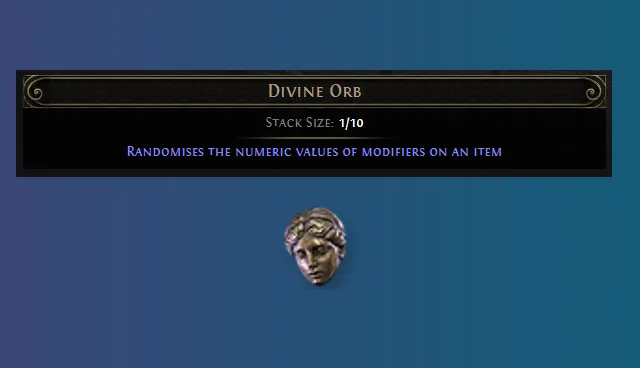
A Divine Orb is a currency item used to reroll the numeric values of modifiers on an item.
It does not change which modifiers the item has — only the numbers inside those mods.
For example:
In PoE 2, Divine Orbs work on both implicit and explicit modifiers unless you're using a special omen that changes this behavior.
You can use it on:
You cannot use it on:
So always check an item's status before using your orb.
Here's the simple version:
Think of it like refreshing the “random number” inside each stat, but keeping the structure of the item exactly as it is.
Divines are valuable, so you shouldn't throw them around. Here's the rule I tell newer players:
Only use a Divine Orb on an item you plan to keep for a long time.
Good times to use one:
Bad times to use one:
A Divine Orb should feel like a finishing touch, not the first step.
Here are helpful questions to ask:
If the answer to at least two of these is yes, then using a Divine Orb is probably worth it.
Divine Orbs:
Yes — you won't see tons of them early on. They're mid-tier rare currency, usually more valuable than most orb types but not impossibly rare.
Not specific “Divine Orb zones,” but players tend to farm:
Basically: the more monsters and loot explosions, the better.
If you ever get tired of waiting for that lucky drop, some players simply choose the fast path and buy Divine Orbs from U4N so they can jump right back into crafting without slowing down their build.
This changes constantly, but Divine Orbs have always been one of the “main currencies” in player trading.
Players care about Divines because:
Divine Orbs usually sit near the top of the economy, sometimes even outvaluing or replacing other traditional currencies like the Exalted Orb in trade use.
Should you hoard them?
If you aren't crafting something right now, yes, saving them is usually smart.
Only divine after you finish crafting.
If you're still adding or removing mods, don't waste a Divine yet.
Never use a Divine on leveling gear.
You'll replace it too quickly.
Don't divine an item with fractured mods you want to keep.
Fractured mods won't change, so you're wasting part of the roll.
Don't expect miracles.
You might reroll a high value into a low one — that's part of the gamble.
If you want to control this randomness better, PoE 2 has omens like:
These can help when you want more targeted results.
In serious crafting, players usually:
Divines are the “final polish” on an expensive item.
They also pair well with:
If you like flipping gear, perfect rolls make items far more attractive in trade listings.
While the general behavior is the same as PoE 1, PoE 2 emphasizes:
Overall, Divine Orbs still play the same role: rerolling for perfection, but with more tools around them to help shape the result.
A Divine Orb in PoE 2 is a powerful currency that rerolls the numeric values of an item's modifiers. It's best used on end-game gear, high-demand uniques, and crafted rares you plan to keep. It cannot be used on corrupted items and has no effect on fractured modifiers. Divines drop anywhere but remain rare, valuable, and central to crafting and trading. Think of them as the last step in finishing great gear — not something you waste on early-game items.
U4N編輯團隊由一群熱愛遊戲的分析師和技術專家組成。我們不僅是一個可靠的遊戲資產市場——我們的核心目標是通過專業內容幫助玩家。我們的團隊為一些大熱門遊戲製作詳細的攻略、經濟策略和技術問題解決方案,包括《MLB The Show 26》、《Aion 2》、《Forza Horizon 6》、《Arc Raiders》和《Path of Exile》等。
無論是掌握遊戲市場的買賣技巧,還是幫助你打造最強的遊戲角色或策略,我們發布的每一份內容都經過我們團隊的實際測試。在 U4N,我們不僅跟隨遊戲的趨勢,我們還幫助你領先一步