

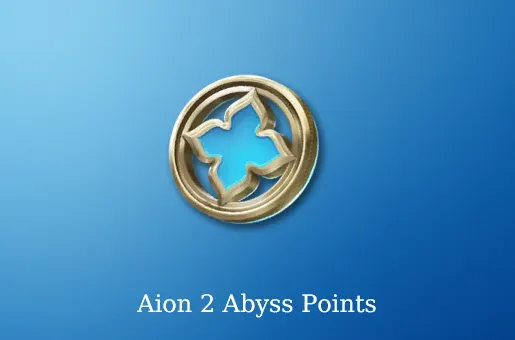
In Aion 2, Abyss Points (AP) are one of the most important progression currencies in the game. They represent honor earned through ongoing conflict and competitive play, and they are mainly used to unlock powerful gear and rewards from the Abyss-related systems. Most players interact with Abyss Points at every stage of progression, regardless of level.
This article explains what Abyss Points are, how players usually earn them, and what limits you need to be aware of.
What Are Abyss Points?
Abyss Points are a common currency tied closely to PvP and endgame-style content, but they are usable at all levels. Lore-wise, they symbolize honor gained through continuous battle. In practical terms, they act as a gatekeeper for some of the strongest equipment available in the game.
AP is primarily spent in Abyss-related shops to purchase high-tier accessories, armor, and other progression items. Because of this, most players treat AP as a long-term resource rather than something to spend casually.
Main Ways to Earn Abyss Points
Players earn Abyss Points from several different activities. Some are combat-focused, while others are more time-efficient and accessible to non-PvP players.
1. Artifact Dungeons (High-Altitude Dungeons)
Artifact dungeons are one of the most efficient daily sources of Abyss Points.
- These are short daily instances found in high-altitude areas
- They reset after the daily server reset
- Clearing mobs inside grants large AP rewards
- Typical runs can award 5,000 to 20,000+ AP
- A single run often takes only a few minutes
In general, high-damage DPS classes benefit the most here because faster clears mean faster AP gains. Still, most players can complete them with basic preparation.
2. Supply Requests (Alt + J)
Supply Requests are one of the most overlooked but strongest non-PvP AP sources.
- Accessed via the Supply Request menu (Alt + J)
- Players deposit excess crafting materials or farmed items
- In return, they receive Abyss Points
- These rewards do not count toward weekly PvP or hunting caps
Most players use supply requests to convert surplus materials into steady AP gains, especially when they want to avoid PvP or are playing casually.
3. Arenas
Arena content provides a structured way to earn Abyss Points.
- Includes solo and cooperative arena modes
- Seasonal and weekly arena quests award AP
- Performance matters, but participation still gives progress
For players who enjoy competitive but controlled environments, arenas are a reliable AP source without the chaos of open-world PvP.
4. PvP and Hunting
Traditional combat remains a core AP source, but with limitations.
- Open-world PvP grants Abyss Points
- Hunting certain mobs also contributes AP
- Both are subject to weekly caps
Most players treat PvP and hunting as supplemental sources rather than their primary AP strategy because of these caps.
5. Events and Special Tasks
Events play an important role in long-term AP progression.
- Limited-time events often reward Abyss Points
- Event-related guides and objectives can bypass normal caps
- These rewards stack with other AP sources
In general, events are worth completing whenever available, especially for players trying to push gear upgrades faster.
For players who prefer to save time on basic farming and focus more on AP activities like artifact dungeons and arenas, some quietly look into Aion 2 Kinah for sale from U4N as a convenient way to keep their progression smooth without changing how they play day to day.
Weekly Limits and How Players Work Around Them
One of the most important things to understand is that not all AP sources are capped.
- Weekly PvP AP cap (example): ~200,000
- Weekly hunting AP cap (example): ~200,000
- Supply Requests: no cap
- Event rewards: no cap
Because of this, most experienced players rely heavily on supply requests, artifact dungeons, and events to keep progressing even after hitting weekly combat limits.
Why Abyss Points Matter So Much
Abyss Points are mainly used to buy top-tier Abyss gear. Some of the strongest accessories and equipment pieces are locked behind AP costs, including items like high-end rings that significantly impact character performance.
For most players, AP progression directly determines how quickly they can move into higher-level PvP and endgame content. This is why efficient daily AP routines become part of regular gameplay.
Class Differences and Efficiency
Not all classes earn AP at the same pace.
- High-DPS classes clear artifact dungeons faster
- Support or tank classes may rely more on supply requests and arenas
- Non-PvP players still progress steadily through capped-free methods
In general, the system allows flexibility, but understanding your class strengths helps you choose the most time-efficient approach.
Summary
Abyss Points in Aion 2 are designed to reward consistent play rather than endless grinding. While PvP is a major source, it is not the only viable path. Most players mix daily artifact dungeons, supply requests, arena participation, and event content to maintain steady AP growth.
If you manage weekly caps properly and focus on uncapped activities, Abyss Points become a predictable and manageable part of long-term progression rather than a constant bottleneck.