Cart Empty
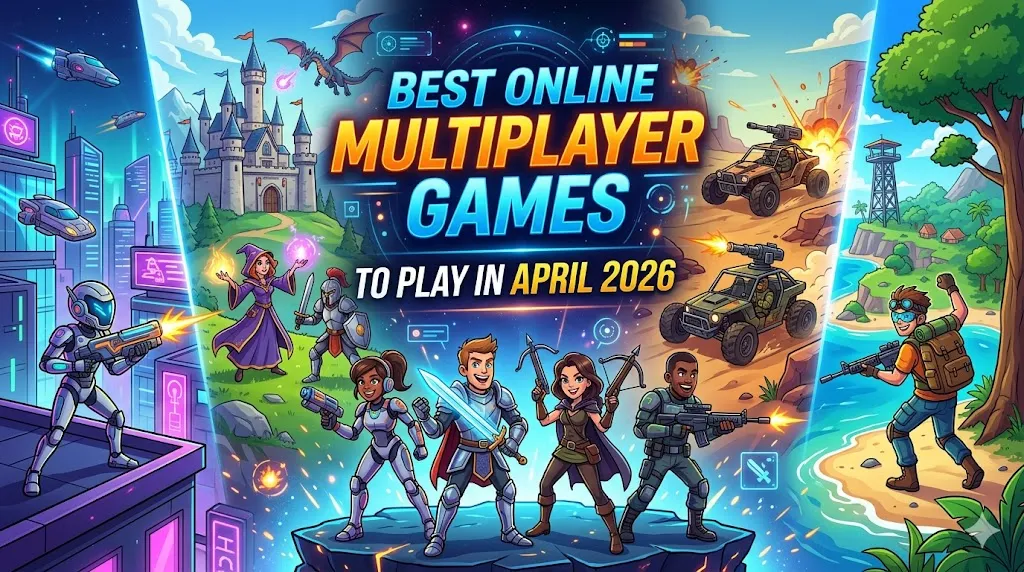
Continue ShoppingApril 2026 is unusually strong for “live” multiplayer: several of the biggest ecosystems are either entering new competitive stages (notably VALORANT esports beginning its Stage 1 regional leagues in April) or are in the middle of high-tempo seasonal rotations (notably Call of Duty Season 03 launching April 2, and Overwatch Season 1 running through mid‑April).
Using a weighted model that prioritizes population health (matchmaking), freshness of content (patches/roadmaps), community momentum (esports/streaming), and onboarding/accessibility, the strongest “play-now” picks for April 2026 partition into four clear clusters:
Streaming/viewership data reinforces these clusters: across major platforms, Counter‑Strike, League/LoL-like MOBAs, GTA V, VALORANT, Dota 2, Fortnite, and Overwatch 2 occupy top watch-time tiers in the last 30 days snapshot.
Current date context: This report is written for April 2026 planning from March 30, 2026 (America/Los_Angeles). Player-count metrics and “what's hot” signals are treated as snapshots, not constants.
Data sources (prioritized):
Ranking model (transparent, editorial but data‑anchored):
Important comparability note: “Player counts” are not one uniform statistic. SteamDB is Steam concurrent players; Roblox figure used is a reported peak concurrent instance; VALORANT is a tracker-based activity proxy. The chart section makes this explicit.
Genre/core loop: battle royale + creator-made experiences; drop/loot/survive, or rotate into short UGC sessions. Platforms: widely multi-platform (PC/console; mobile availability can vary by ecosystem). Monetization: free-to-play cosmetics; V‑Bucks pricing is periodically adjusted. Player metric: ~457,982 players “right now” (Fortnite.gg live snapshot).
Why recommended now: Fortnite's live ecosystem is unusually “eventful” heading into April: official service messaging indicates mode/playlist changes with the April 16 update (e.g., Ballistic's Battle Stage removed).
Key attributes: skill floor low (many modes), skill ceiling very high; typical session ~10–25 min (Fortnite.gg reports ~12.99 min average session time for its tracked sessions); social features include parties and cross‑platform play; hardware demand ranges from low‑to‑moderate depending on settings; accessibility is strong in practice (subtitles/color options/input remaps are commonly offered), but the exact feature list varies by platform build and is not consistently published in a single public spec sheet.
Regional/age notes: availability on mobile can be constrained by platform-store disputes/returns; expect standard in‑game purchases + online interaction parental-control considerations.
Genre/core loop: competitive tactical FPS; short economy-driven rounds; win by objective + aim/utility mastery. Platforms: PC (Steam). Monetization: free-to-play; in‑app purchases and optional Prime upgrade for matchmaking improvements. Player metric: ~811,938 in-game concurrent on Steam at snapshot.
Why recommended now: it remains one of the most-watched competitive categories on Twitch in March 2026, signaling strong creator + esports gravity and robust ranked matchmaking.
Key attributes: skill floor medium, ceiling elite; session length ~25–50 min for full match (shorter in casual modes); social features include party queues; Steam listing flags cross‑platform multiplayer (useful for controller/Steam ecosystems). Hardware: modest minimum requirements for PC (e.g., Windows 10, i5‑class CPU threads, 8 GB RAM). Accessibility: Steam listing emphasizes subtitle support across many languages; other accessibility options are unevenly standardized across shooters and may require per-setting tuning.
Regional/age notes: violence descriptors apply; local age ratings vary by country.
Genre/core loop: UGC platform spanning social hangouts, roleplay, tycoons, obbies, shooters; you choose “micro‑games” and communities. Platforms: multi-device ecosystem (PC/console/mobile). Monetization: free-to-play; creator economy and Robux purchases. Player metric: Roblox reported hitting ~45 million concurrent users during a viral event period (August 2025) as an example of peak-scale concurrency; it also reports DAU in financial materials (not directly comparable to Steam concurrency).
Why recommended now: Roblox's platform-scale social features keep it resilient: a single shared account system enables frictionless “meet → jump into a game,” and the company highlights ongoing safety and age-check rollouts (e.g., global age check rollout referenced in early 2026 commentary).
Key attributes: skill floor very low (depends by experience); session length ~10–60 min; social features are the product (friends/chat/groups); hardware is generally low for many experiences but varies widely; accessibility varies by experience, with some UGC games offering strong options and others minimal—treat it as “experience-by-experience.”
Regional/age notes: Roblox is heavily age-gated and moderation-forward; expect stricter defaults for minors and region-specific safety settings.
Genre/core loop: tactical hero shooter; 5v5 rounds with agent abilities + gunplay; ranked ladder focus. Platforms: PC. Monetization: free-to-play cosmetics. Player metric: tracker-based activity proxy shows ~5.57M players “yesterday” and ~18.48M tracked in March (Tracker Network).
Why recommended now: March 2026 patch cadence is active (12.04, 12.05) and Act 2 timing lands right before April; esports re-ramps with VCT Stage 1 starting across regions in April (e.g., Americas kicks off April 10).
Key attributes: skill floor medium, ceiling very high; match length typically ~30–45 min; social features include parties and competitive team structures; hardware demand is moderate (esports-optimized); accessibility depends on settings and platform overlays, but Riot continuously updates UX/QoL per patch notes.
Regional/age notes: regional esports leagues are segmented (Americas/EMEA/Pacific/China), which can influence matchmaking times in fringe regions.
Genre/core loop: MOBA; 5v5 macro strategy + micro execution; long-form matches with deep drafting/metas. Platforms: PC (Steam). Monetization: free-to-play; cosmetics and periodic event content. Player metric: ~342,469 concurrent in-game (Steam).
Why recommended now: Valve's March 24, 2026 gameplay patch 7.41 is a major “meta reset” moment, and official news calls out The International 2026 cycle, keeping competitive interest high into April.
Key attributes: skill floor high, ceiling extreme; typical session 35–60+ min; social features include party queue and guilds; hardware demand is moderate; accessibility depends on UI scale, color options, and audio controls (varies by configuration).
Regional/age notes: large global playerbase supports regional matchmaking, but competitive experience improves markedly with voice/party play.
Genre/core loop: battle royale; tactical positioning, looting, zone pressure; higher lethality than many BRs. Platforms: PC + consoles (and separate PUBG Mobile ecosystem). Monetization: free-to-play with cosmetics. Player metric: ~339,253 in-game concurrent on Steam snapshot.
Why recommended now: the official 2026 roadmap emphasizes gunplay meta rotation and ongoing balance/new weapons, and March 2026 patching continues (Update 40.2 notes). Anti-cheat roadmap also foregrounds 2025 enforcement stats, signaling continued integrity investment.
Key attributes: skill floor medium, ceiling high; session length ~25–35 min; social features: squads, cross‑platform play depending on platform pairing; hardware demand moderate; accessibility varies by platform and interface scaling.
Regional/age notes: competitive fairness is an ongoing focus; high-skill lobbies can be punishing for new entrants.
Genre/core loop: hero BR; movement + team synergy; rotations and fights paced by legend kits. Platforms: PC + consoles. Monetization: free-to-play cosmetics/battle pass. Player metric: ~112,578 concurrent in-game on Steam snapshot.
Why recommended now: Season 28 “Breach” patch notes (Steam news) highlight a named season update—these “season starts” are typically the most welcoming time to return because matchmaking pools swell and metas shift.
Key attributes: skill floor medium, ceiling very high (movement tracking); match length ~15–25 min; social: squads strong, crossplay common; hardware moderate; accessibility includes configurable subtitles and audio controls in many builds (specific lists vary by platform distribution).
Regional/age notes: competitive population is healthiest in major regions; off-peak queues can be longer in smaller regions.
Genre/core loop: survival PvP sandbox; gather/build/raid; wipe-based progression cycles that reset social economies. Platforms: primarily PC; broader ecosystem exists via separate console editions. Monetization: premium buy-to-play with DLC and in-app purchases. Player metric: ~76,250 concurrent in-game on Steam snapshot.
Why recommended now: Rust's wipe cadence and creator culture make it “always new” (fresh servers + emergent stories), and its concurrency remains very high for a niche-leaning hardcore survival title.
Key attributes: skill floor high (knowledge + PvP), ceiling very high; session length highly variable (15 min → multi-hour raids); social: clans/teams are central; hardware moderate; accessibility tags on Steam include adjustable text size, subtitle options, color alternatives, custom volume controls, and adjustable difficulty options (as tagged).
Regional/age notes: mature content descriptors apply; anti-cheat limitations can affect some Linux/SteamOS/handheld environments.
Genre/core loop: shooter “hub” supporting Warzone + annual titles; rotate between BR, ranked modes, and seasonal PvE options. Platforms: PC + consoles. Monetization: premium entries + free Warzone; strong in‑app purchases/battle pass ecosystem. Player metric: ~17,269 concurrent in-game on Steam snapshot (Steam is one distribution channel; total population is broader).
Why recommended now: official intel frames April as a major refresh: Season 03 content drop launches April 2, following Season 02 content and the Season 02 Reloaded midseason update in March.
Key attributes: skill floor low–medium, ceiling high; session length 10–30 min (varies by mode); social: parties + clans are common; hardware can be demanding and, notably, Steam Deck compatibility is flagged as unsupported due to anti-cheat requirements; Steam tags list accessibility categories including adjustable text size, subtitle options, color alternatives, camera comfort, custom volume controls, and “playable without timed input.”
Regional/age notes: SteamDB indicates microtransactions restricted in some countries (e.g., RU/BY) and anti-cheat/security prerequisites (Secure Boot/TPM) may matter for some PCs.
Genre/core loop: co-op looter shooter; missions → loot/mods → build frames/weapons → fashion/endgame grinds. Platforms: PC + consoles; cross‑platform play is flagged on Steam tags. Monetization: free-to-play; in‑app purchases with trading economy. Player metric: ~51,376 concurrent on Steam snapshot.
Why recommended now: Warframe remains one of the most stable “return any time” co-op ecosystems: large concurrency and cross‑platform multiplayer support are strong when friends are on mixed devices.
Key attributes: skill floor low–medium (early game), ceiling high (buildcraft); session length 10–25 min; social: clans/dojo systems are central; hardware generally moderate; Steam accessibility tags include color alternatives, camera comfort, custom volume controls, and “playable without timed input.”
Regional/age notes: monetization is broad but optional; trading can reduce spend for grinders.
Genre/core loop: hero team shooter; objective modes; frequent balance patches and seasonal passes. Platforms: PC + consoles, crossplay flagged. Monetization: free-to-play with battle pass and cosmetics. Player metric: ~33,923 concurrent on Steam snapshot.
Why recommended now: official roadmap messaging frames Season 1 (“Reign of Talon”) beginning Feb 10, carrying through mid‑April, plus ongoing patch notes cadence (e.g., March 12 retail patch notes).
Key attributes: skill floor low–medium, ceiling very high (hero mastery); typical session 10–20 min; social: parties and crossplay, role-based teamwork; hardware moderate; Steam accessibility tags are unusually rich: adjustable text size, subtitle options, color alternatives, chat speech‑to‑text and text‑to‑speech, and “playable without timed input.”
Regional/age notes: community challenge events can skew queue populations—good for variety, high variance for competitive consistency.
Genre/core loop: tactical FPS; operator utility; short rounds with information denial and map control. Platforms: PC + consoles; long-running esports footprint. Monetization: premium buy-to-play with seasonal monetization. Player metric: ~32,949 concurrent on Steam snapshot.
Why recommended now: the official roadmap notes Year 11 Season 1 “Operation Silent Hunt” released March 3, 2026, and it also schedules a 1v1 Arcade window April 16–30—exactly in April—making it a timely month to re-enter.
Key attributes: skill floor high, ceiling elite; session length ~20–35 min; social: squads are strongly advantaged; hardware moderate; accessibility options exist but Steam accessibility tags are not surfaced in this snapshot, so treat accessibility as “settings menu dependent” (text size/remaps vary by platform).
Regional/age notes: high-stakes gunplay + gadget depth can be harsh on brand-new players; consider unranked/training first.
Genre/core loop: 4v1 asymmetric horror; survivors repair generators and escape; killer hunts and hooks. Platforms: PC + consoles; crossplay flagged. Monetization: premium buy-to-play base with frequent DLC chapters/cosmetics. Player metric: ~35,281 concurrent on Steam snapshot.
Why recommended now: high concurrency and durable DLC cadence keep matchmaking healthy; it also shows up as a notable Twitch category in March 2026 listings, reflecting ongoing streamer/community relevance.
Key attributes: skill floor medium, ceiling high (mindgames/map knowledge); session length ~10–20 min; social: survive-with-friends is the best entry; hardware low–moderate; Steam accessibility tags include subtitle options, color alternatives, and custom volume controls.
Regional/age notes: horror/violence rating considerations; check region-specific age ratings.
Genre/core loop: co-op PvE extraction shooter; drop into missions, coordinate stratagems, extract with resources. Platforms: PC + console ecosystem; Steam notes co-op focus. Monetization: premium buy-to-play with optional cosmetics. Player metric: ~23,486 concurrent on Steam snapshot.
Why recommended now: it remains a rare “big-pop co-op” shooter with strong social stickiness; accessibility tagging is also strong compared with many action co-op titles (menus narration, chat accessibility).
Key attributes: skill floor medium, ceiling high (team coordination); session length ~20–45 min; social: best as 2–4 friends; hardware moderate; Steam accessibility tags include adjustable text size, subtitle options, narrated menus, chat speech‑to‑text/text‑to‑speech, and adjustable difficulty.
Regional/age notes: violent content descriptors apply; server region choice can matter for latency.
Genre/core loop: open-world sandbox + GTA Online; missions/heists/racing + social roleplay communities. Platforms: PC + consoles. Monetization: premium base game; in‑app purchases via Shark Cards-like economy. Player metric: ~59,740 concurrent on Steam snapshot.
Why recommended now: GTA remains a top streaming category (high watch hours), which tends to correlate with active roleplay/social servers and content trends you can “join into” as a player.
Key attributes: skill floor low, ceiling medium (PvP optional); session length 20–90+ min (heists/social); social: crews and RP communities; hardware moderate (older title but heavy online scenes); accessibility varies by platform and server/community mods.
Regional/age notes: typically mature-rated; in‑game purchases and online interaction.
Genre/core loop: team-based hero shooter; ability synergy and objective fights. Platforms: PC (Steam) at minimum; console availability depends on publisher rollout. Monetization: live-service pattern likely (cosmetics), but specifics depend on regional store terms. Player metric: ~34,219 concurrent on Steam snapshot.
Why recommended now: high early concurrency indicates critical-mass matchmaking; it's also strong for players who want the “new hotness” social effect (everyone learning together).
Key attributes: skill floor low–medium, ceiling high; session length 10–20 min; social: party-friendly, team comps matter; hardware moderate; accessibility options are not consistently exposed via Steam accessibility tagging in this snapshot, so confirm in settings before committing.
Regional/age notes: licensing/regions can affect availability and collab cadence; watch for region-specific store rules.
Genre/core loop: social VR/desktop social worlds; hangouts, events, mini-games, roleplay. Platforms: PC (VR and desktop). Monetization: free-to-play with subscription/cosmetic economy typical of social platforms. Player metric: ~34,044 concurrent on Steam snapshot.
Why recommended now: high concurrency suggests a thriving event scene; it's an outlier pick for “online multiplayer” that isn't purely competitive—ideal for social discovery.
Key attributes: skill floor very low; session length 15–120+ min; social: friends/groups/events; hardware ranges from modest desktop to higher-end VR; accessibility depends on VR/desktop mode and community worlds.
Regional/age notes: social VR spaces frequently have community age norms; moderation and comfort settings matter.
Genre/core loop: online ARPG; map/league cycles; buildcraft, loot, economy trading. Platforms: PC + console ecosystem (varies by region). Monetization: free-to-play with stash tabs/cosmetics. Player metric: ~30,825 concurrent on Steam snapshot.
Why recommended now: PoE's league cadence makes “jump-in months” feel meaningful; the community remains large enough for healthy trading and party play.
Key attributes: skill floor medium, ceiling very high (build systems); session length 20–90+ min; social: trading and guilds/parties; hardware moderate; Steam accessibility tags aren't surfaced in this snapshot—expect standard subtitle/audio sliders but verify UI scaling if you need it.
Regional/age notes: trading economies can be restricted by region/platform version differences.
Genre/core loop: MMORPG; dungeons/raids + crafting + social hubs; strong narrative plus endgame. Platforms: PC + console ecosystem; Steam is one PC distribution channel. Monetization: subscription + expansions (region pricing varies). Player metric: ~8,335 concurrent on Steam snapshot (note: many PC players may use non‑Steam launcher, so Steam undercounts total).
Why recommended now: stable MMO social structures (FCs/guild analogs) make it a strong “commitment game” if April is when you want to settle into a long arc, not chase a season reset.
Key attributes: skill floor low–medium, ceiling high (savage/ultimate); session length 30–120 min; social: guilds, raids, party finder; hardware moderate; accessibility varies by platform UI and settings (text size and UI scaling are typically central).
Regional/age notes: region/datacenter choice strongly affects latency and raid availability.
Genre/core loop: co-op looter shooter; strikes/raids/PvP; buildcraft and seasonal narrative. Platforms: PC + consoles. Monetization: free-to-try with paid expansions + seasonal content. Player metric: ~4,718 concurrent on Steam snapshot (Steam is one channel).
Why recommended now: Destiny remains a premier “raid-night” game if you have 3–6 committed friends; even with lower Steam concurrency than the biggest shooters, its structured co-op endgame differentiates it.
Key attributes: skill floor medium, ceiling high (raids/master content); session length 15–120+ min; social: clans/raids; hardware moderate; accessibility features vary by platform build and are best verified via in-game settings before long-term play.
Regional/age notes: expansion ownership gating can fragment friend groups—align purchases early.
Interpretation of Average monthly cost: “typical engaged player” spend excluding optional cosmetics binge behavior. Buy-to-play games show $0 after entry unless you choose DLC; subscription MMOs list the subscription as the baseline.
| Game | Platform availability (high level) | Monetization model | Avg monthly cost (typical) | Recommended player type |
|---|---|---|---|---|
| Fortnite | PC/console (+ limited mobile variance) | F2P + cosmetics/pass | $0–$12 | Casual, competitive, social |
| Roblox | PC/console/mobile | F2P + Robux economy | $0–$15 | Casual, social, creators |
| VALORANT | PC | F2P + cosmetics | $0–$10 | Competitive |
| Counter-Strike 2 | PC | F2P + Prime/skins | $0–$5 | Competitive |
| Dota 2 | PC | F2P + cosmetics/events | $0–$10 | Competitive |
| PUBG: BATTLEGROUNDS | PC/console | F2P + cosmetics | $0–$10 | Competitive, tactical |
| Apex Legends | PC/console | F2P + cosmetics/pass | $0–$10 | Competitive, movement-heavy |
| Rust | PC (+ separate console editions) | Buy-to-play + DLC | $0 after entry | Hardcore, social clans |
| Call of Duty | PC/console | Mixed hub + F2P BR + IAP | $0–$15 | Casual, competitive, variety |
| Warframe | PC/console | F2P + IAP/trading | $0–$10 | Co-op, grinders |
| Overwatch | PC/console | F2P + pass/cosmetics | $0–$10 | Casual→competitive |
| Rainbow Six Siege | PC/console | Buy-to-play + seasons | $0–$10 | Competitive tactical |
| Dead by Daylight | PC/console | Buy-to-play + DLC | $0–$10 | Casual/co-op, streamer-friendly |
| HELLDIVERS 2 | PC/console | Buy-to-play + optional | $0 after entry | Co-op |
| Grand Theft Auto V | PC/console | Buy-to-play + IAP | $0–$10 | Social, sandbox |
| Marvel Rivals | PC (Steam) at minimum | Live-service likely | $0–$10 | Casual→competitive |
| VRChat | PC | F2P + subscription | $0–$10 | Social |
| Path of Exile | PC/console | F2P + stash/cosmetics | $0–$10 | Solo/co-op, buildcraft |
| FINAL FANTASY XIV Online | PC/console | Subscription MMO | ~$13–$15 | Co-op, long-term MMO |
| Destiny 2 | PC/console | Free-to-try + expansions | $0–$12 | Co-op endgame, raids |
If you want ranked improvement with clear skill feedback, prioritize Counter‑Strike 2 or VALORANT; if you want the same core tension but with heavier gadget depth, Rainbow Six Siege is a one‑sentence alternative.
If you want seasonal “drop in for a month” energy, Fortnite is the broadest bet; a one‑sentence alternative with more structured progression is Call of Duty Season 03 (April 2 launch).
If you want co-op nights with friends, HELLDIVERS 2 is the most “sessionable” co-op shooter here; Warframe is the alternative if you want deeper long-term progression and trading economy.
If you want social discovery rather than combat mastery, Roblox is the broadest multi‑genre hangout platform; VRChat is the alternative if you want adult-leaning social VR/desktop worlds.
The chart below mixes metrics because the industry publishes different public numbers. Legend: most entries are Steam concurrent “In‑Game” counts; Roblox is a reported peak concurrent moment; VALORANT is a tracker-based daily activity proxy. The scale is logarithmic to fit the range into one view.
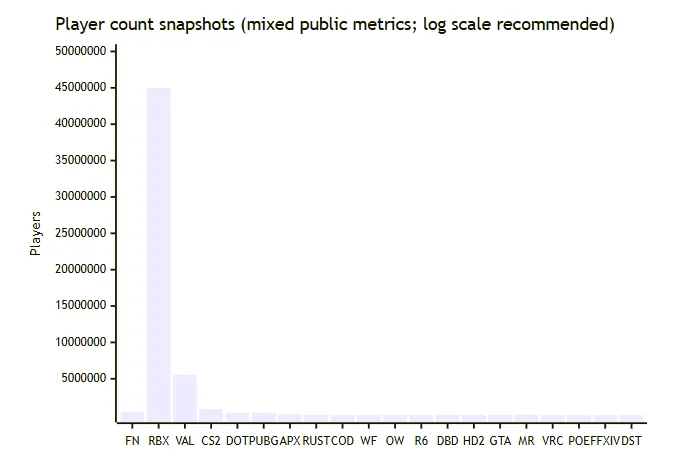
Label key: FN=Fortnite; RBX=Roblox; VAL=VALORANT; CS2=Counter‑Strike 2; DOT=Dota 2; APX=Apex Legends; COD=Call of Duty; WF=Warframe; OW=Overwatch; R6=Rainbow Six Siege; DBD=Dead by Daylight; HD2=HELLDIVERS 2; GTA=Grand Theft Auto V; MR=Marvel Rivals; VRC=VRChat; POE=Path of Exile; FFXIV=Final Fantasy XIV Online; DST=Destiny 2.
On Twitch in March 2026, “Counter-Strike” ranks near the very top by average concurrent viewers, with Fortnite and Overwatch also appearing prominently in top game lists—supporting the idea that these titles have strong “community momentum” going into April.
Across broader streaming platforms (Streams Charts last‑30‑days snapshot), Counter‑Strike, League‑style MOBAs, GTA V, VALORANT, Dota 2, Fortnite, and Overwatch 2 appear among the highest watch-time categories, indicating sustained audience attention beyond just player concurrency.
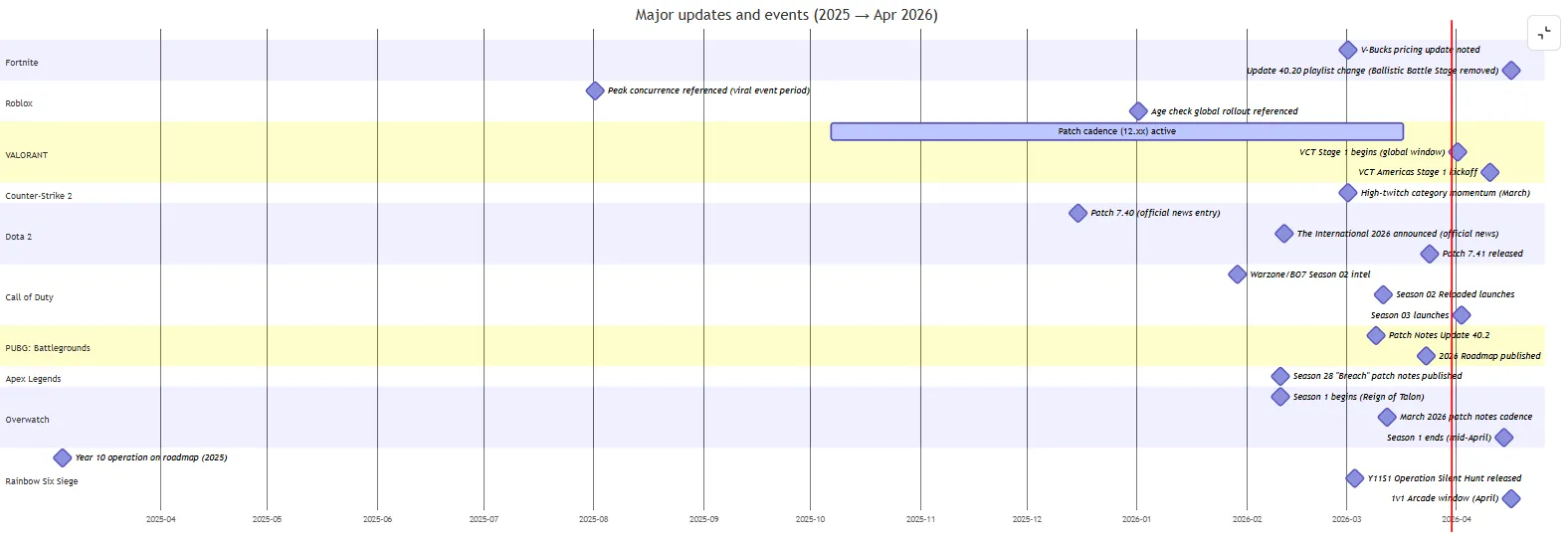
The following timeline focuses on major “why now” triggers (seasons/roadmaps/esports stage starts) spanning 2025 through April 2026 for the top 10 games in this report. Sources are official roadmaps/patch notes where available; otherwise, company financial commentary is used for Roblox scale metrics.
Regional availability can shift due to platform rules, compliance and monetization restrictions. The most concrete region flags found in primary sources for this report were:
Age restrictions and safety: Almost all top games here include online interactivity and frequently in-game purchases; platform parental controls and account age gating are therefore material. Steam store/store-adjacent pages often enumerate “interactive elements” and content descriptors (e.g., CS2 indicates online interactivity and in-game purchases). Roblox additionally foregrounds safety moderation and age verification/age-check initiatives, which can change what features are available to minors.
Primary and high-reliability sources used for load-bearing claims in this report:
Authored by elite gamers and industry insiders, the U4N Editorial Team delivers authoritative game updates, patch notes breakdowns, and expert strategies for trending titles including World of Warcraft, Path of Exile 2, MapleStory, Aion 2, and Arc Raiders.
From deep-dive guides to the latest meta shifts, our in-house veterans test every tactic firsthand to keep you ahead of the game.