Playing solo in ARC Raiders is about patience, awareness, and restraint. You are not there to dominate the map. You are there to move quietly, take only what you need, and leave before anyone can stop you.
Core Survival Strategies
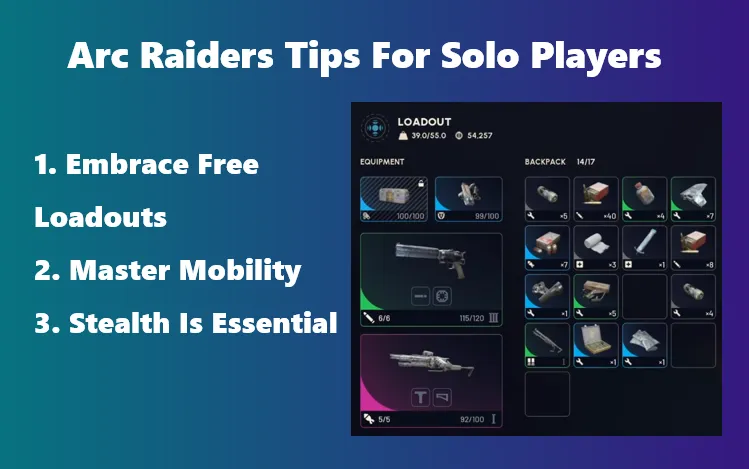
1. Embrace Free Loadouts
When you are learning a new map area or testing routes, use the Free Loadout. It gives you basic armor, a simple weapon, and healing items at no cost. This lets you:
- Scout enemy spawn points
- Learn patrol routes of bots
- Practice extraction timing
- Complete low-risk quests
If you die, you lose nothing. This removes fear and helps you build knowledge, which is more valuable than early loot.
2. Master Mobility
Movement keeps you alive more than armor.
- Holster your weapon (default H or 5) whenever you are not about to fight. You run faster and drain stamina more slowly.
- Slide down slopes, stairs, and broken roads. You gain speed while your stamina recovers, which lets you cover long distances quietly.
- Dodge Roll just before hitting the ground after a fall. This cancels most fall damage and lets you escape rooftops or cliffs without losing health.
- Always plan an exit path before looting. Know where you will run if shots start.
3. Stealth Is Essential
Noise attracts both bots and players.
- Walk instead of sprinting near buildings or objectives.
- Open doors slowly when possible. Slamming doors can be heard from far away.
- Use melee on weak enemies like Ticks and Wasps to avoid gunfire noise.
- Turn off unnecessary lights and avoid standing in bright areas. Dark corners and shadows make you hard to see, especially in indoor zones.
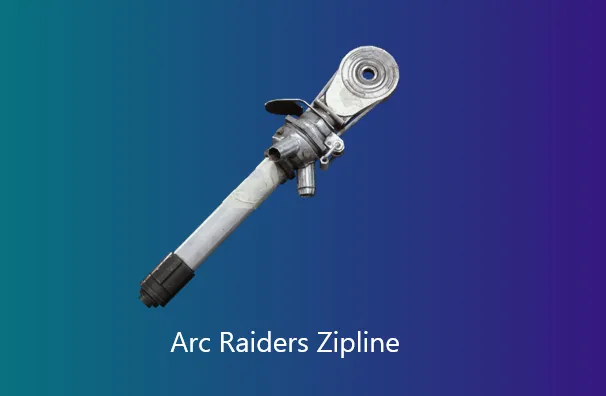
- Stop moving for a moment and listen. Footsteps, zip lines, and reload sounds often give away nearby players before you see them.
For players who prefer to save time on early progression, some choose to buy ARC Raiders items from U4N instead of farming everything in high-risk solo runs.
Strategic Loadout and Skills
1. Early Skill Priorities
Your first skill points should support movement and stamina.
- Nimble Climber: Faster climbing means less time exposed on ladders and walls.
- Marathon Runner: Longer sprint time for escaping or repositioning.
- Youthful Lungs: Faster stamina recovery, which helps after long chases.
These skills reduce how often you are forced to stop and catch your breath in dangerous spots.
2. Essential Perks
- In Round Crafting (Survival Tree): Lets you craft bandages and healing items while inside the match. This is critical for long solo runs.
- Used to the Weight: Ignores shield weight penalties, keeping your movement speed high even with better protection.
Speed is life for a solo player. Heavy gear that slows you down often causes more deaths than it prevents.
3. Gadgets Over Firepower
High-end weapons are useful, but gadgets save lives.
- Smoke Grenades: Break line of sight when escaping squads or crossing open areas.
- Lure Grenades: Pull bots toward other players or away from your path.
- Mines: Cover your back while looting or set traps near doors and stairs.
A solo should think in terms of control and escape, not direct damage.
Combat Approach
1. Choose Your Fights
Do not engage every player you see.
- Fight only when you have surprise, high ground, or a clear escape route.
- Avoid long gunfights. The longer you shoot, the more likely other players will third-party you.
- If a squad spots you first, break line of sight immediately and reposition instead of trading shots.
2. Use Terrain
- Move through broken walls, rooftops, and vertical paths that squads struggle to follow quickly.
- Stay near cover when crossing open ground. Move from object to object, not in straight lines.
Extraction and Interaction
1. Smart Extraction
High-traffic elevators are dangerous.
- Use Raider Hatches when possible. They are quieter and less likely to be camped, though they require keys.
- Learn multiple extraction points on each map so you can change plans if one is compromised.
2. The “Decoy” Elevator
Calling an elevator creates noise that draws attention.
- Call it, then hide nearby instead of boarding immediately.
- Campers may reveal themselves or leave after it auto-recalls in about two minutes.
- Enter only at the last moment when the area feels clear.
3. Emotes as Diplomacy
The “DON'T SHOOT!” emote can sometimes prevent a fight, especially during early-game encounters.
- Use it when surprised at close range and you have no advantage.
- Even if the other player responds peacefully, never fully trust them.
- Keep cover nearby and your weapon ready in case the situation changes.
FAQs
1. Is it better to avoid PvP completely as a solo player?
Not always, but you should avoid fair fights. As a solo, you want uneven fights in your favor: surprise, height advantage, or a clean escape path. If none of these exist, it is usually smarter to disengage and rotate away.
2. What time of a match is safest for looting as a solo?
The first few minutes and the final phase are the most dangerous. Early on, spawns are close and players rush objectives. Late game, many squads camp extractions. The mid-phase is often the safest time to move, loot, and reposition.
3. How can I reduce the chance of being third-partied?
Keep fights short and quiet. If a fight lasts more than a few seconds, assume someone else is already moving toward the sound. Reposition immediately after every engagement, even if you win.
4. Should solos focus on quests or pure resource runs?
Early on, focus on quests that can be completed in low-traffic zones. They unlock progression and teach map flow. Once you know safe routes, dedicated resource runs become more efficient and less risky.
5. How do I read player behavior without seeing them?
Listen for patterns. Fast repeated footsteps often mean a squad sprinting together. Slow, spaced footsteps usually indicate a solo or a cautious duo. Zipline use, door timing, and reload sounds can tell you how many players are nearby and what direction they are moving.
6. What is the best way to deal with extraction campers?
Never approach an extraction in a straight line. Stop, listen, and observe from cover. Look for opened doors, dead bots, or disturbed loot, which often signal recent player activity. If something feels wrong, rotate to another exit instead of forcing it.
7. Is armor level or movement more important for solo survival?
Movement is usually more important. Being able to reposition, disengage, and reach cover quickly prevents more deaths than extra armor points. Armor helps only after you are already being shot.
8. How should solos manage inventory weight?
Carry only what supports your current goal. Extra ammo, unused gadgets, and low-value loot slow you down. A lighter load means faster sprinting, better stamina control, and safer escapes.
9. When is it worth taking a high-risk area as a solo?
Only when the reward clearly supports your progression and you have a planned entry and exit route. Enter from an unexpected angle, loot quickly, and leave before other players converge.
10. Are sound traps and environmental noise useful for solos?
Yes. Triggering alarms, doors, or bots in one area can draw attention away from your real path. Controlled noise can be used to redirect squads while you move through a quieter route.
11. How important is map knowledge for solo players?
It is critical. Knowing climb routes, drop points, shadowed corridors, and alternate exits allows you to break pursuit and avoid direct confrontations. Map knowledge often decides whether a solo escapes or gets cornered.
12. Should solos ever trust random players who act friendly?
Treat it as temporary neutrality, not safety. Keep distance, maintain cover, and never turn your back. Friendly behavior can change the moment loot or extraction is involved.