Hitting in MLB The Show 26 can be a challenge, especially when you're up against elite pitchers. But with the right approach, practice, and understanding of the game mechanics, you can become a more consistent and powerful hitter. Here's how to improve your hitting skills, written in a clear and straightforward way to help you step up your game.
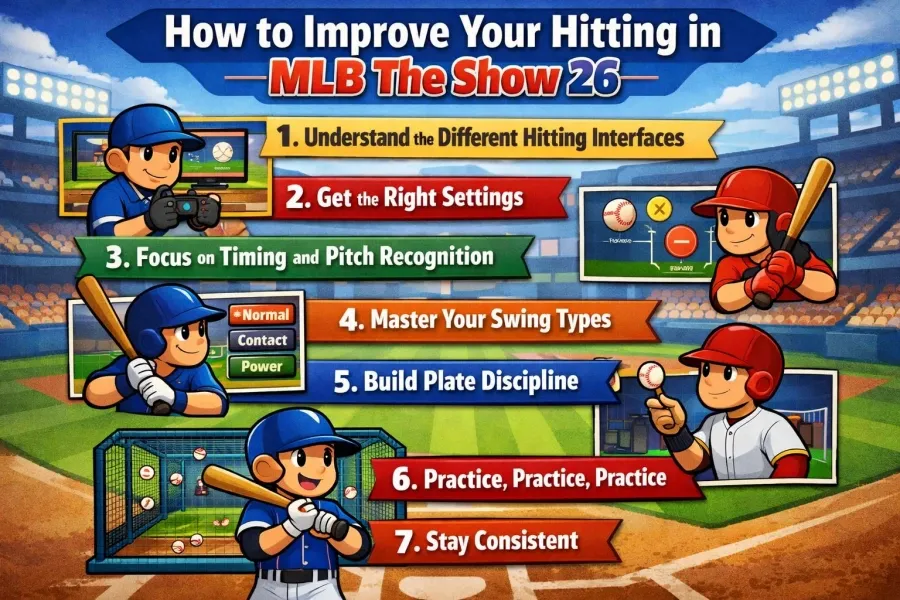
1. Understand the Different Hitting Interfaces
The first step in improving your hitting is understanding the different ways you can swing the bat. MLB The Show 26 offers several hitting interfaces, and selecting the right one for your style is essential. Each one has its advantages and drawbacks.
- Timing Hitting: This is the simplest hitting mode. You swing based on timing, with no directional control. This option is easier for beginners, but it doesn't offer much flexibility. It's more about reacting to the pitch than controlling where the ball goes. It's a good starting point if you're new to the game.
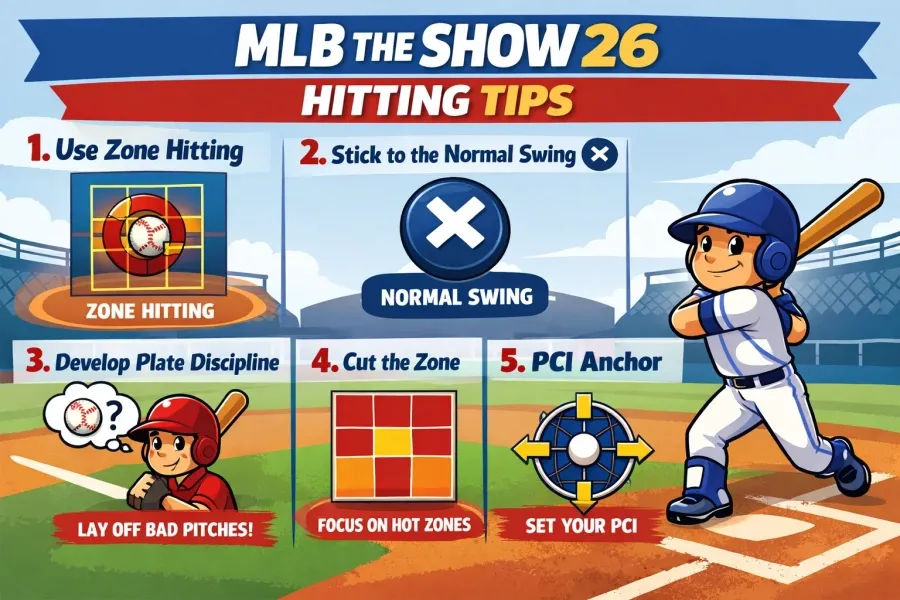
- Zone Hitting (Recommended): This gives you the most control over your swing. You'll need to aim at the pitch's location and swing when the ball is in the strike zone. Zone hitting requires more skill and practice, but it's also the most rewarding because it allows you to cover more of the strike zone and hit balls with more precision.
- Directional Hitting: In this mode, you aim where you want to hit the ball, while timing still plays a role. It can be useful when you want to focus on hitting to a specific part of the field, but it's less flexible than zone hitting. It's a decent middle ground for players who don't want the complexity of full zone hitting but still want some control.
If you want to get better at MLB The Show 26, I recommend focusing on Zone Hitting. It's the most advanced, and mastering it will give you a strong foundation for your hitting.
2. Get the Right Settings
Adjusting your settings can help you improve your hitting by making the game easier to control. Start by setting up a few basic options that will make a noticeable difference:
- Hitting Interface: Set this to Zone. This is the best choice if you want to have full control over your swing and placement.
- Swing Input: Use buttons instead of analog sticks. This gives you more consistency in how you swing.
- PCI (Plate Coverage Indicator): Make sure it's visible and customize the color to one that stands out. This helps you focus on the zone where the ball is coming in.
- Guess Pitch: Turn this off, at least at first. Guessing pitches can be tempting, but it's often a gamble. It's better to focus on recognizing pitch types and locations first.
- PCI Anchoring: This helps you get better at controlling where you want to hit the ball.
These settings will make the game more comfortable and intuitive to play. You should tweak them according to what feels right, but this setup is a solid starting point.
By following these tips and refining your approach, you'll be well on your way to improving your hitting in MLB The Show 26. If you're looking to boost your experience and unlock key features quickly, you can buy MLB 26 stubs cheap at U4N.
3. Focus on Timing and Pitch Recognition
One of the key aspects of hitting is being able to recognize what pitch is coming and react in time. Here are a few ways to improve your pitch recognition and timing:
- Watch the Pitcher's Windup: Pay attention to the pitcher's motion. In MLB The Show 26, each pitcher has unique windups, and recognizing them can give you a split-second advantage in predicting the pitch.
- Track the Ball: Follow the ball as it leaves the pitcher's hand. This helps you get a better sense of the speed and break of the pitch. It's especially important for off-speed pitches like curveballs or changeups.
- Start Slow: When you're practicing, slow the game down by focusing on tracking pitches. Start with fastballs, as they're the easiest to time. Once you're comfortable with those, move on to breaking balls and off-speed pitches.
- Understand Pitch Types: Each pitch has its own characteristics, and understanding these can help you anticipate what's coming. A fastball has little movement, while a curveball or slider can break sharply. Learn the common pitches each pitcher throws, and adjust your swing accordingly.
4. Master Your Swing Types
In MLB The Show 26, the type of swing you use can impact how the ball comes off the bat. There are three main types of swings to know about:
- Normal Swing: This is your default swing. It's the most balanced and effective for general hitting. You'll use this in most situations.
- Power Swing: Use this when you're looking to hit the ball out of the park. A power swing is more likely to result in a home run, but it's also less accurate and can result in strikeouts if you're not careful. You typically use this in favorable counts like 2-0 or 3-1.
- Contact Swing: This swing focuses on making contact with the ball and is useful when you're trying to protect the plate with two strikes. While it doesn't produce as much power, it's more likely to help you avoid a strikeout.
Choosing the right swing for the situation is essential. If you're looking for a hit with a runner on third and less than two outs, use a contact swing. If you're in a good hitter's count and you want to try for a home run, go for the power swing.
5. Build Plate Discipline
Hitting is not just about swinging—it's also about knowing when to take pitches. Building plate discipline can make you a more consistent hitter:
- Don't Swing at Everything: A common mistake many players make is swinging at every pitch, even if it's not in the strike zone. In MLB The Show 26, being patient and waiting for a pitch you can hit will lead to better results.
- Work the Count: Don't be afraid to take a pitch if it's not to your liking. Working the count helps you get into better hitter's counts (e.g., 2-0, 3-1), where you have a higher chance of getting a pitch to drive.
- Look for a Pitch You Can Drive: Once you've learned the pitcher's repertoire, focus on looking for a specific pitch in a certain location. This makes it easier to anticipate the pitch and make solid contact.
Building plate discipline isn't something that happens overnight, but over time, you'll become more selective and make better contact.
6. Practice, Practice, Practice
As with any skill, practice is essential for improvement. Here are some specific ways to practice hitting:
- Practice Mode: Spend time in practice mode, where you can face a variety of pitches without the pressure of a game. Focus on tracking different pitch types and timing your swings.
- Situational Hitting: Practice in different game situations, such as hitting with two outs, runners in scoring position, or protecting the plate with two strikes. This will help you prepare for real-game scenarios.
- Batting Cage Drills: Use the in-game batting cages to refine your technique. Focus on making contact with different parts of the strike zone, and experiment with different swing types.
The more you practice, the better your muscle memory will become. Soon enough, reacting to pitches and making solid contact will feel natural.
7. Stay Consistent
The best hitters in MLB The Show 26 are the ones who remain consistent with their approach. Whether you're facing a star pitcher or a rookie, it's important to stick with your approach and adjust as needed:
- Don't Get Too Fancy: While it's tempting to try new strategies, sticking to the fundamentals—like tracking pitches, making solid contact, and knowing when to swing—will usually give you the best results.
- Adjust to the Pitcher: As you face different pitchers, you'll need to adjust your approach. Some pitchers throw a lot of fastballs, while others focus on breaking balls. Adapting to their pitching styles is key to improving your hitting.
Summary
Improving your hitting in MLB The Show 26 takes time and dedication. By understanding the hitting interfaces, adjusting your settings, practicing your timing, and working on your swing types and plate discipline, you'll gradually become a more consistent hitter. Stay patient and continue practicing, and you'll see results as your skills improve.
Remember, it's not just about hitting home runs—making solid contact and getting on base is equally important. So, take the time to build a strong foundation, and with some practice, you'll be hitting like a pro in no time.