Cart Empty
Continue ShoppingAs someone who's spent countless hours behind the wheel in racing games, I can say that the soundscape in Forza Horizon 6 feels next-level, thanks to Triton Acoustics. This isn't just another audio upgrade—it's a full rethink of how racing games handle sound.
Cars sound better than ever, with a selection of remastered engine audio and more detailed surface interaction – all brought to life by new acoustic modelling technology, simulating the soundscape of the world. More music than any previous title, including exciting Japanese artists, creating the most diverse soundtrack of any Horizon game yet. Extensive field recordings across all four seasons in Japan create a rich and truly authentic world for you to experience.
Triton Acoustics, sometimes called Project Triton or Project Acoustics, is Microsoft's next-gen audio tech in FH6. Unlike older systems that trigger sounds when you hit a specific zone, Triton simulates how sound actually travels through the environment.
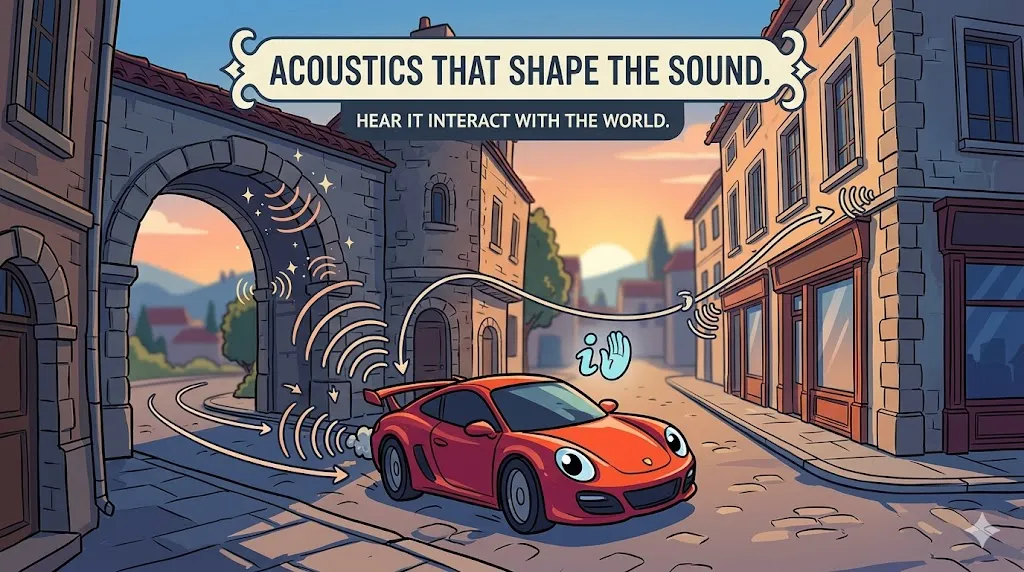
Think of it like this: instead of a car engine making a flat “vroom” sound no matter where you are, you hear it interact with the world—echoing down alleys, bouncing off walls, or muffled behind obstacles. It's physics-based audio at its finest, giving the game a realism you can feel.
Q: What else is new with audio in Forza Horizon 6?
Forza Horizon 6 introduces Triton Acoustics, which is an object-based spatial reverb system. It simulates real world acoustics by generating reverb signals from the virtual positions of objects within the game. To complement the visual contrast throughout the environment, we've captured extensive field recordings across all four seasons in Japan, creating a rich and truly authentic world for you to experience.
For players who want to fully immerse themselves in the vibrant world of FH6, tools like U4N make it easier than ever to enhance your gameplay experience, including real-time FH6 Credits top up for in-game purchases, letting you focus on the thrill of racing while Triton Acoustics brings every engine roar, alleyway echo, and turbo whistle to life with unmatched realism.
Old racing games apply a single “reverb” effect for a tunnel or room. Triton treats every object as a real physical barrier. Sound waves bend around corners and reflect off buildings or cliff faces in real-time. You'll notice your car roar differently depending on whether you're on an open highway or racing through a tight street.
If a building comes between you and another car, you don't just hear a muffled engine anymore. Triton calculates how sound bends around edges and objects, letting you track opponents through your ears alone. It's subtle but makes a huge difference in urban races.
The Japan-inspired regions in FH6, especially Tokyo's dense streets, really show off Triton. Engines bounce off narrow alleys, change pitch in plazas, and behave differently in tunnels. Every environment feels alive, not just visually but acoustically too.
You might think all this realism would crush your system—but Triton cleverly “bakes” the acoustic properties of the world ahead of time. That means physics-based sound in real-time without hammering your CPU like older ray-traced audio methods.
Triton isn't just about immersion; it actually changes how you play.
High-frequency sounds, like turbochargers and exhaust growls, are clearer than ever. They interact with your car and surroundings, letting you “hear” the car's power as it cuts through the environment.
You can now tell exactly where opponents are based on how their engines reflect off terrain. Behind a wall, around a corner, or up a hill—your ears guide you almost as much as your eyes. For competitive races, this gives you an edge.
Authored by elite gamers and industry insiders, the U4N Editorial Team delivers authoritative game updates, patch notes breakdowns, and expert strategies for trending titles including World of Warcraft, Path of Exile 2, MapleStory, Aion 2, and Arc Raiders.
From deep-dive guides to the latest meta shifts, our in-house veterans test every tactic firsthand to keep you ahead of the game.